The illustrated growing guide

Field Pea (Austrian Winter Pea)

Pisum sativum subsp. arvense

Family Fabaceae

Grown as an annual

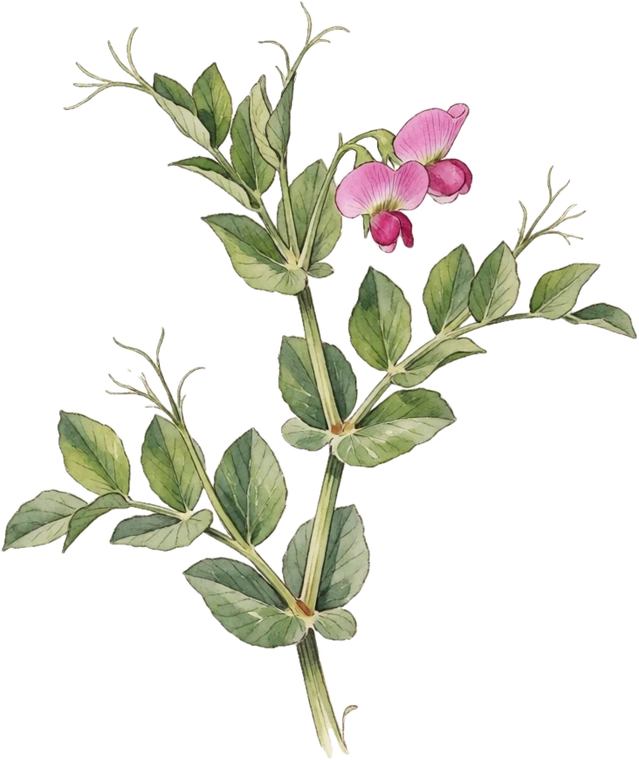
Botanical illustration of Field Pea (Austrian Winter Pea)
Annual · Pisum sativum subsp. arvense

A gentle, fast cool-season cover crop that fixes nitrogen and breaks down easily — fall-sown in mild climates or earliest spring elsewhere, often blended with oats or rye. And the tender shoots and curling tendrils are the same 'pea shoots' that cost a fortune at farmers markets. Terminate at bloom for maximum soil nitrogen.

AnnualFull SunModerate waterFast in cool weather growthExcellent edibleAttracts beesNone winter chill

Where to buy the plant — 1 nursery

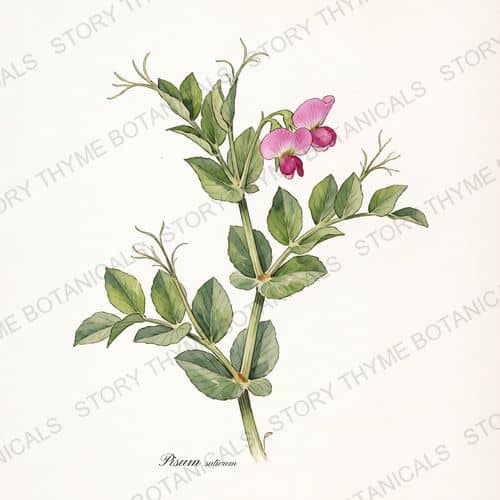
Snow Pea — a print from the Beans & Legumes collection

From the print shop

Growing field pea (austrian winter pea)? Hang it.

Our Beans & Legumes collection carries field pea (austrian winter pea)Pisum sativum, print Nº 16, “Snow Pea.”

16 designsfrom $21.99white or black groundmatte poster, unframed

Shop Beans & Legumes botanical prints →

I

Overview

Will field pea (austrian winter pea) suit your garden, and what goes wrong.

Will it fruit where you are?

Enter your ZIP — we look up your USDA hardiness zone (2023 map) and check it against what field pea (austrian winter pea) actually needs.

Life cycleAnnual
Winter chillNone

Field Pea (Austrian Winter Pea) at a glance

Life cycleAnnual
Mature size2-4 ft
PollinationFlowers feed bees
Chill requirementNone (not chill-dependent)
Bloom seasonSpring — pink-violet pea flowers
Harvest seasonCover crop; young shoots and tendrils are edible (pea shoots)
Growth rateFast in cool weather

Common field pea (austrian winter pea) problems

II

Growing

Light, water, soil, propagation and the season’s jobs.

How to grow field pea (austrian winter pea): light, water & soil

LightFull Sun
WaterModerate
SoilAny; nitrogen-fixer · pH 6.0 - 7.5
FertilizerNone — fixes nitrogen
PruningMow/till at bloom as green manure — A cool-season legume cover crop that fixes nitrogen and produces tender growth easily tilled or crimped in spring — sow in fall (mild zones) or earliest spring. Bonus: the young shoots and tendrils are a gourmet 'pea shoot' salad green. Often mixed with oats or rye for support. Terminate at flowering for peak nitrogen.
SpacingBroadcast dense

How to plant & propagate field pea (austrian winter pea)

PropagateFrom seed

The field pea (austrian winter pea) growing playbook

Field-tested instructions for every job field pea (austrian winter pea) asks of you, compiled from university extension guidance — in the order the season brings them.

Sowing

Fall sowing: get Austrian winter peas up before hard cold

Sow winter peas in late summer to early fall, roughly six to eight weeks before your first hard freeze, drilling seed a half inch to one inch deep at about 30 to 60 pounds per acre (60 to 75 pounds drilled in a pure stand). Earlier is better than later - benefits fall off quickly once you are past the end of your late-summer window. Coat the seed with a pea inoculant just before it goes in the ground. Mix with a strong-stemmed grain like oats, barley, wheat, rye, or triticale to hold the vines up, cutting the pea rate by about a quarter. Peas need enough warm weeks to nodulate and build root mass before cold shuts growth down. A Michigan stand sown in early August, right after wheat harvest, made 1.5 tons of dry matter per acre carrying over 130 pounds of nitrogen; MSU warns the payoff drops off quickly for stands sown past the end of August, so the late sowing gives up most of that benefit.

Spring sowing: plant as soon as the ground is workable

Sow spring field peas as soon as the soil has thawed and can be worked, about one inch deep in soil with a pH between 6 and 7.5. Do not wait for settled weather - young plants take light frost and grow at any temperature above 40 degrees. See the inoculation rule before the seed goes in the ground. Peas do their best work between 55 and 65 degrees and stop flowering and podding above 85, so the crop is racing summer from the day it emerges. Powdery mildew also runs in hot dry weather, which is what a late-sown stand grows straight into.

Feeding

Inoculate, and hold back the nitrogen

Treat seed with a pea-type inoculant carrying Rhizobium leguminosarum biovar viciae at every sowing. It matters most the first time peas go into a field; where peas have been in the rotation a few times the need is less critical. Inoculant is a living culture - keep it out of heat and sunlight and use it fresh, per the label. Do not fertilize a well-nodulated crop with nitrogen. The one exception extension allows is a small starter of roughly 15 to 30 pounds per acre where a soil test shows available nitrate-N is very low or nodulation has failed. Set phosphorus by soil test rather than skipping it - adequate P is the primary fertility concern for this crop. Rhizobium partnerships are species-specific, so the strains already in your soil probably will not nodulate a pea; without the right one the crop mines soil nitrogen instead of fixing it. Free nitrogen tells the plant to stop feeding its nodules and reduces the potential of N fixation, which is the whole reason the crop is in the ground - a fall-sown stand can otherwise return 90 to 150 pounds of nitrogen per acre.

Pruning

Terminate at full bloom for the most nitrogen

Mow or disk the stand down at full bloom. Do not wait for pods - and do not expect a cut crop to come back, since the succulent stems do not regrow well once blooming starts. Leave the residue on the surface as mulch or turn it in shallowly ahead of the next planting. Nitrogen in the crop peaks at full bloom and then moves out of the leaves and stems into filling seed, where it leaves with the harvest instead of feeding the soil. Austrian winter peas killed at bloom return 90 to 150 pounds of nitrogen per acre, and as much as 300 in a strong fall-planted stand.

A blooming pea stand is active bee forage, so mow early morning or evening when fewer bees are working it. Field peas will not tolerate field traffic on their succulent stems, so make one pass rather than several.

What to watch for

Pea aphid: count them once the flowers open

Start checking when half to three-quarters of the stand is flowering. Examine five 8-inch plant tips at each of four spots in the planting, or take ten sweeps with a 15-inch net. The treatment threshold is two to three aphids per 8-inch tip, or nine to twelve per sweep. Below that, leave them to the lady beetles, lacewings, and parasitic wasps already working the field. Flowering and early pod fill are when aphid feeding actually costs yield, and they are also when the aphids arrive in numbers - the same weeks the crop is most vulnerable and most attractive.

Field pea in bloom is heavily worked by bees. Do not apply insecticide to an open-flowering stand. If a cover crop or pea shoot planting is over threshold, mow or terminate rather than spray - there is no yield to protect.

Protection

Expect winterkill in colder zones, and plan for it

Austrian winter peas take about 10 degrees briefly, but sustained temperatures below 20 degrees kill them; seed suppliers rate the type as overwintering reliably only in zone 6 and warmer. In colder ground, treat the fall stand as a winterkilled cover - leave the dead vines in place as surface mulch and plant into them in spring. If you want live spring regrowth in a marginal zone, sow with a winter grain nurse crop and pick a winter-hardy variety such as Granger or Melrose rather than generic seed. Winterkill is not a failure here - a crop that dies at the right time terminates itself for free and leaves an easy, nitrogen-rich residue. The mistake is counting on spring regrowth that your winter lows were never going to allow.

Harvesting

Pea shoots: cut the tips and let them branch

First cut comes about 24 days from sowing, when plants stand 8 to 12 inches. Clip the growing point plus one pair of leaves to force branching, then take the top 2 to 6 inches off the regrowth every three to four weeks. A good shoot is the top pair of small leaves with the tendrils, plus a few larger leaves and any blossoms or immature buds. Stop cutting once the shoots turn bitter. Removing the growing point breaks apical dominance and pushes the plant to throw side shoots, which is what turns one sowing into repeated cuttings; the bitterness at the end is the plant shifting from vegetative growth toward flowering and seed.

III

The year

What field pea (austrian winter pea) asks for, month by month.

The field pea (austrian winter pea) year, month by month

MonthJanFebMarAprMayJunJulAugSepOctNovDec
Bloom

What each band means

  • Bloomflowers open — pollinators working, frost on blossoms is the danger.

The field pea (austrian winter pea) year as text

  • Jan quiet month
  • Feb quiet month
  • Mar bloom
  • Apr bloom
  • May bloom
  • Jun quiet month
  • Jul quiet month
  • Aug quiet month
  • Sep quiet month
  • Oct quiet month
  • Nov quiet month
  • Dec quiet month

These are the species' typical months — expect them a few weeks earlier in warm zones and later in cold ones. Watch the plant, not just the calendar.

IV

Ecology & uses

What it does for the garden, and what it is grown for.

Field Pea (Austrian Winter Pea) in the garden system

  • Herbaceous layer annual
  • N-fixer
  • Nectary/insectary
AttractsBees
MoistureFacultative / average
DeerBrowsed — protect young plants
OriginIntroduced

What field pea (austrian winter pea) is grown for

✓ Commonly eatenshoots edible

UseCool-season N-fixer
UsePea shoots
UseGreen manure
Edible value4/5

Harvesting & storing field pea (austrian winter pea)

Cover crop; young shoots and tendrils are edible (pea shoots).

Edibility, identification, and traditional-use notes here are general reference — not medical or veterinary advice, and not a claim that any plant treats or prevents anything. Medicinal ratings record how strongly a plant features in herbal tradition, nothing more. Never eat or dose a plant you have not positively identified. More on how to use this library.

V

Cultivars

Named varieties of field pea (austrian winter pea), ruled as a catalogue.

Best field pea (austrian winter pea) varieties & cultivars

5 on file

Named varieties of field pea (austrian winter pea) differ in days to maturity, disease resistance, flavor, and habit — pick one that fits your season and space.

Whistler

Self-fertile
Zones6-9

Semi-leafless, white-flowered winter pea with yellow cotyledons, released by Progene Research of Washington; rated winter hardy down to 0 degrees F. The zone figure is the Austrian winter pea type spec for reliable overwintering, not a variety-specific trial figure. Sold as farm-scale seed and frequently on backorder, so availability varies.

Where to buy ‘Whistler

Story Thyme Farms may earn a small commission from these links, at no cost to you — it never changes what we recommend.

Maxum · Maxum 4010

Self-fertile
Size24-36 inch vines

Edible blossoms, mild and pea-like — Open-pollinated spring/forage field pea, 52-75 days to seed. Sow early to mid-spring or late summer to early fall; not frost tolerant, so a fall sowing winterkills and terminates itself. Seed alone at 200 lb/acre (5 lb/1,000 sq ft) or 120 lb/acre in mixes (3 lb/1,000 sq ft), inoculated with pea-type inoculant. Showy blossoms are edible and draw pollinators. No hardiness zone spec published by the source.

Where to buy ‘Maxum

Story Thyme Farms may earn a small commission from these links, at no cost to you — it never changes what we recommend.

Parsley Pea

Self-fertile

Open-pollinated variety named by University of Delaware extension as a pea selected for shoot production, producing long shoots with many tendrils. First shoot cut about 24 days from sowing at 8-12 inches tall. Tendrils, leaflets and flowers are all edible. No hardiness zone spec published, and the source gives no pH, flavor, or full-foliage timing for this variety specifically.

Where to buy ‘Parsley Pea

Story Thyme Farms may earn a small commission from these links, at no cost to you — it never changes what we recommend.

Melrose

Self-fertile
Zones6-9

Winterhardy Austrian winter pea type. Planted the first week of September in Idaho, Melrose produced 300 lb N/acre and 6 tons of dry matter by the following June - the top nitrogen figure extension reports for this crop. Named by SARE among the most winter-hardy cultivars available. Zone figure is the Austrian winter pea type spec for overwintering; sold mainly as farm-scale seed, so home-garden availability varies.

Where to buy ‘Melrose

Story Thyme Farms may earn a small commission from these links, at no cost to you — it never changes what we recommend.

Granger

Self-fertile
Zones6-9SizeMore upright than standard winter pea types

Improved winter pea with fewer leaves and more tendrils, stiffer than standard cultivars, more upright, and pods dry more quickly. Named by SARE among the most winter-hardy cultivars available. Zone figure is the Austrian winter pea type spec for overwintering; sold mainly as farm-scale seed, so home-garden availability varies.

Where to buy ‘Granger

Story Thyme Farms may earn a small commission from these links, at no cost to you — it never changes what we recommend.

VI

Sources & plant ID

Where the care distinctions come from, and how the plant is filed.

Research basis

Sources behind this profile

No extension citations are attached to field pea (austrian winter pea)yet. The care figures below come from the library's own catalogue rather than a traced primary source.

Plant ID

BinomialPisum sativum subsp. arvense
FamilyFabaceae
TypeAnnual
USDA symbolPISA6
OriginIntroduced
Invasive riskLow

VII

Where to buy

Third-party nurseries — not Story Thyme Farms.

Third-party nurseries, not Story Thyme Farms. Prices are theirs.

Story Thyme Farms may earn a small commission from these links, at no cost to you — it never changes what we recommend.

VIII

Questions

Field Pea (Austrian Winter Pea) questions, answered straight.

Is field pea (austrian winter pea) safe for kids and pets?

Field Pea (Austrian Winter Pea) is commonly eaten and isn't considered toxic, but "commonly eaten" isn't a guarantee for any particular person or animal — allergies, quantity, and which part you eat all matter. One caveat on this one: shoots edible. Never eat a plant you haven't positively identified, and check with a vet before letting pets or livestock graze anything new.

When do you harvest field pea (austrian winter pea)?

Cover crop; young shoots and tendrils are edible (pea shoots).

How do you propagate field pea (austrian winter pea)?

From seed.

IX

Elsewhere

Where field pea (austrian winter pea) sits in the library.

Where field pea (austrian winter pea) sits in the library

Grows in the same world