The illustrated growing guide

Jostaberry

Ribes × nidigrolaria

Family Grossulariaceae

Est. zones 3-8

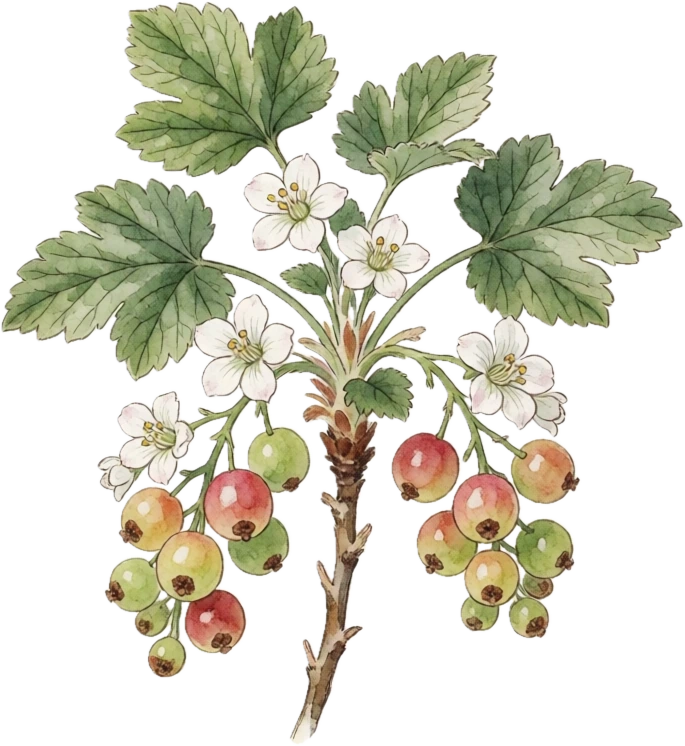
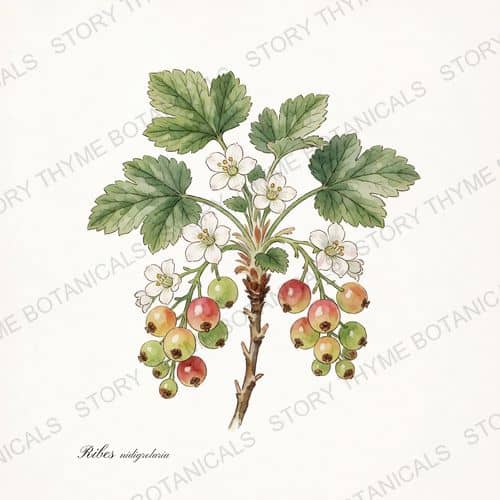
Botanical illustration of Jostaberry
Shrub · Ribes × nidigrolaria

The hybrid that fixed both parents' flaws: thornless like a currant, big-berried like a gooseberry, disease-resistant, self-fertile, and — crucially — immune to the white pine blister rust that gets currants banned near pines. A no-brainer for the shrub layer.

ShrubFull Sun to Part ShadeModerate waterFast growthExcellent edibleAttracts bees800-1200 winter chill (unconfirmed)

Where to buy the plant — 1 nursery

Gooseberry — a print from the Berry Plants collection

From the print shop

The closest print we make

We don’t print Ribes × nidigrolaria. The closest we have is Ribes uva-crispa (“Gooseberry”) in the Berry Plants collection — the same genus, Ribes, not the same species.

16 designsfrom $21.99white or black groundmatte poster, unframed

Shop Berry Plants botanical prints →

I

Overview

Will jostaberry suit your garden, and what goes wrong.

Will it fruit where you are?

Enter your ZIP — we look up your USDA hardiness zone (2023 map) and check it against what jostaberry actually needs.

Hardy inZones 3-8
Winter chill800-1200
Unconfirmed

Commonly quoted, but we have not traced this range to a university extension trial or another primary source, and published figures for the same plant often disagree. Chill-hour requirements were only ever established by trial for a handful of commercial fruit crops; for most species the work was never funded. Treat it as a starting point and check your local extension office before you plant on it.

PollinationSelf-fertile

Jostaberry at a glance

HardinessUSDA 3–8
Mature size5-6 ft, THORNLESS
PollinationSelf-fertile
Chill requirement800-1200
Unconfirmed

Commonly quoted, but we have not traced this range to a university extension trial or another primary source, and published figures for the same plant often disagree. Chill-hour requirements were only ever established by trial for a handful of commercial fruit crops; for most species the work was never funded. Treat it as a starting point and check your local extension office before you plant on it.

Bloom seasonApril (bee-visited)
Harvest seasonJuly: black, grape-sized — blackcurrant-meets-gooseberry flavor
Growth rateFast

Common jostaberry problems

  • Currant Aphid
  • Sawfly (less than gooseberry)
  • Immune to White Pine Blister Rust (unlike currants — plantable near pines)
  • Mildew-resistant

II

Growing

Light, water, soil, propagation and the season’s jobs.

How to grow jostaberry: light, water & soil

LightFull Sun to Part Shade
WaterModerate
SoilRich, well-drained · pH 6.0 - 7.0
FertilizerCompost + light spring feed
PruningLate Winter — Renewal-prune oldest wood; open the center for airflow.
Spacing4-5 ft

How to plant & propagate jostaberry

PropagateGrafted, or from cuttings/layering (seed won't come true)

When to spray jostaberry

Growing season. Low-spray by nature.

The jostaberry growing playbook

Field-tested instructions for every job jostaberry asks of you, compiled from university extension guidance — in the order the season brings them.

Watering

Taper the water after harvest to harden the bush for winter

Irrigate steadily through fruit development for best berry size and yield, then gradually reduce the water once the last picking is done rather than cutting it off all at once. Adequate irrigation is what sets fruit size and yield, but water carried late into the season keeps pushing soft growth that has not hardened off by the time the first freezes arrive.

Mulching

Two to three inches of mulch, topped up every year

Spread two to three inches of straw, wood chips, compost, lawn rakings or grass clippings over the root zone and replenish it yearly. Grass clippings are the best of them here. Jostaberry is a cool-climate plant with a shallow root system that wants moist soil and a high water-holding capacity. Mulch keeps the soil cool through summer, holds that moisture, suppresses weeds, and reduces winter injury to the roots.

If you mulch with fresh straw or sawdust, apply extra nitrogen fertilizer alongside it. These high-carbon materials tie up soil nitrogen as they decompose, and this plant is already a heavy nitrogen feeder.

Feeding

Feed only a bush that is not vigorous, and keep the chloride out

Work manure into the soil before planting, and topdress with composted manure annually - on soil already in good heart that is the whole job. Then look at the bush each spring: if it is pushing strong new canes from the base, it does not need fertilizer. Only if plants are not vigorous, lightly broadcast about a quarter to a half pound of 10-10-10 per plant. Cornell recommends the 10-10-10 only for plants that are not vigorous. Ribes are heavy nitrogen feeders and the cane-renewal system does depend on the plant pushing new basal shoots every year, but feeding a bush that is already making them buys soft growth and a denser canopy, and poor air circulation is what favors powdery mildew - the disease that most commonly plagues Ribes.

Avoid any fertilizer containing muriate of potash (potassium chloride).

Pruning

Renewal pruning: cut out everything older than three years

While the bush is dormant, in late winter or early spring before the buds swell, cut every cane older than three years off at ground level, along with any branches lying on the soil and anything broken or hollow. Thin the young shoots so a mature bush carries about eight bearing canes, roughly three or four of each age class. Ribes fruit at the base of one-year-old wood and most heavily on the spurs of two- and three-year-old wood, so a fourth-year cane takes light and space without paying for it. Removing the oldest class every year forces the new canes that will carry the next crop.

Destroy the prunings instead of stacking them nearby. Currant borer larvae overwinter inside the pith of old canes, and cutting infested canes out before the clearwing moths emerge in June is the best control available.

What to watch for

Imported currantworm: check the undersides of the first leaves

As the leaves expand, turn over the leaves low in the center of the bush and look along the major veins for rows of small eggs, then a week to ten days later for half-inch greenish larvae with black spots chewing holes and eating in from the leaf margins. Hand-pick the egg-bearing leaves and the larvae. If a bush is being stripped after fruit set, an azadirachtin product such as AzaGuard or Molt-X, or a horticultural oil such as SuffOil-X, will bring the larvae down. The sawfly adults lay on the undersides of the first leaves to expand, and if the larvae are numerous they can strip a bush of its foliage in a few days. A defoliated bush cannot finish the crop it is already carrying.

Bt will not touch these. Sawfly larvae resemble lepidopteran caterpillars but are not related, so Bt products do not control them. The materials above carry a 0 to 3 day pre-harvest interval. Do not spray anything insecticidal while the bush is in bloom - jostaberry flowers are bee-visited.

White pine blister rust: check your state law first, then watch the leaves

Before you plant at all, check with your state department of agriculture or local extension office - jostaberry is a black currant hybrid and several states regulate it as one. Through summer, look on the undersides of the leaves for orange-yellow pustules, the sign of Cronartium ribicola, and report a find to your extension office. The rust cannot complete its life cycle without both a Ribes and a five-needle pine, which is why states with white pine still control Ribes planting. Jostaberry cultivars are rated resistant, but resistance is not immunity, and a newer rust strain in New England has already overcome resistance in some black currant varieties previously considered safe.

Jostaberry is not permitted in Virginia or West Virginia. Maryland permits it. Michigan requires a permit and issues them only for varieties rated highly resistant, listing Josta and Orus 8 among them. Check your own state before you buy a plant.

Spraying

Dormant oil for San Jose scale, only if you saw scale last year

Scale is easy to spot on bare dormant wood as small hard grey bumps crusting the older canes. If you find them, spray a dormant horticultural oil or lime-sulfur while the bush is fully dormant and before the buds swell. Pruning out and destroying the infested canes handles a light infestation on its own. Oil kills scale by smothering it, so it only works against the armored overwintering stage, and only while there is no foliage or swelling bud tissue for the oil to burn.

Dormant oil carries a 0-day pre-harvest interval. Apply before buds swell, and never within 48 hours of a frost - oil plus freezing injures the wood.

Harvesting

Pick when fully colored and soft - the window is forgiving

Pick jostaberries once they are fully colored, reddish-black to black, and soft to the touch. Timing is not critical the way it is with most soft fruit, so a bush can be picked over more than one pass without losing the crop. Jostaberries have a long shelf life, so the fruit does not punish a late picking the way a raspberry does.

III

The year

What jostaberry asks for, month by month.

The jostaberry year, month by month

MonthJanFebMarAprMayJunJulAugSepOctNovDec
Bloom
Prune
Harvest

What each band means

  • Bloomflowers open — pollinators working, frost on blossoms is the danger.
  • Pruneshape it now — cuts heal cleanly and structure is visible.
  • Harvestpicking time — check ripeness every few days.

The jostaberry year as text

  • Jan quiet month
  • Feb pruning
  • Mar pruning
  • Apr bloom
  • May quiet month
  • Jun quiet month
  • Jul harvest
  • Aug quiet month
  • Sep quiet month
  • Oct quiet month
  • Nov quiet month
  • Dec quiet month

These are the species' typical months — expect them a few weeks earlier in warm zones and later in cold ones. Watch the plant, not just the calendar.

IV

Ecology & uses

What it does for the garden, and what it is grown for.

Jostaberry in the garden system

  • Shrub layer shrub
AttractsBees, Birds
MoistureFacultative / average
DeerBrowsed — protect young plants
OriginIntroduced

What jostaberry is grown for

✓ Commonly eaten

UseFresh eating
UseJam
UsePies
UseLow-spray shrub
Edible value4/5

Harvesting & storing jostaberry

July: black, grape-sized — blackcurrant-meets-gooseberry flavor.

Edibility, identification, and traditional-use notes here are general reference — not medical or veterinary advice, and not a claim that any plant treats or prevents anything. Medicinal ratings record how strongly a plant features in herbal tradition, nothing more. Never eat or dose a plant you have not positively identified. More on how to use this library.

V

Cultivars

Named varieties of jostaberry, ruled as a catalogue.

Best jostaberry varieties & cultivars

5 on file

Named varieties of jostaberry differ in winter-chill needs, ripening time, hardiness, and whether they set fruit on their own — pick one that fits your climate.

Jostine

Partly self-fertile
RipensJulyZones3-8DiseaseDescribed as disease resistantSize3-5 ft tall

Excellent flavor, medium to large berries — Hardy to minus 40 F. Thornless. Very high yields, reported at 10 to 20 lbs annually, and begins bearing 1 to 2 years after planting. Like other jostaberries it is only partially self-fertile - a second jostaberry or a black currant nearby increases fruit set.

Where to buy ‘Jostine

Story Thyme Farms may earn a small commission from these links, at no cost to you — it never changes what we recommend.

Giant Jostaberry

Self-fertile
Zones3-8DiseasePowdery mildew, white pine blister rustSize6 ft tall by 8 ft wide

Reported sweeter than standard jostaberry — Nursery-sourced chill figure, and stated for jostaberries as a group rather than for this cultivar specifically: at least 1,000 chilling hours, so it is not a southern plant. No land-grant extension source publishes jostaberry chill hours, so treat the number as indicative. Thornless, early to leaf out, fruits on older wood, productive in sun or partial shade and prefers afternoon shade in hot-summer climates.

Where to buy ‘Giant Jostaberry

Story Thyme Farms may earn a small commission from these links, at no cost to you — it never changes what we recommend.

Red Jostaberry · Red Josta

Partly self-fertile
Zones3-8DiseasePowdery mildew, white pine blister rustSize6-8 ft wide, vigorous and mostly upright

Sweet-tart, resembles black currant without the muskiness — Partially self-fertile and produces larger crops with cross-pollination from another jostaberry or a black currant. Thornless, early to leaf out, fruits on older wood. Space at least 6 ft apart. As a black currant-gooseberry hybrid it is prohibited to DE, ME, NC, NJ, WV, VA, MI, MA, OH and RI; the nursery notes rust-resistant varieties may still be shipped to OH and MI with a permit. Check your own state before ordering.

Where to buy ‘Red Jostaberry

Story Thyme Farms may earn a small commission from these links, at no cost to you — it never changes what we recommend.

Black Jostaberry

Partly self-fertile
RipensJulyZones3-8DiseaseNursery reports no significant pest or disease problems in its region; no specific resistance rating publishedSize3-5 ft tall

Sweet-tart, large jet black fruit, good fresh or for jam — Hardy to minus 40 F. Like other jostaberries it is only partially self-fertile - a second jostaberry or a black currant nearby increases fruit set. The nursery notes white pine blister rust may still affect black currants and their hybrids in certain eastern and midwestern states, so check local rules before planting.

Where to buy ‘Black Jostaberry

Story Thyme Farms may earn a small commission from these links, at no cost to you — it never changes what we recommend.

Orus 8

RipensJune-JulyZones3-7Size3-5 ft tall by 3-5 ft wide

Deep purple fruit, rated the best for fresh eating of any gooseberry — A black currant by red gooseberry hybrid from the USDA breeding program at Corvallis, Oregon. Hardy to minus 40 F. Has some thorns, though fewer than a typical gooseberry. Michigan's Department of Agriculture lists Orus 8 among the white pine blister rust resistant varieties it will permit.

Where to buy ‘Orus 8

Story Thyme Farms may earn a small commission from these links, at no cost to you — it never changes what we recommend.

VI

Sources & plant ID

Where the care distinctions come from, and how the plant is filed.

Research basis

Sources behind this profile

No extension citations are attached to jostaberryyet. The care figures below come from the library's own catalogue rather than a traced primary source.

Plant ID

BinomialRibes × nidigrolaria
FamilyGrossulariaceae
TypeShrub · Perennial
OriginIntroduced
Invasive riskLow

VII

Where to buy

Third-party nurseries — not Story Thyme Farms.

Third-party nurseries, not Story Thyme Farms. Prices are theirs.

Story Thyme Farms may earn a small commission from these links, at no cost to you — it never changes what we recommend.

VIII

Questions

Jostaberry questions, answered straight.

Do I need two jostaberry plants to get fruit?

No — jostaberry is self-fertile, so a single plant will set a crop. A second one usually improves yields, but it isn't required.

Will jostaberry fruit in a warm-winter climate?

Jostaberry needs roughly 800-1200 hours of winter chill (hours between 32–45°F) to break dormancy and set fruit. That range is commonly quoted but we have not traced it to a university extension trial, and published figures for this plant disagree — treat it as a starting point and check your local extension office. Mild-winter growers should count their chill hours before planting.

Is jostaberry safe for kids and pets?

Jostaberry is commonly eaten and isn't considered toxic, but "commonly eaten" isn't a guarantee for any particular person or animal — allergies, quantity, and which part you eat all matter. Never eat a plant you haven't positively identified, and check with a vet before letting pets or livestock graze anything new.

When do you harvest jostaberry?

July: black, grape-sized — blackcurrant-meets-gooseberry flavor.

IX

Elsewhere

Where jostaberry sits in the library.

Where jostaberry sits in the library

Grows in the same world