The illustrated growing guide

Mango

Mangifera indica

Family Anacardiaceae

Est. zones 10-11

Botanical illustration of Mango
Tree · Mangifera indica

Real mangoes need real tropics — but breeders created 'condo' mangoes that fruit in a large pot at 4-6 feet, wintered in a bright warm room. Anthracnose in humid summers is the constant battle. The peel is poison-ivy kin: wash hands, and sensitive folks should let someone else peel.

TreeFull Sun — maximum heatModerate waterFast in heat growthExcellent edibleAttracts beesNone winter chill

Where to buy the plant — 2 nurseries

I

Overview

Will mango suit your garden, and what goes wrong.

Will it fruit where you are?

Enter your ZIP — we look up your USDA hardiness zone (2023 map) and check it against what mango actually needs.

Life cyclePerennial zones 10–11, annual elsewhere
Winter chillNone
PollinationSelf-fertile

Mango at a glance

Life cyclePerennial zones 10–11, annual elsewhere
Mature size30-60 ft; 'Condo' types 6-8 ft
PollinationSelf-fertile (bigger crops with pollinators)
Chill requirementNone (not chill-dependent)
Bloom seasonWinter-Spring (panicles; cool dry weather sets them)
Harvest seasonSummer: pick mature-green and ripen on the counter
Growth rateFast in heat

Common mango problems

II

Growing

Light, water, soil, propagation and the season’s jobs.

How to grow mango: light, water & soil

LightFull Sun — maximum heat
WaterModerate; DRY winter rest triggers bloom
SoilDeep, well-drained · pH 5.5 - 7.5
FertilizerLow N; excess = leaves, no fruit
PruningAfter harvest — Tip-prune potted trees to force branching and stay small; a 'Condo Mango' fruits at 4 ft.
Spacing20+ ft; dwarf types in pots

How to plant & propagate mango

PropagateGrafted, or from cuttings/layering (seed won't come true)

The mango growing playbook

Field-tested instructions for every job mango asks of you, compiled from university extension guidance — in the order the season brings them.

Watering

Water a young tree, mostly leave a mature one alone

Water at planting and every other day for the first week, then once or twice a week for the first couple of months, and about weekly in dry spells until the tree is three. From year four, irrigate only during a very prolonged spring or summer drought. Keep water off the flowers and fruit - run a low sprinkler or drip, not an overhead. Mature mango trees do not need frequent watering and overwatering produces poor-quality, watery fruit. Wetting the panicles is worse than useless - anthracnose needs free water on the flowers to infect, so an overhead sprinkler manufactures the disease you are otherwise spraying against.

Feeding

Feed young trees six times a year, then cut the nitrogen once it bears

For the first three years, make about six applications a year, starting at a quarter to a half pound per tree and working up toward 1 to 1.5 lb, using a 6-6-6-2 or 8-3-9-2 type mix. From year four on, drop to four applications a year at 1.5 to 4 lb each, drastically reduce or eliminate the nitrogen, and raise the potash to 9-15 percent - 6-3-16 and 0-0-22 are the mixes UF/IFAS names. Nitrogen buys leaves, not mangos. A bearing tree fed heavy nitrogen puts its energy into vegetative flushes instead of flower panicles, and the fruit it does set eats poorer.

If you use a boron-containing micronutrient product, apply it at roughly 1/300th of the nitrogen rate - UF/IFAS warns boron is toxic to plants at moderate to high rates.

Iron and micronutrients if your soil is alkaline

On high-pH or calcareous soil, drench the root zone with chelated iron in the FeEDDHA form two or three times through the growing season, and add an annual foliar spray of copper, zinc, manganese and boron. On neutral or acidic soil, iron sulfate watered in two or three times a year is enough and costs far less. Above about pH 7 the ordinary iron chelates fall apart and the iron locks up as an oxide the roots cannot take, so leaves go yellow between green veins while the soil is technically full of iron. FeEDDHA is the one chelate that holds on at high pH.

Pruning

Prune soon after you pick the last fruit

Once the last fruit is off the tree, take out a few upper limbs back to their crotches to hold the height down and open the canopy. UF/IFAS says pruning should be done soon after harvest; get it done early enough that any regrowth hardens off before the tree sets panicles. Severe pruning does not injure a mango, but it reduces production for one to several seasons. A mango sets its flower panicles on shoots that hardened off after the summer flush. Cut late and you are removing the wood that was going to bloom, or forcing a soft flush that will not be mature enough to flower.

Once a mango is 25 to 30 ft or taller, UF/IFAS says climbing the tree to prune it is dangerous and not recommended - hire a professional arborist who is licensed and insured.

What to watch for

Look for pests, but do not spray on principle

Walk the tree through the growing season and look for bud mites, red-banded thrips, scale insects such as false oleander and Florida red, spider mites, and ambrosia beetle entry holes in the trunk and limbs. Treat only when you find a large infestation, and ask your local extension office what is currently labeled before you buy anything. UF/IFAS is explicit that mango insect infestations are not predictable and control measures are justified only when large infestations occur. A calendar insecticide on a home mango mostly kills the thrips and flies that pollinate the panicles.

Never apply an insecticide while the tree is in bloom - thrips, flies and bees are what set your crop.

Spraying

Anthracnose: copper on the flower panicles, then stop

Spray copper when the panicle is about a quarter of full size and again 10-21 days later. Sprays should continue at the recommended interval only until the fruit is about 1.5-2 inches long - then stop. Anthracnose infects the flowers and small fruit; the black spots that appear on a ripening mango are an infection that happened at bloom, months earlier.

Copper hydroxide's PHI on mango is 0 days, but the PHI is NOT the operative limit here: the extension spray window CLOSES months before harvest, so a summer copper spray is legal and still later than it should be. UF/IFAS says disease control on a home mango is usually not warranted or should not be intensive - cultivar choice and a hot, dry site are the primary controls. Wash fruit before eating. Copper can burn foliage if the spray pH is below 6.5.

Powdery mildew: sulfur preventively as the panicle expands

Time this to the panicle, not the calendar. UF/IFAS calls for one to two applications of sulfur and copper beginning when the panicle is about 1/4 full size, with a second 10 to 21 days later. Do not wait for the white powdery growth to appear: infection happens days to months before symptoms show, and sprays applied after infection have no effect on disease already established. If mildew does appear on flowers, young fruit, or leaf midribs, sulfur will still limit spread into new growth, but the crop-saving application is the early one. Unlike anthracnose, this fungus works in dry, mild spring weather rather than rain. A severe infection destroys the flowering panicles outright, so you lose the whole crop at set rather than losing fruit quality later - which is why UF/IFAS times the spray ahead of symptoms.

Follow the product label rate and pre-harvest interval for mango; the label is the law and MG216 does not substitute for it. Do not assume sulfur is pollinator-safe - it is a fungicide, not an insecticide, but it can harm some pollinators and beneficial mites, so spray early or late in the day when thrips, flies and bees are least active on the panicles. Do not apply sulfur above about 90F or within two weeks of an oil spray - it burns foliage.

Protection

Cover for cold - the flowers give up long before the tree does

Watch the forecast through bloom. A mature tree takes 25F for a few hours with damage limited to leaves and small branches, but open flowers and small fruit can be lost below 40F. Cover or heat trees under three years old whenever 29F to 30F is possible. Mango blooms in winter, so its most cold-sensitive tissue is out in the coldest part of the year. The threshold that kills the crop is nearly fifteen degrees warmer than the threshold that hurts the tree, which is why a grower can lose an entire year to a night that left no visible mark.

A young mango can be killed outright at 29F to 30F - protect the trunk of a tree under three years old, not just the canopy.

Harvesting

Pick mature-green, ripen on the counter at 70-75F

The fruit is mature when the shoulders and nose broaden and fill out. If you are unsure, cut one - mature flesh next to the seed has turned from white to yellow, and that happens before any color break in the peel. Pick firm and hold at 70F to 75F; mature fruit ripens in three to eight days. Mango ripens off the tree, and the internal color change at the seed is a truer maturity signal than skin color, which varies by variety and by how much sun the fruit saw.

Do not refrigerate a mango before it ripens. Chilling an unripe fruit causes brown or gray skin discoloration, surface pitting, uneven ripening and off flavors, and it is not reversible.

III

The year

What mango asks for, month by month.

The mango year, month by month

MonthJanFebMarAprMayJunJulAugSepOctNovDec
Bloom
Prune
Harvest

What each band means

  • Bloomflowers open — pollinators working, frost on blossoms is the danger.
  • Pruneshape it now — cuts heal cleanly and structure is visible.
  • Harvestpicking time — check ripeness every few days.

The mango year as text

  • Jan bloom
  • Feb bloom
  • Mar bloom
  • Apr bloom
  • May bloom
  • Jun harvest
  • Jul pruning, harvest
  • Aug pruning, harvest
  • Sep quiet month
  • Oct quiet month
  • Nov quiet month
  • Dec bloom

These are the species' typical months — expect them a few weeks earlier in warm zones and later in cold ones. Watch the plant, not just the calendar.

IV

Ecology & uses

What it does for the garden, and what it is grown for.

Mango in the garden system

  • Canopy layer tree
AttractsBees
MoistureFacultative / average
DeerBrowsed — protect young plants
OriginIntroduced

What mango is grown for

! Some parts toxic — see notesSAP + peel contain urushiol (poison-ivy family) — sensitive people react; flesh is fine

UseFresh eating
UseChutney
UseSmoothies
Edible value4/5

Harvesting & storing mango

Summer: pick mature-green and ripen on the counter.

Edibility, identification, and traditional-use notes here are general reference — not medical or veterinary advice, and not a claim that any plant treats or prevents anything. Medicinal ratings record how strongly a plant features in herbal tradition, nothing more. Never eat or dose a plant you have not positively identified. More on how to use this library.

V

Cultivars

Named varieties of mango, ruled as a catalogue.

Best mango varieties & cultivars

20 on file

Named varieties of mango differ in winter-chill needs, ripening time, hardiness, and whether they set fruit on their own — pick one that fits your climate.

Glenn · Glen

Self-fertile
RipensJune-JulyZones9b-11 (marginal, protect in 9b)Diseasegood (moderately anthracnose resistant)Sizemoderate vigor, easily kept 8-12 ft

sweet, mild, nearly fiberless - excellent fresh — Classic reliable beginner mango - consistent early crops, disease-tolerant, and stays manageable for small yards. Self-fruitful; fruit set improves with insect pollinators.

Where to buy ‘Glenn

Story Thyme Farms may earn a small commission from these links, at no cost to you — it never changes what we recommend.
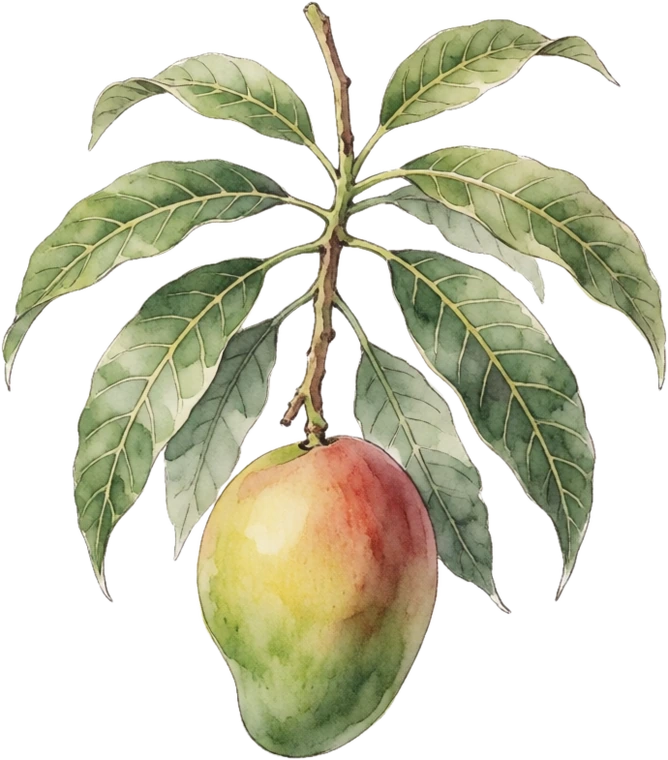
Cogshall

Self-fertile
RipensJune-JulyZones10-11DiseasemoderateSizelow-vigor compact 'condo' tree, kept 6-10 ft

rich, sweet, very low fiber — A naturally small, low-vigor Florida tree that is one of the best true container / small-yard 'condo' mangoes. Self-fruitful on a single tree.

Where to buy ‘Cogshall

Story Thyme Farms may earn a small commission from these links, at no cost to you — it never changes what we recommend.

Pickering

Self-fertile
RipensJune-JulyZones10-11DiseasegoodSizedwarf, bushy 'condo' tree, 6-8 ft

sweet, rich coconut-like, low fiber — Top UF/IFAS pick for containers and tiny spaces - naturally compact yet a heavy, precocious bearer. Self-fruitful; no second tree needed.

Where to buy ‘Pickering

Story Thyme Farms may earn a small commission from these links, at no cost to you — it never changes what we recommend.

Carrie

Self-fertile
RipensJune-JulyZones10-11Diseasegood for anthracnose but susceptible to powdery mildewSizedwarf, dense 'condo' tree, 6-10 ft

intensely rich, aromatic, fiberless - a connoisseur favorite — Prized for outstanding rich flavor on a small tree; fruit is green when ripe so judge by softness, not color. Relatively anthracnose tolerant but prone to powdery mildew in humid springs.

Where to buy ‘Carrie

Story Thyme Farms may earn a small commission from these links, at no cost to you — it never changes what we recommend.

Nam Doc Mai · Nam Dok Mai, Namdokmai

Self-fertile
RipensJune-JulyZones10-11Diseasemoderate (susceptible to anthracnose and powdery mildew per UF/IFAS)Sizemoderate, kept 10-15 ft

sweet, floral, low fiber - excellent eaten green or ripe — Popular elongated Thai mango, superb flavor, good eaten green. Contrary to common lore about Indochinese types, UF/IFAS lists it as susceptible to anthracnose and powdery mildew, so it needs a spray program in wet, humid sites.

Where to buy ‘Nam Doc Mai

Story Thyme Farms may earn a small commission from these links, at no cost to you — it never changes what we recommend.

Mallika

Self-fertile
RipensJuly-AugustZones10-11Diseasemoderate (reports conflict - some rate it resistant, UF lists it susceptible)Sizesemi-dwarf, kept 8-12 ft

very rich honey-citrus, fiberless Indian dessert type — A compact Indian dessert-type mango (Neelam x Dashehari) with outstanding flavor. Anthracnose resistance is disputed - some germplasm trials rate it among the least susceptible while UF lists it as susceptible - so do not rely on it as disease-proof in wet sites.

Where to buy ‘Mallika

Story Thyme Farms may earn a small commission from these links, at no cost to you — it never changes what we recommend.

Valencia Pride

Self-fertile
RipensJuly-AugustZones10-11DiseasemoderateSizelarge, vigorous standard tree, 20+ ft if unpruned

sweet, aromatic, low fiber, large fruit — A vigorous Haden seedling that yields big late-summer fruit but needs space or regular pruning to stay in bounds. Self-fruitful.

Where to buy ‘Valencia Pride

Story Thyme Farms may earn a small commission from these links, at no cost to you — it never changes what we recommend.
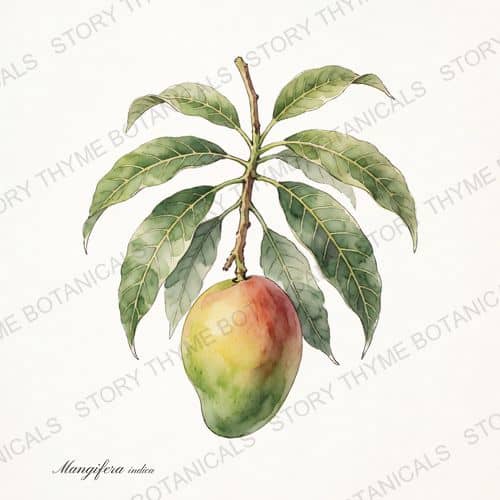
Keitt

Self-fertile
RipensAugust-SeptemberZones10-11Diseasegood (late crop largely escapes peak anthracnose season)Sizemoderate-to-large, kept 10-15 ft

mild, sweet, low fiber; stays green when ripe — The go-to late-season mango - very large fruit that ripens after the humid spring, extending the harvest into fall. Self-fruitful; judge ripeness by softness since skin stays green.

Where to buy ‘Keitt

Story Thyme Farms may earn a small commission from these links, at no cost to you — it never changes what we recommend.

Tommy Atkins

Self-fertile
RipensMay-JuneZones10-11Diseasegood (tough, disease-tolerant, long shelf life)Sizelarge, vigorous standard tree

mild, sweet, fibrous - the common supermarket mango — Extremely hardy and productive early cropper; flavor is only fair and fiber is high, so pick it for reliability over taste. Self-fruitful.

Where to buy ‘Tommy Atkins

Story Thyme Farms may earn a small commission from these links, at no cost to you — it never changes what we recommend.

Kent

Self-fertile
RipensJuly-AugustZones10-11Diseasepoor (very susceptible to anthracnose)Sizelarge, vigorous standard tree

very rich, sweet, juicy, nearly fiberless — Superb dessert flavor but highly anthracnose-prone - best only in dry climates or with a spray program. Self-fruitful.

Where to buy ‘Kent

Story Thyme Farms may earn a small commission from these links, at no cost to you — it never changes what we recommend.

Rosigold

RipensVery early (March-April in South Florida)Zones10-11DiseaseSusceptible to anthracnoseSizeLow-vigor tree; fruit 9-11 oz

Polyembryonic seed, so seedlings tend to come true to the parent. The earliest variety in the UF/IFAS table, ripening before the summer rains really start.

Where to buy ‘Rosigold

Story Thyme Farms may earn a small commission from these links, at no cost to you — it never changes what we recommend.

Angie

RipensEarly (April-May in South Florida)Zones10-11DiseaseModerately resistant to anthracnoseSizeLow-vigor tree; fruit 13-14 oz

Monoembryonic. One of the few varieties that is both genuinely small and rated moderately resistant, which is the combination most home growers actually need.

Where to buy ‘Angie

Story Thyme Farms may earn a small commission from these links, at no cost to you — it never changes what we recommend.

Saigon

RipensEarly-mid (May-July in South Florida)Zones10-11DiseaseResistant to anthracnoseSizeModerate to high vigor tree; fruit 6-12 oz

Polyembryonic. Rated flatly resistant in the UF/IFAS variety table, not merely moderately resistant - the only variety in that table to earn the rating.

Where to buy ‘Saigon

Story Thyme Farms may earn a small commission from these links, at no cost to you — it never changes what we recommend.

Florigon

RipensEarly-mid (May-July in South Florida)Zones10-11DiseaseModerately resistant to anthracnoseSizeHigh-vigor tree; fruit 10-16 oz

Polyembryonic. An old Florida selection that carries its resistance on a big, vigorous tree - it needs real room or annual pruning.

Where to buy ‘Florigon

Story Thyme Farms may earn a small commission from these links, at no cost to you — it never changes what we recommend.

Edward

RipensEarly-mid (May-July in South Florida)Zones10-11DiseaseModerately resistant to anthracnoseSizeModerate to high vigor tree; fruit 16-20 oz

Monoembryonic. Large fruit paired with a moderately resistant rating, which is unusual - most of the big-fruited varieties in the UF/IFAS table are rated susceptible.

Where to buy ‘Edward

Story Thyme Farms may earn a small commission from these links, at no cost to you — it never changes what we recommend.

Fairchild

RipensMid (June-July in South Florida)Zones10-11DiseaseModerately resistant to anthracnoseSizeLow-vigor tree; fruit 8-10 oz

Monoembryonic. Small tree, small fruit, moderately resistant - UF/IFAS names it among the varieties better suited to South Florida home landscapes.

Where to buy ‘Fairchild

Story Thyme Farms may earn a small commission from these links, at no cost to you — it never changes what we recommend.

Ice Cream

RipensMid (June-July in South Florida)Zones10-11DiseaseSusceptible to anthracnoseSizeLow-vigor tree; fruit 8-9 oz

Monoembryonic. One of the low-vigor varieties in the UF/IFAS table and a common choice for a container or a tight lot, but it is rated susceptible, so expect to manage anthracnose preventively at bloom or accept spotted fruit.

Where to buy ‘Ice Cream

Story Thyme Farms may earn a small commission from these links, at no cost to you — it never changes what we recommend.

Parvin

RipensLate (July-August in South Florida)Zones10-11DiseaseModerately resistant to anthracnoseSizeHigh-vigor tree; fruit 16-25 oz

Monoembryonic. A late, large-fruited variety that keeps a moderately resistant rating deep into the wet season, when anthracnose pressure is highest.

Where to buy ‘Parvin

Story Thyme Farms may earn a small commission from these links, at no cost to you — it never changes what we recommend.

Rapoza

RipensLate (July-August in South Florida)Zones10-11DiseaseModerately resistant to anthracnoseSizeModerate-vigor tree; fruit 14-28 oz

Monoembryonic. UF/IFAS Table 1 rates it moderate vigor and moderately resistant, carrying large fruit on a manageable tree. Bred by the University of Hawaii at Manoa - selected from open-pollinated 'Irwin' seedlings at the Poamoho Experiment Farm and named for Herbert Rapoza (UH CTAHR CFS-MAN-3C).

Where to buy ‘Rapoza

Story Thyme Farms may earn a small commission from these links, at no cost to you — it never changes what we recommend.

Neelum · Neelam

RipensVery late (September-October in South Florida)Zones10-11DiseaseModerately susceptible to anthracnoseSizeLow to moderate vigor tree; fruit 8-11 oz

Monoembryonic. The latest variety in the UF/IFAS table by more than a month - it is how a home grower stretches the mango season past everyone else's.

Where to buy ‘Neelum

Story Thyme Farms may earn a small commission from these links, at no cost to you — it never changes what we recommend.

VI

Sources & plant ID

Where the care distinctions come from, and how the plant is filed.

Research basis

Sources behind this profile

No extension citations are attached to mangoyet. The care figures below come from the library's own catalogue rather than a traced primary source.

Plant ID

BinomialMangifera indica
FamilyAnacardiaceae
TypeTree · Tender Perennial
USDA symbolMAIN3
OriginIntroduced
Invasive riskLow

VII

Where to buy

Third-party nurseries — not Story Thyme Farms.

Third-party nurseries, not Story Thyme Farms. Prices are theirs.

Story Thyme Farms may earn a small commission from these links, at no cost to you — it never changes what we recommend.

VIII

Questions

Mango questions, answered straight.

Do I need two mango plants to get fruit?

No — mango is self-fertile, so a single plant will set a crop. A second one usually improves yields, but it isn't required.

Is mango safe for kids and pets?

With care. SAP + peel contain urushiol (poison-ivy family) — sensitive people react; flesh is fine Site it accordingly if children or pets roam the garden. This is general reference, not medical or veterinary advice — call a vet or poison control if something has actually been eaten.

When do you harvest mango?

Summer: pick mature-green and ripen on the counter.

How do you propagate mango?

Grafted, or from cuttings/layering (seed won't come true).

IX

Elsewhere

Where mango sits in the library.