The illustrated growing guide

Orach (Mountain Spinach)

Atriplex hortensis

Family Amaranthaceae

Grown as an annual

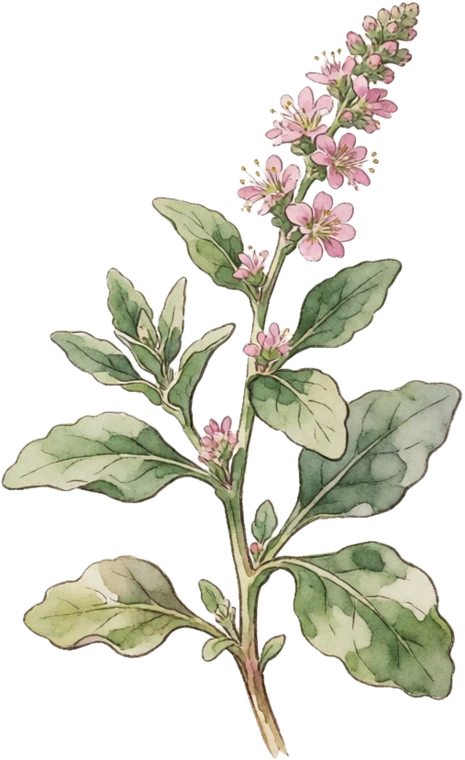
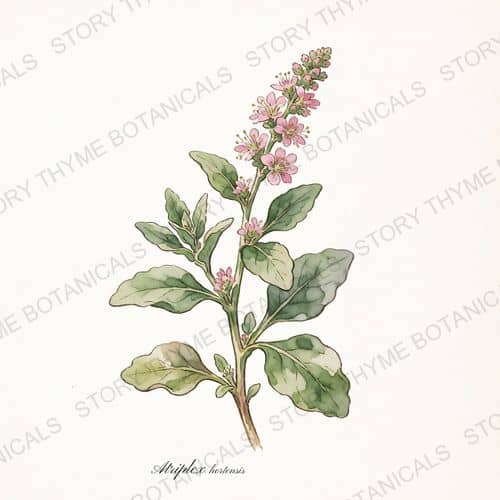
Botanical illustration of Orach (Mountain Spinach)
Annual · Atriplex hortensis

The heat-tolerant answer to spinach the pioneers grew — it keeps producing tender leaves into summer when spinach has long since bolted, and the magenta-leaved form is gorgeous enough for the flower border. Cook like spinach or use young raw. Salt-tolerant and tough.

AnnualFull SunModerate waterFast growthExcellent edibleSalt-tolerantAttracts beesNone winter chill

Where to buy the plant — 1 nursery

I

Overview

Will orach (mountain spinach) suit your garden, and what goes wrong.

Will it fruit where you are?

Enter your ZIP — we look up your USDA hardiness zone (2023 map) and check it against what orach (mountain spinach) actually needs.

Life cycleAnnual
Winter chillNone

Orach (Mountain Spinach) at a glance

Life cycleAnnual
Mature size4-6 ft
PollinationBees on the seed spikes
Chill requirementNone (not chill-dependent)
Bloom seasonBolts in high summer heat
Harvest seasonYoung leaves spring-fall — a spinach substitute that DOESN'T bolt as fast in heat; comes in green, gold, and stunning magenta-red
Growth rateFast

Common orach (mountain spinach) problems

  • Almost none
  • Almost none

II

Growing

Light, water, soil, propagation and the season’s jobs.

How to grow orach (mountain spinach): light, water & soil

LightFull Sun
WaterModerate
SoilAny, tolerates poor and even salty soil · pH 6.0 - 7.5
FertilizerLight
PruningNone — Pinch tips to delay bolting and keep leaves coming; the tall red types double as a back-of-border ornamental. Self-sows.
Spacing10-12 in

How to plant & propagate orach (mountain spinach)

Maturity40-60 days
From seedDirect-sow early; heat-tolerant; self-sows
PropagateFrom seed

The orach (mountain spinach) growing playbook

Field-tested instructions for every job orach (mountain spinach) asks of you, compiled from university extension guidance — in the order the season brings them.

Sowing

Direct-sow as early as the soil can be worked

Sow seed about a half inch to an inch deep in rows roughly 2 feet apart, as soon as the ground is workable in spring. Grow it much as you would garden spinach. Orach is a cool-season vegetable that is quick to bolt once summer heat arrives, so the tender leaves you actually eat are the ones it builds while the weather is still cool. It outlasts true spinach in heat, but it does not outlast it forever.

Where winters are mild, make the main sowing in fall, not spring

In hot-summer, mild-winter regions, sow from early fall onward instead of in spring. UF/IFAS sows orach in Florida from mid-September through February, and from October through January in the southern half of the state. Orach's season is the cool one, whenever that lands in your climate. In the Deep South and the low desert a spring sowing runs into bolting heat within a few weeks, while a fall sowing gets months of the mild weather the plant actually wants.

Planting out

Transplant seedlings rather than discarding them

Orach seedlings move well, so you can start plants indoors and set them out, or lift and reset seedlings you pull while thinning. Set them 6 to 12 inches apart in rows about 2 feet apart. UF/IFAS states plainly that orach seedlings may be transplanted, which is not true of every cool-season green. That lets growers in short-season zones start the crop under cover and get picking sooner in the narrow cool window, and it means the seedlings you pull while thinning are worth resetting instead of discarding.

Thinning

Thin to 6-12 inches once seedlings are handling-size

Thin seedlings to stand 6 to 12 inches apart in the row once they are big enough to handle. The thinnings are edible leaves, so eat them rather than composting them. A single orach plant develops a stout, angular, branching stem 5 to 6 feet tall. Left at seeding density the plants stay spindly, shade each other, and give small leaves instead of the broad soft ones worth picking.

What to watch for

Leafminer: check leaf undersides for egg clusters

Once plants are up, turn leaves over regularly and look for clusters of 4 to 8 white eggs on the undersides, and for pale blotches that later turn brown. Pick off and destroy egg-bearing or mined leaves as you find them, and pull lambsquarters and other chenopod weeds nearby. Spinach leafminer attacks crops and weeds in the Chenopodiaceae, the family orach belongs to, and lambsquarters growing nearby feeds the flies that then find your row. The larva feeds between the leaf surfaces where nothing sprayed on the outside reaches it, so catching eggs before they hatch is the control that actually works.

Do not borrow the leafminer insecticides labeled for spinach, such as spinetoram or dinotefuran. Orach is a minor crop that is unlikely to appear on any product's label, and applying a pesticide to a crop not named on its label is illegal.

Protection

Row cover at sowing to exclude the leafminer flies

Lay a fine-mesh row cover over the bed at sowing or transplanting and seal the edges down to the soil. Only cover ground that did not grow orach, beets, chard, or spinach last year. Because you are eating leaves and orach is wind-pollinated, the cover can stay on all season. The adult leafminer is a fly that overwinters as a pupa in the soil, emerges in spring, and must land on a leaf to lay her eggs. A sealed cover stops her outright, which matters because once the larvae are inside the leaf they cannot be reached. Covering ground that held a host crop last year backfires, since the pupae emerge underneath the cover.

Clear the spent bed, and save the deep tillage for early spring

When picking is over, pull and destroy the spent plants instead of leaving residue standing over winter. Do not turn the bed now: wait and plow it deeply in early spring, before the flies emerge, to destroy overwintered material from last season. Move next season's orach, beets, chard, and spinach to different ground. Leafminers spend the winter as pupae in the soil and in the debris of the crop they fed on, and the first generation in spring is the one that does the most damage. Clearing the residue takes away the debris they overwinter in; the deep tillage does its work in early spring, timed to disrupt the pupae just before that first flight rather than months ahead of it. Rotating away from chenopod hosts breaks the cycle from the other side.

Harvesting

Pick leaves and tender stems from about 40 days on

Leaves and the tender attached stems are ready roughly 40 to 60 days after seeding. Pick leaves as you want them rather than cutting the whole plant down, and use them as a cooking green. Orach is picked leaf by leaf like spinach, and the leaves are best while they are still slightly crimped, soft, and pliable. They toughen as the plant shifts out of its leaf rosette and into a seed stalk that can reach 8 feet.

III

The year

What orach (mountain spinach) asks for, month by month.

The orach (mountain spinach) year, month by month

MonthJanFebMarAprMayJunJulAugSepOctNovDec
Bloom
Harvest

What each band means

  • Bloomflowers open — pollinators working, frost on blossoms is the danger.
  • Harvestpicking time — check ripeness every few days.

The orach (mountain spinach) year as text

  • Jan quiet month
  • Feb quiet month
  • Mar harvest
  • Apr harvest
  • May harvest
  • Jun bloom
  • Jul bloom
  • Aug bloom
  • Sep harvest
  • Oct harvest
  • Nov harvest
  • Dec quiet month

These are the species' typical months — expect them a few weeks earlier in warm zones and later in cold ones. Watch the plant, not just the calendar.

IV

Ecology & uses

What it does for the garden, and what it is grown for.

Orach (Mountain Spinach) in the garden system

  • Herbaceous layer annual
AttractsBees
MoistureFacultative / average
SaltSalt-tolerant — fine near roads and coasts
DeerBrowsed — protect young plants
OriginIntroduced

What orach (mountain spinach) is grown for

✓ Commonly eatena traditional potherb

UseHeat-season spinach
UseOrnamental greens
UseSalty/poor soil
Edible value4/5

Harvesting & storing orach (mountain spinach)

Young leaves spring-fall — a spinach substitute that DOESN'T bolt as fast in heat; comes in green, gold, and stunning magenta-red. About 40-60 days from planting.

Edibility, identification, and traditional-use notes here are general reference — not medical or veterinary advice, and not a claim that any plant treats or prevents anything. Medicinal ratings record how strongly a plant features in herbal tradition, nothing more. Never eat or dose a plant you have not positively identified. More on how to use this library.

V

Cultivars

Named varieties of orach (mountain spinach), ruled as a catalogue.

Best orach (mountain spinach) varieties & cultivars

7 on file

Named varieties of orach (mountain spinach) differ in days to maturity, disease resistance, flavor, and habit — pick one that fits your season and space.

Ruby Red

Zones2-11

Spinach-like — Grown as an annual, so it can be raised in any zone within its season. Expect a few all-green plants in any planting. Start picking when plants reach about a foot tall.

Where to buy ‘Ruby Red

Story Thyme Farms may earn a small commission from these links, at no cost to you — it never changes what we recommend.

Magenta Magic

Zones2-11

Originally sourced from a Montana homestead and maintained by Wild Garden Seed. Grown as an annual in any zone. Days to maturity is not stated by the breeder.

Where to buy ‘Magenta Magic

Story Thyme Farms may earn a small commission from these links, at no cost to you — it never changes what we recommend.

Triple Purple

Zones2-11

Salty — The darkest of the orachs, with thick, deeply textured leaves. Grown as an annual in any zone. Days to maturity is not stated by the breeder.

Where to buy ‘Triple Purple

Story Thyme Farms may earn a small commission from these links, at no cost to you — it never changes what we recommend.

Golden

Zones2-11

A heritage strain kept by Wild Garden Seed since 1982; it was preserved by the Abundant Life Foundation and nearly lost in their 2003 fire. Grown as an annual in any zone.

Where to buy ‘Golden

Story Thyme Farms may earn a small commission from these links, at no cost to you — it never changes what we recommend.

Ruby Gold

Zones2-11

Bred by Wild Garden Seed from Golden and Magenta parents. Mature leaves come gold with magenta stems and ruby blushes. Grown as an annual in any zone.

Where to buy ‘Ruby Gold

Story Thyme Farms may earn a small commission from these links, at no cost to you — it never changes what we recommend.

Aurora Orach Mix · Aurora

Zones2-11

A mix rather than a single clone, so plants vary in color across the row. Open-pollinated and OSSI-pledged, bred by Frank Morton. Days to maturity is counted from emergence after direct seeding.

Where to buy ‘Aurora Orach Mix

Story Thyme Farms may earn a small commission from these links, at no cost to you — it never changes what we recommend.

Green Orach

Zones2-11

Mild, stays mild even as it bolts — Light green leaves on red stems, with some seasonal color variation. An heirloom, easy to save seed from. Grown as an annual in any zone.

Where to buy ‘Green Orach

Story Thyme Farms may earn a small commission from these links, at no cost to you — it never changes what we recommend.

VI

Sources & plant ID

Where the care distinctions come from, and how the plant is filed.

Research basis

Sources behind this profile

No extension citations are attached to orach (mountain spinach)yet. The care figures below come from the library's own catalogue rather than a traced primary source.

Plant ID

BinomialAtriplex hortensis
FamilyAmaranthaceae
TypeAnnual
USDA symbolATHO
OriginIntroduced
Invasive riskLow

VII

Where to buy

Third-party nurseries — not Story Thyme Farms.

Third-party nurseries, not Story Thyme Farms. Prices are theirs.

Story Thyme Farms may earn a small commission from these links, at no cost to you — it never changes what we recommend.

VIII

Questions

Orach (Mountain Spinach) questions, answered straight.

Is orach (mountain spinach) safe for kids and pets?

Orach (Mountain Spinach) is commonly eaten and isn't considered toxic, but "commonly eaten" isn't a guarantee for any particular person or animal — allergies, quantity, and which part you eat all matter. One caveat on this one: a traditional potherb. Never eat a plant you haven't positively identified, and check with a vet before letting pets or livestock graze anything new.

When do you harvest orach (mountain spinach)?

Young leaves spring-fall — a spinach substitute that DOESN'T bolt as fast in heat; comes in green, gold, and stunning magenta-red. From planting, expect about 40-60 days to maturity.

How do you propagate orach (mountain spinach)?

From seed.

IX

Elsewhere

Where orach (mountain spinach) sits in the library.

Where orach (mountain spinach) sits in the library

Grows in the same world