The illustrated growing guide

Ostrich Fern

Matteuccia struthiopteris

Family Onocleaceae

Est. zones 3-7

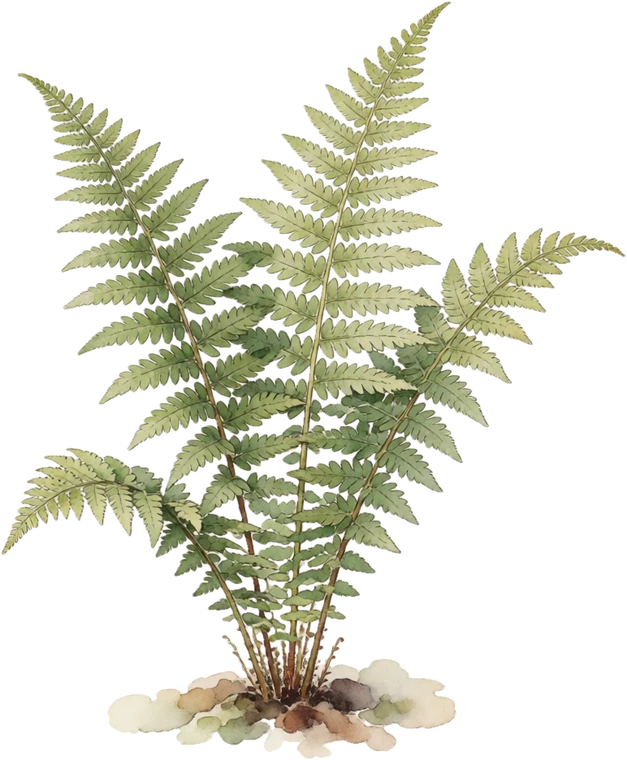
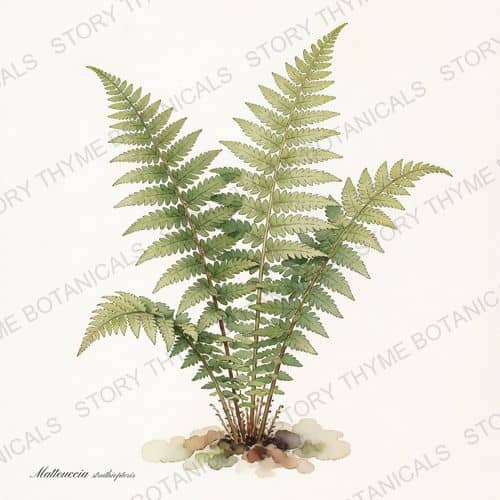
Botanical illustration of Ostrich Fern
Perennial · Matteuccia struthiopteris

The edible landscaping cheat code: shade + moisture becomes a self-expanding colony of architectural vases plus an April farmers-market vegetable ($18/lb!) for free, forever. The deep-shade wet corner finally has a payoff.

Perennial · NativeShade to Part ShadeHigh waterFast spreader once settled growthNative to North AmericaExcellent edible

Where to buy the plant — 1 nursery

Ostrich Fern — a print from the Ferns & Fronds collection

From the print shop

Growing ostrich fern? Hang it.

Our Ferns & Fronds collection carries ostrich fernMatteuccia struthiopteris, print Nº 1, “Ostrich Fern.”

16 designsfrom $21.99white or black groundmatte poster, unframed

Shop Ferns & Fronds botanical prints →

I

Overview

Will ostrich fern suit your garden, and what goes wrong.

Will it fruit where you are?

Enter your ZIP — we look up your USDA hardiness zone (2023 map) and check it against what ostrich fern actually needs.

Hardy inZones 3-7

Ostrich Fern at a glance

HardinessUSDA 3–7
Mature size3-5 ft vase fronds
PollinationN/A (spores)
Chill requirementNot yet established
Bloom seasonN/A
Harvest seasonFIDDLEHEADS: April, take max 3 per crown, from OSTRICH fern only (ID matters), cook thoroughly — never raw
Growth rateFast spreader once settled

Common ostrich fern problems

  • None
  • None

II

Growing

Light, water, soil, propagation and the season’s jobs.

How to grow ostrich fern: light, water & soil

LightShade to Part Shade
WaterHigh — streambank plant
SoilRich, moist, humusy · pH 5.5 - 6.5
FertilizerLeaf mold/compost topdress
PruningNone — Nothing; runners colonize — mow escapes or share divisions.
Spacing2-3 ft (it RUNS — give boundaries or blessing)

How to plant & propagate ostrich fern

PropagateDivision or seed

The ostrich fern growing playbook

Field-tested instructions for every job ostrich fern asks of you, compiled from university extension guidance — in the order the season brings them.

Planting out

Plant crowns in spring shade with steady moisture

Set ostrich fern crowns in partial to full shade where the soil stays constantly moist, planting in spring as growth begins. Heavy, moist soil suits it best, though it adapts to lighter rich soil; give each clump room for a 2 to 4 foot spread. In the wild this fern grows along cool woodland streambanks and river floodplains under maple and ash canopy, so it only thrives where a planting replicates that shade and constant moisture.

Watering

Keep the soil constantly moist through summer

Water whenever the soil surface dries, especially on plants getting any direct sun. Ostrich fern tolerates sun only where temperatures stay cool and moisture is ample; in warmer zones keep it shaded and wet. The fern is adapted to streambank soil that never dries out, and fronds tatter and brown early when the crown runs short of water in summer heat.

Dividing

Divide crowns in spring to make new plants

In spring, lift a crown from the edge of the colony and split it so each division carries a crown and a healthy share of roots, then replant at the original depth in moist shade. The stout rhizomes send out slender underground runners that form new crowns, so a colony divides cleanly in spring while growth is starting and the divisions can root before summer heat.

Keep the colony inside its border, lifting offshoots in spring

Give ostrich fern a shaded, moist area with a defined border and expect it to fill that area; it is best sited where you do not mind it spreading. In spring, when crowns are breaking, lift any offshoot crowns the underground runners have pushed past your border, taking a share of roots with each. Replant the divisions in moist shade elsewhere or compost them. Do not rely on it behaving in a small mixed planting. Penn State Extension states the fern is strongly competitive and can push out less vigorous shade species, so it is not ideal for small gardens with mixed plantings, and that deeply shaded moist areas with borders let it thrive and remain confined. NC State adds that the stout rhizomes send out slender underground runners forming new colonies, which can be weedy, and that crowns are divided in spring - so spring is when offshoots are lifted cleanly and can root before summer heat.

Harvesting

Fiddleheads: cut at 2 to 6 inches, never more than half a crown

Pick fiddleheads while still tightly curled, at 2 to 6 inches tall, and only from healthy crowns carrying at least four of them. Take no more than half the emerged fiddleheads from any one crown and do not come back for the later ones that season. Harvest only ostrich fern, identified by the deep U-shaped groove inside a smooth stem and the thin brown papery scales. University of Maine research followed harvested crowns for four years and found that stripping all the emerged fiddleheads each year left crowns producing very few or none, because the fronds are the crown's only means of rebuilding its reserves.

Never eat fiddleheads raw or lightly cooked; boil them at least 15 minutes. Bracken fern fiddleheads are fuzzy, lack the papery scales and have no U-shaped groove - do not harvest them.

Rinse off the scales and cook fiddleheads thoroughly

Rinse the brown papery scales off under running water, then boil the fiddleheads in lightly salted water for 15 minutes or steam them 10 to 12 minutes before they go into any other dish. Cook in small batches rather than packing the pot, and refrigerate them until you cook or preserve them, within a week. A 1994 CDC-investigated outbreak traced foodborne illness to raw and undercooked fiddleheads, and University of Maine testing showed a crowded pot does not heat the coils through.

Sauteing, stir-frying and microwaving are not adequate cooking methods for fiddleheads - always boil or steam first, then finish however you like.

III

The year

What ostrich fern asks for, month by month.

The ostrich fern year, month by month

MonthJanFebMarAprMayJunJulAugSepOctNovDec
Harvest

What each band means

  • Harvestpicking time — check ripeness every few days.

The ostrich fern year as text

  • Jan quiet month
  • Feb quiet month
  • Mar quiet month
  • Apr harvest
  • May quiet month
  • Jun quiet month
  • Jul quiet month
  • Aug quiet month
  • Sep quiet month
  • Oct quiet month
  • Nov quiet month
  • Dec quiet month

These are the species' typical months — expect them a few weeks earlier in warm zones and later in cold ones. Watch the plant, not just the calendar.

IV

Ecology & uses

What it does for the garden, and what it is grown for.

Ostrich Fern in the garden system

  • Herbaceous layer perennial
HabitatWetland
MoistureWetland / wet-tolerant
DeerBrowsed — protect young plants
OriginNative to North America

What ostrich fern is grown for

✓ Commonly eatenRaw fiddleheads = GI trouble; cooked = spring delicacy. ID before eating — other ferns' fiddleheads are not food

UseFiddleheads
UseShade architecture
UseStreambanks
Edible value4/5

Harvesting & storing ostrich fern

FIDDLEHEADS: April, take max 3 per crown, from OSTRICH fern only (ID matters), cook thoroughly — never raw.

Edibility, identification, and traditional-use notes here are general reference — not medical or veterinary advice, and not a claim that any plant treats or prevents anything. Medicinal ratings record how strongly a plant features in herbal tradition, nothing more. Never eat or dose a plant you have not positively identified. More on how to use this library.

V

Cultivars

Named varieties of ostrich fern, ruled as a catalogue.

Best ostrich fern varieties & cultivars

Straight species

VI

Sources & plant ID

Where the care distinctions come from, and how the plant is filed.

Research basis

Sources behind this profile

No extension citations are attached to ostrich fernyet. The care figures below come from the library's own catalogue rather than a traced primary source.

Plant ID

BinomialMatteuccia struthiopteris
FamilyOnocleaceae
TypePerennial
USDA symbolMAST
OriginNative to North America
Invasive riskLow

VII

Where to buy

Third-party nurseries — not Story Thyme Farms.

Third-party nurseries, not Story Thyme Farms. Prices are theirs.

Story Thyme Farms may earn a small commission from these links, at no cost to you — it never changes what we recommend.

VIII

Questions

Ostrich Fern questions, answered straight.

Is ostrich fern safe for kids and pets?

Ostrich Fern is commonly eaten and isn't considered toxic, but "commonly eaten" isn't a guarantee for any particular person or animal — allergies, quantity, and which part you eat all matter. One caveat on this one: Raw fiddleheads = GI trouble; cooked = spring delicacy. ID before eating — other ferns' fiddleheads are not food. Never eat a plant you haven't positively identified, and check with a vet before letting pets or livestock graze anything new.

When do you harvest ostrich fern?

FIDDLEHEADS: April, take max 3 per crown, from OSTRICH fern only (ID matters), cook thoroughly — never raw.

How do you propagate ostrich fern?

Division or seed.

IX

Elsewhere

Where ostrich fern sits in the library.

Where ostrich fern sits in the library

Grows in the same world