The illustrated growing guide

Quinoa

Chenopodium quinoa

Family Amaranthaceae

Grown as an annual

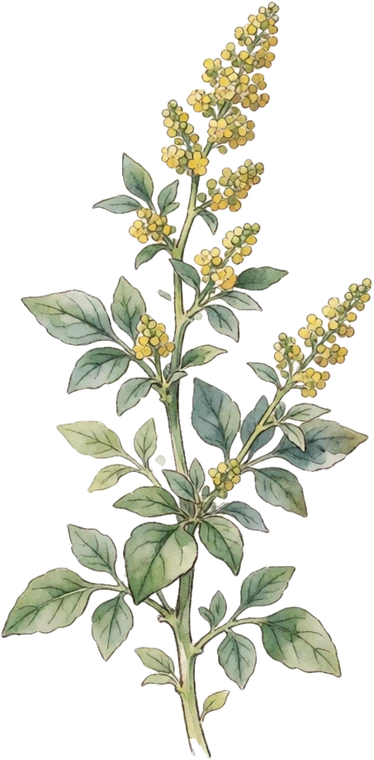
Botanical illustration of Quinoa
Annual · Chenopodium quinoa

Grow the superfood grain — and get the most beautiful cereal crop going, in magenta and gold plumes. Best where summers aren't brutally humid; the leaves are an edible bonus green. Rinse the seed well (saponins) before it hits the pot.

AnnualFull SunDrought-tolerant · low waterFast growthExcellent edibleNone winter chill

Where to buy the plant — 2 nurseries

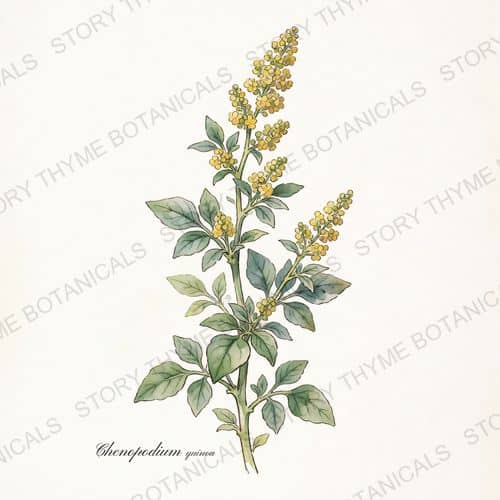
Quinoa — a print from the Historic Crops collection

From the print shop

Growing quinoa? Hang it.

Our Historic Crops collection carries quinoaChenopodium quinoa, print Nº 6, “Quinoa.”

16 designsfrom $21.99white or black groundmatte poster, unframed

Shop Historic Crops botanical prints →

I

Overview

Will quinoa suit your garden, and what goes wrong.

Will it fruit where you are?

Enter your ZIP — we look up your USDA hardiness zone (2023 map) and check it against what quinoa actually needs.

Life cycleAnnual
Winter chillNone

Quinoa at a glance

Life cycleAnnual
Mature size3-6 ft magenta/gold plumes
PollinationWind + self; finches love it
Chill requirementNone (not chill-dependent)
Bloom seasonSummer (spectacular seed heads)
Harvest seasonSeed heads when they shatter at a rub, late summer; rinse SAPONINS off the grain before cooking
Growth rateFast

Common quinoa problems

II

Growing

Light, water, soil, propagation and the season’s jobs.

How to grow quinoa: light, water & soil

LightFull Sun
WaterLow-Moderate — drought-tolerant Andean grain
SoilWell-drained, average · pH 6.0 - 8.5
FertilizerLight N early
PruningNone — Thin seedlings; stake tall types in wind.
Spacing10-14 in

How to plant & propagate quinoa

Maturity90-120 days
From seedDirect-sow early; prefers cool summers; struggles in humidity
PropagateFrom seed

When to spray quinoa

Growing season. Choose short-season types; humid-summer regions struggle.

The quinoa growing playbook

Field-tested instructions for every job quinoa asks of you, compiled from university extension guidance — in the order the season brings them.

Sowing

Sow in early spring, as soon as the seedbed can be worked

Direct sow about a half-inch deep at 1 to 2 teaspoons (5-8 g) of seed per 100 square feet, in rows 8 to 24 inches apart. Expect near 100 percent germination at soil temperatures from 36F to 68F, with seedlings up in three to five days. Sow thick and thin later, and double the rate in less than ideal conditions. Quinoa aborts flowers and goes pollen-sterile above 95F, so sowing early is what puts flowering and grain fill ahead of peak summer heat. Quinoa also grows slowly right after germination, and a late sowing hands the bed to weeds during exactly that window.

Do not place seed in direct contact with fertilizer. WSU observed inhibited germination when fertilizer was applied at seeding, the strength and proximity burning the very small seeds.

Watering

Water through flowering and grain fill, and never overhead

Flowering and grain filling, roughly 40 to 80 days after sowing, are the stages that decide the crop. If your summers are hot and dry, drip about 0.6 inches of water once a week through this window, delivered at the root zone. In WSU trials, drip irrigation at this stage raised yields nearly fivefold over unirrigated quinoa, and in a hot year the irrigated plots produced seed when the unirrigated plots produced none. Overhead irrigation wets the canopy, and downy mildew spreads on cool wet leaves at 90 percent humidity or greater.

Do not irrigate fully at every stage. That encourages tall plants that lodge and delays senescence, which makes harvest harder and drags the crop into autumn rain.

Feeding

Work in modest nitrogen at bed prep, after a soil test

Following a soil test, incorporate roughly 0.25 to 0.4 lb of nitrogen per 100 square feet into the seedbed, as aged compost, composted manure, or blood meal. For containers, 2 teaspoons of blood meal in a 12-inch pot hits the low rate and 1 tablespoon plus 1 teaspoon hits the high rate. Reported quinoa yields have almost tripled at 0.25 lb N per 100 square feet compared to no fertilizer, but the curve flattens fast. Quinoa is a luxury consumer of nitrogen: extra N buys leaf and stem rather than grain, and brings late maturity and lodging with it.

High nitrogen favors aphid reproduction, so prefer a less soluble organic source. Container plants lack the soil buffer against fertilizer toxicity, which shows as poor germination, stunting, and low yield.

Thinning

Thin to 3-5 inches about two weeks after emergence

Two weeks after emergence, thin the stand to 3 to 5 inches between plants. Thinning wider, up to 12 inches, gives larger branching plants carrying several seed-bearing panicles. Choose the wider end in humid regions, the closer end where the season is short. Sowing thick and thinning later is what guarantees an even stand, since 100 percent germination and emergence is unlikely. Spacing then does real work: wider inter- and intra-row spacing increases airflow, which is the main cultural control for downy mildew and speeds dry-down; close planting reduces branching and brings maturity earlier.

Thin carefully by eye. Young lambsquarters is nearly indistinguishable from quinoa seedlings, so pull anything that is not in the planting row rather than trusting leaf shape.

What to watch for

Scout panicles at flowering for lygus bugs and stem borers

Inspect panicles closely as they develop, and again at the seed milk stage when the seeds are formed but still soft and milky inside. Look for lygus bugs, which are pencil-eraser sized, pale green to yellowish brown, with a large light triangle on the back, and for pin holes along stalks left by boring larvae. On a small plot, vacuuming individual panicles with a cordless hand vacuum is effective. Do not confuse lygus with the beneficial bigeyed bug. Lygus pierce flowers and developing seed and destroy terminal meristems, causing seed abortion and bushy plants. WSU found lygus populations peak in the three-week period following bloom and preceding seed set. Boring larvae gut the stem and can take the whole crop when they hit early growth.

WSU reports no home-garden pesticide carries a label allowing use on quinoa for these pests. Tolerances for chlorantraniliprole, spinosad, and spinetoram have been established and registered only in some states, so confirm your own state registration before considering any spray, and never spray a panicle that is in flower.

Spraying

Aphids: neem oil on the leaf undersides, before flowering

If aphids build up on foliage, spray neem oil onto both the tops and the undersides of leaves, since that is where they feed. First remove nearby sow thistle and mustard weeds that build aphid populations, and check any purchased transplants for aphids before planting them. Aphids suck sap until leaves curl, distort, and go necrotic, and their honeydew coats stems and blocks light while inviting fungal growth. They also vector plant viruses, to which quinoa is notoriously susceptible.

Few home-garden pesticide products are allowed on grains. Use only a neem product whose label lists grain crops, and follow that label. Do not apply while panicles are in flower, and limit the number of sprays, as they disrupt the lady beetles, green lacewing larvae, syrphid fly larvae, and parasitoid wasps that hold aphids down for free.

Harvesting

Harvest at hard dough, and beat the first autumn rain

Watch for the stalks and leaves to lose their green and turn autumnal orange, yellow, red and pink, and for the leaves to drop. Shake a few seeds into your hand: quinoa is ready when the seed is barely dented by a fingernail and threshes free of the panicle easily. Branched plants ripen unevenly, so take the leading panicle that dries down first and the rest days or weeks later. Mature quinoa seed germinates within 24 hours of exposure to moisture. Rain on a standing ripe crop sprouts the seed right on the panicle, and complete crop loss is possible. Prolonged rain or wind also lodges plants once the heads are full of seed.

If rain is coming, cut the plants and let them dry down in a sheltered location rather than waiting on a perfect field dry-down.

Thresh, winnow, then wash the saponins off the grain

Thresh by rubbing panicles between your hands or striking them against a hard surface over a clean tarp. Winnow with a fan, letting seed fall onto cloth while the air carries the lighter chaff away. Then remove saponins by repeatedly soaking the seed, agitating it, and dumping the water until soapy bubbles stop forming, or by rinsing under fast hot running water until it runs clear. Most quinoa varieties coat their seed in saponin, a bitter soap-like compound that foams in water and makes the grain unpalatable straight off the plant. Saponin-free sweet varieties exist but are hard to buy as commercial seed.

Dry seed to about 13 percent moisture before storing, or it loses viability and molds. Spread it in full sun for several days but bring it in each evening in climates with evening dew or rain. Taste a few seeds to confirm the bitterness is gone before cooking a batch.

III

The year

What quinoa asks for, month by month.

The quinoa year, month by month

MonthJanFebMarAprMayJunJulAugSepOctNovDec
Bloom
Harvest

What each band means

  • Bloomflowers open — pollinators working, frost on blossoms is the danger.
  • Harvestpicking time — check ripeness every few days.

The quinoa year as text

  • Jan quiet month
  • Feb quiet month
  • Mar quiet month
  • Apr quiet month
  • May quiet month
  • Jun bloom
  • Jul bloom
  • Aug bloom, harvest
  • Sep quiet month
  • Oct quiet month
  • Nov quiet month
  • Dec quiet month

These are the species' typical months — expect them a few weeks earlier in warm zones and later in cold ones. Watch the plant, not just the calendar.

IV

Ecology & uses

What it does for the garden, and what it is grown for.

Quinoa in the garden system

  • Herbaceous layer annual
AttractsBirds
MoistureUpland / dry
DeerBrowsed — protect young plants
OriginIntroduced

What quinoa is grown for

✓ Commonly eatenLeaves edible (like its cousin lamb's quarters); saponin coating on raw seed is bitter — rinse

UseHomegrown grain
UseOrnamental edible
UseGreens
Edible value4/5

Harvesting & storing quinoa

Seed heads when they shatter at a rub, late summer; rinse SAPONINS off the grain before cooking. About 90-120 days from planting.

Edibility, identification, and traditional-use notes here are general reference — not medical or veterinary advice, and not a claim that any plant treats or prevents anything. Medicinal ratings record how strongly a plant features in herbal tradition, nothing more. Never eat or dose a plant you have not positively identified. More on how to use this library.

V

Cultivars

Named varieties of quinoa, ruled as a catalogue.

Best quinoa varieties & cultivars

8 on file

Named varieties of quinoa differ in days to maturity, disease resistance, flavor, and habit — pick one that fits your season and space.

Cherry Vanilla

RipensLate summer to early fallZones2-11DiseaseGood downy mildew resistance per the breederSizeShort, unbranched when close planted

Excellent flavor; whitest seed of any type the breeder has trialed — Farm original from Wild Garden Seed in Philomath, Oregon, and an OSSI-pledged variety. Carried in both WSU's eastern and western Washington variety trials and among the varieties that produced seed in USU's Logan, Utah trials. Pink and cream heads. Young leaves eat like baby spinach.

Where to buy ‘Cherry Vanilla

Story Thyme Farms may earn a small commission from these links, at no cost to you — it never changes what we recommend.

Brightest Brilliant Rainbow · Brightest Brilliant

RipensLate summer to early fallZones2-11SizeLarge branching plants up to 7 feet tall

Farm original from Wild Garden Seed and an OSSI-pledged variety, listed by WSU Extension among commercially available quinoa for home gardens. Panicles run hot pink to royal burgundy, red, orange, yellow, white and green. Being large and branching, it carries multiple panicles that mature at different dates, so plan to harvest in stages.

Where to buy ‘Brightest Brilliant Rainbowverified

Story Thyme Farms may earn a small commission from these links, at no cost to you — it never changes what we recommend.

Titicaca

RipensLate summerZones2-11

Bred and selected at the University of Copenhagen in Denmark by Sven-Erik Jacobsen, from Chilean and Peruvian material, for early maturity under North European conditions. Day-length neutral and short-cycle, which is why it matures early outside the Andes. Trialed by WSU in both eastern and western Washington, and among the varieties that produced seed in USU's Logan, Utah trials.

Where to buy ‘Titicaca

Story Thyme Farms may earn a small commission from these links, at no cost to you — it never changes what we recommend.

Colorado 407 Dave · CO 407 Dave;Dave 407;Dave's 407

RipensLate summer to early fallZones2-11

One of the nine commercially available varieties WSU trialed in eastern and western Washington, and among the varieties that produced seed in USU's Logan, Utah trials. In WSU's Albion trial in hot, dry eastern Washington it was one of the two best yielders in both trial years, and the top yielder in the hot 2015 season when most varieties nearly failed.

Where to buy ‘Colorado 407 Dave

Story Thyme Farms may earn a small commission from these links, at no cost to you — it never changes what we recommend.

Kaslaea · Kaslala;Kaslala Multicolor

RipensLate summer to early fallZones2-11

One of the nine commercially available varieties WSU trialed in eastern and western Washington, and among the varieties that produced seed in USU's Logan, Utah trials. It posted the highest single yield of any variety in WSU's 2014 Albion trial in hot, dry eastern Washington.

Where to buy ‘Kaslaea

Story Thyme Farms may earn a small commission from these links, at no cost to you — it never changes what we recommend.

Linares

RipensLate summer to fallZones2-11

One of the nine commercially available varieties WSU trialed in eastern and western Washington, where it was among the better yielders at the hot, dry Albion site in both trial years (0.90 and 0.23 lb per 100 square feet, third of nine each year). Also carried in WSU's later Washington variety trials and listed by WSU Extension among commercially available quinoa for home gardens.

Where to buy ‘Linares

Story Thyme Farms may earn a small commission from these links, at no cost to you — it never changes what we recommend.

Cahuil

RipensLate summer to early fallZones2-11

One of the nine commercially available varieties WSU trialed in eastern and western Washington, and listed by USU among the varieties that successfully produced seed in its Logan, Utah trials. Yielded poorly at WSU's hot, dry Albion site, so treat it as a cool-summer choice rather than a heat performer.

Where to buy ‘Cahuil

Story Thyme Farms may earn a small commission from these links, at no cost to you — it never changes what we recommend.

Black

RipensLate summer to early fallZones2-11

Black-seeded variety, one of the nine commercially available varieties WSU trialed in eastern and western Washington and listed by USU among the varieties that successfully produced seed in its Logan, Utah trials. Seed color in quinoa ranges white through yellow, brown, red, gray and black; the darker seed is the reason to grow this one.

Where to buy ‘Black

Story Thyme Farms may earn a small commission from these links, at no cost to you — it never changes what we recommend.

VI

Sources & plant ID

Where the care distinctions come from, and how the plant is filed.

Research basis

Sources behind this profile

No extension citations are attached to quinoayet. The care figures below come from the library's own catalogue rather than a traced primary source.

Plant ID

BinomialChenopodium quinoa
FamilyAmaranthaceae
TypeAnnual
USDA symbolCHQU
OriginIntroduced
Invasive riskLow

VII

Where to buy

Third-party nurseries — not Story Thyme Farms.

Third-party nurseries, not Story Thyme Farms. Prices are theirs.

Story Thyme Farms may earn a small commission from these links, at no cost to you — it never changes what we recommend.

VIII

Questions

Quinoa questions, answered straight.

Is quinoa safe for kids and pets?

Quinoa is commonly eaten and isn't considered toxic, but "commonly eaten" isn't a guarantee for any particular person or animal — allergies, quantity, and which part you eat all matter. One caveat on this one: Leaves edible (like its cousin lamb's quarters); saponin coating on raw seed is bitter — rinse. Never eat a plant you haven't positively identified, and check with a vet before letting pets or livestock graze anything new.

When do you harvest quinoa?

Seed heads when they shatter at a rub, late summer; rinse SAPONINS off the grain before cooking. From planting, expect about 90-120 days to maturity.

How do you propagate quinoa?

From seed.

IX

Elsewhere

Where quinoa sits in the library.

Where quinoa sits in the library

Grows in the same world