The illustrated growing guide

Schisandra

Schisandra chinensis

Family Schisandraceae

Est. zones 4-8

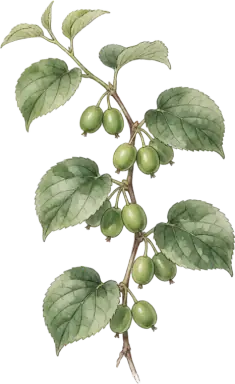
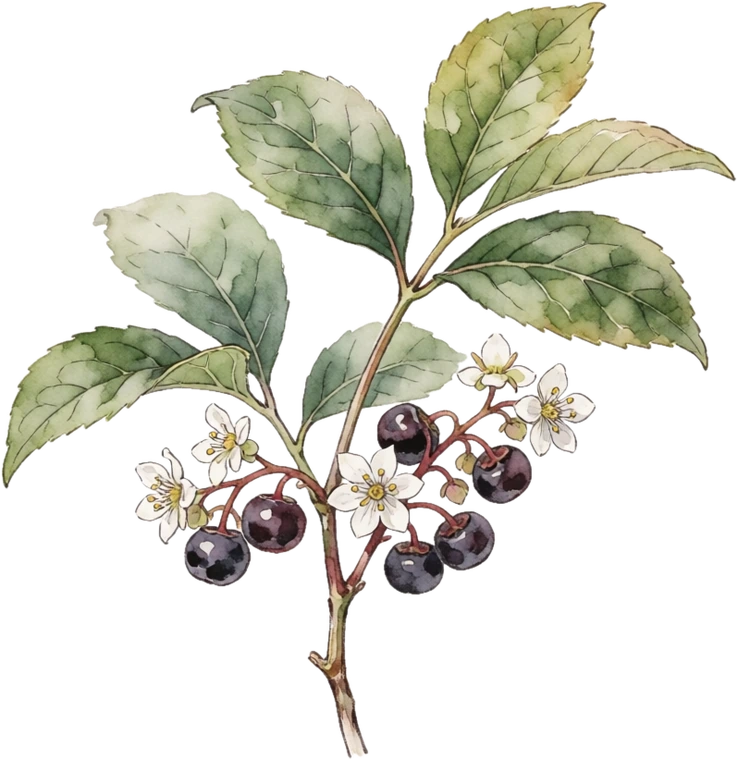
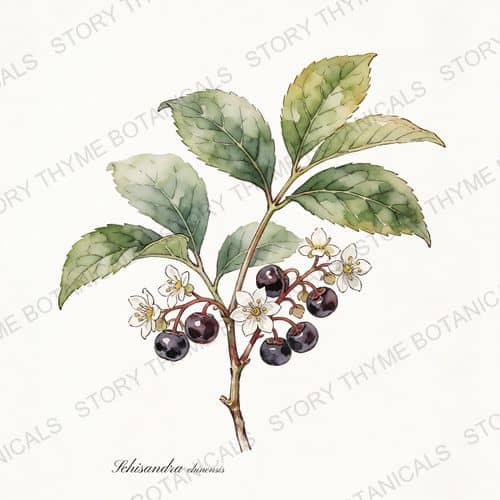
Botanical illustration of Schisandra
Vine · Schisandra chinensis

A shade-tolerant medicinal berry vine for the food forest edge. The tart red berries are dried for five-flavor tea; give it a cool root run, steady moisture, and a trellis.

VinePart Shade to ShadeModerate waterModerate growthExcellent edibleNeeds a pollination partner

Where to buy the plant — 1 nursery

I

Overview

Will schisandra suit your garden, and what goes wrong.

Will it fruit where you are?

Enter your ZIP — we look up your USDA hardiness zone (2023 map) and check it against what schisandra actually needs.

Hardy inZones 4-8
PollinationPartner needed

Schisandra at a glance

HardinessUSDA 4–8
Mature size10-25 ft vine
PollinationUsually dioecious - plant male and female unless cultivar is self-fertile
Chill requirementNot yet established
Bloom seasonLate Spring
Harvest seasonRed berries late summer-fall; dry for five-flavor tea
Growth rateModerate

Common schisandra problems

II

Growing

Light, water, soil, propagation and the season’s jobs.

How to grow schisandra: light, water & soil

LightPart Shade to Shade
WaterModerate-High - evenly moist
SoilMoist, humus-rich, well-drained · pH 5.5 - 7.0
FertilizerCompost and leaf mold in spring
PruningLate Winter — Train on a shaded trellis; thin weak/crowded vines after establishment.
Spacing6-10 ft on trellis

When to spray schisandra

Growing season. Improve airflow; avoid drought stress.

The schisandra growing playbook

Field-tested instructions for every job schisandra asks of you, compiled from university extension guidance — in the order the season brings them.

Planting out

Plant a male alongside your females, or buy a self-fertile clone

Set at least one male vine among your females, close enough that insects can carry pollen between them. If you are buying unsexed seedlings, plant several together to raise the odds of getting both sexes, or buy a clonally propagated self-fertile cultivar such as Eastern Prince instead. Schisandra chinensis is dioecious - male and female flowers are borne on separate plants - so a female vine never sets berries unless a male is flowering nearby. This is the most common reason a healthy, well-grown schisandra never fruits.

Watering

Keep the root zone evenly moist through summer

Water deeply enough through the growing season that the soil never dries out, and watch it hardest where the vine sits in full sun rather than dappled shade. This is a woodland vine that wants fertile, moist but well-drained soil. It tolerates full sun only where the soil stays consistently moist, and drought stress checks growth on a vine that is already slow to establish.

Pruning

Prune the vine in early spring before growth starts

In early spring, while the vine is still dormant and before the buds begin to move, shorten the sideshoots to within three or four buds of the permanent framework of branches, and cut out any overcrowded, diseased or damaged shoots. Keep the framework itself intact. Judge the timing by the vine rather than the calendar: the window closes once buds start to swell and open, which arrives anywhere from late winter in the mild end of the range to well into spring in the coldest zones. The RHS places Schisandra chinensis in pruning group 12, the moderately vigorous climbers, and calls for pruning it in early spring. Shortening the sideshoots induces more compact growth and encourages flower buds to form on those shortened shoots, while thinning crowded growth opens the vine to light and air. Fruit is carried on old wood, so keeping the permanent framework and its basal buds is what preserves the crop.

Protection

Stake and tube young vines against deer

Stake each newly planted vine with a 3-foot bamboo cane and slip a grow tube over it, leaving the tube on until the vine has climbed to its trellis wire. Give it a trellis built on the pattern of a grape vineyard. Schisandra is a slow-growing woody vine, so a leader lost to deer browsing costs most of a season's progress; the tube also keeps herbicide spray off the tender stems at the bottom of the row.

Harvesting

Harvest schisandra berriesAug – Oct

Pick fully red berry clusters and dry for five-flavor tea. Fully colored fruit has the strongest tea and storage quality.

Medicinal berry; check interactions.

Pick over the vine several times as clusters color

Go over the vine more than once as the fruit colors, taking only the fully red clusters on each pass. Dry the berries in the sun, or steam them briefly and then sun-dry them, which is the traditional cure for wu wei zi. Berries ripen unevenly within and between clusters, so a single strip-pick either wastes green fruit or leaves ripe fruit to drop. Expect the crop to build gradually from about the third year after planting rather than arriving all at once.

Schisandra berry is used medicinally and has reported drug interactions - treat it as a food-herb rather than a remedy, and check interactions before using it in quantity.

III

The year

What schisandra asks for, month by month.

The schisandra year, month by month

MonthJanFebMarAprMayJunJulAugSepOctNovDec
Bloom
Prune
Harvest

What each band means

  • Bloomflowers open — pollinators working, frost on blossoms is the danger.
  • Pruneshape it now — cuts heal cleanly and structure is visible.
  • Harvestpicking time — check ripeness every few days.

The schisandra year as text

  • Jan quiet month
  • Feb pruning
  • Mar pruning
  • Apr quiet month
  • May bloom
  • Jun quiet month
  • Jul quiet month
  • Aug harvest
  • Sep harvest
  • Oct harvest
  • Nov harvest
  • Dec quiet month

These are the species' typical months — expect them a few weeks earlier in warm zones and later in cold ones. Watch the plant, not just the calendar.

IV

Ecology & uses

What it does for the garden, and what it is grown for.

Schisandra in the garden system

  • Vine layer vine
HabitatWoodland
MoistureFacultative / average
DeerBrowsed — protect young plants
OriginIntroduced

What schisandra is grown for

! Some parts toxic — see notesCaution: medicinal berry tea; possible drug/pregnancy interactions - use as food-herb, not a cure

UseBerry tea
UseShade vine
Traditional useMedicinal
UseTrellis crop
Edible value4/5
Traditional use rating5/5 in herbal tradition

Harvesting & storing schisandra

Red berries late summer-fall; dry for five-flavor tea.

Edibility, identification, and traditional-use notes here are general reference — not medical or veterinary advice, and not a claim that any plant treats or prevents anything. Medicinal ratings record how strongly a plant features in herbal tradition, nothing more. Never eat or dose a plant you have not positively identified. More on how to use this library.

V

Cultivars

Named varieties of schisandra, ruled as a catalogue.

Best schisandra varieties & cultivars

2 on file

Named varieties of schisandra differ in winter-chill needs, ripening time, hardiness, and whether they set fruit on their own — pick one that fits your climate.

Eastern Prince · Eastern Prince

Self-fertile
RipensEarly fallZones4-8DiseaseReported pest-resistant in trial notesSizeDeciduous woody vine to 15+ ft on a trellis

Tart, distinctive five-flavor berry, high in vitamin C — A self-fertile selection bred in Russia at the Vladivostok Station of the Vavilov Institute, described in UW-Madison trial notes as self-fertile, very productive, vigorous and pest-resistant. Buy clonally propagated stock: seedlings are widely sold under the same name but revert to single-sexed dioecious plants that will not fruit alone, and One Green World explicitly ships its Eastern Prince as unsexed seedlings that 'will require both male and female plants for cross pollination'. One Green World reports hardiness to -35F; the UW-Madison trial gives the species as zone 4 / -30F. Not to be confused with Sadova No. 1, a separate Ukrainian cultivar.

Where to buy ‘Eastern Prince

Story Thyme Farms may earn a small commission from these links, at no cost to you — it never changes what we recommend.

Sadova No. 1 · Sadova; Sadova No 1

Self-fertile
Zones4-8SizeHardy twining vine to about 30 ft

Fruit eaten fresh, dried or processed; leaves also made into tea — A Ukrainian cultivar selected by Ivan Shaitan at the M. M. Grishko National Botanical Garden in Kiev from seed of wild plants from Primorsk, entered on the State Register of Plants in Ukraine in 1998, and reported more productive and more resistant to harsh climate events than the wild species. Self-fertility is reported by the Agroforestry Research Trust and other European nurseries ('This Ukrainian variety is self fertile and bred for heavy fruit crops') but is not confirmed by any extension or peer-reviewed source, so do not plant a lone vine on that basis without a male nearby. Zones here are the species range rather than a cultivar-specific figure, as no source states its hardiness directly. Sold mainly in the UK, Europe and Canada, so it is hard to source in the US. Young plants need slug protection. A distinct plant from the Russian-bred Eastern Prince.

Where to buy ‘Sadova No. 1

Story Thyme Farms may earn a small commission from these links, at no cost to you — it never changes what we recommend.

VI

Sources & plant ID

Where the care distinctions come from, and how the plant is filed.

Research basis

Sources behind this profile

No extension citations are attached to schisandrayet. The care figures below come from the library's own catalogue rather than a traced primary source.

Plant ID

BinomialSchisandra chinensis
Other namesSchisandra chinensis (wu wei zi, five-flavor berry)
FamilySchisandraceae
TypeVine · Perennial
OriginIntroduced
Invasive riskLow

VII

Where to buy

Third-party nurseries — not Story Thyme Farms.

Third-party nurseries, not Story Thyme Farms. Prices are theirs.

Story Thyme Farms may earn a small commission from these links, at no cost to you — it never changes what we recommend.

Schisandra needs a pollination partner — plant two genetically distinct plants (two different cultivars, or a cultivar plus a seedling).

VIII

Questions

Schisandra questions, answered straight.

Why isn't my schisandra fruiting?

Most often: it has no genetically distinct partner nearby. Schisandra can't pollinate itself — usually dioecious - plant male and female unless cultivar is self-fertile. Plant a second, unrelated one nearby; two different cultivars, or a cultivar plus a seedling, is the classic pairing.

Is schisandra safe for kids and pets?

With care. Caution: medicinal berry tea; possible drug/pregnancy interactions - use as food-herb, not a cure Site it accordingly if children or pets roam the garden. This is general reference, not medical or veterinary advice — call a vet or poison control if something has actually been eaten.

When do you harvest schisandra?

Red berries late summer-fall; dry for five-flavor tea.

IX

Elsewhere

Where schisandra sits in the library.

Where schisandra sits in the library

Grows in the same world