The illustrated growing guide

Cardoon

Cynara cardunculus

Family Asteraceae

Est. zones 7-10

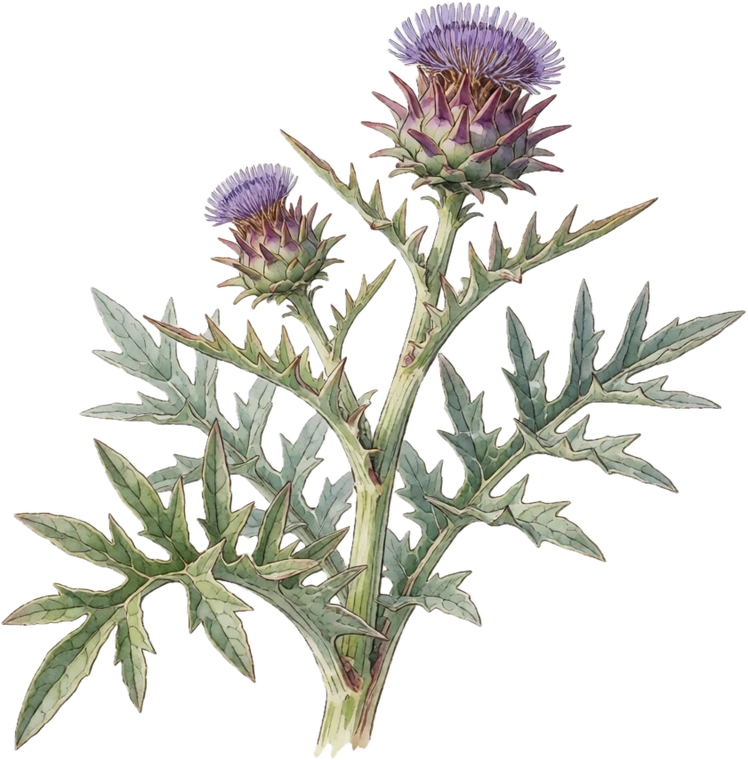
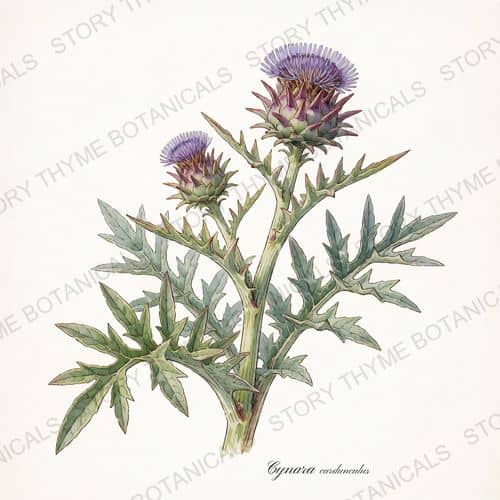
Botanical illustration of Cardoon
Perennial · Cynara cardunculus

A dramatic silver-leaved giant grown two ways: as a gourmet vegetable (blanched stalks that taste of artichoke and celery, a holiday delicacy in Italy and Spain) or purely as one of the boldest ornamental foliage plants going, topped by pollinator-mobbed purple thistles. Blanch the stalks before harvest.

PerennialFull SunModerate waterFast growthExcellent edibleAttracts bees

Where to buy the plant — 1 nursery

Cardoon Head — a print from the Seed Heads & Pods collection

From the print shop

Growing cardoon? Hang it.

Our Seed Heads & Pods collection carries cardoonCynara cardunculus, print Nº 16, “Cardoon Head.”

16 designsfrom $21.99white or black groundmatte poster, unframed

Shop Seed Heads & Pods botanical prints →

I

Overview

Will cardoon suit your garden, and what goes wrong.

Will it fruit where you are?

Enter your ZIP — we look up your USDA hardiness zone (2023 map) and check it against what cardoon actually needs.

Life cyclePerennial zones 7–10, annual elsewhere

Cardoon at a glance

Life cyclePerennial zones 7–10, annual elsewhere
Mature size4-6 ft silver architecture
PollinationIf it blooms: giant electric-purple thistles the bees swim in
Chill requirementNot yet established
Bloom seasonSummer (spectacular if allowed)
Harvest seasonBlanched leaf STALKS in fall (the edible part — celery-like, artichoke-flavored); eaten cooked
Growth rateFast

Common cardoon problems

II

Growing

Light, water, soil, propagation and the season’s jobs.

How to grow cardoon: light, water & soil

LightFull Sun
WaterModerate
SoilRich, deep, well-drained · pH 6.5 - 7.5
FertilizerHeavy feeder
PruningCut back after harvest — The artichoke's cousin, grown for its blanched stalks rather than buds. Wrap the stalks for 2-3 weeks before harvest to blanch them tender. Even if you never eat it, the huge silver architectural foliage and purple thistle blooms are a knockout ornamental.
Spacing3-4 ft

How to plant & propagate cardoon

Maturity120+ days
From seedStart indoors 8 wks early; blanch stalks before harvest
PropagateFrom seed

The cardoon growing playbook

Field-tested instructions for every job cardoon asks of you, compiled from university extension guidance — in the order the season brings them.

Sowing

Start cardoon indoors 6 to 8 weeks before last frost

Sow cardoon seed indoors 6 to 8 weeks before your last frost date, 2 to 3 seeds about 1/4 inch deep per cell in plug trays or individual pots, and germinate warm at 70 to 80 F. Keep the mix moist until emergence, then thin to the strongest seedling. Direct seeding in the field works too, but transplants give the best crop because cardoon needs the full season to size up. Note that the 1 inch covering depth in OSU's sheet refers to backfilling the field trench around seed or transplants, not to how deep to sow in a plug tray. Cardoon needs roughly 120 to 150 days from planting to reach harvest, and it is frost sensitive at both ends of the season, so the head start indoors is what buys a cold-climate grower a crop at all.

Planting out

Set cardoon out after frost danger, and give it far more room than you think

Transplant once the danger of frost is past. Space plants 18 to 24 inches apart in rows 36 to 48 inches apart, setting them into an 8 to 10 inch deep trench and filling soil in around the stems as the plants grow. Pick a full-sun site with deep, well-drained soil, sheltered from strong wind. Cardoon is frost sensitive and deep rooted, and a single plant can reach 3 to 4 feet tall and 4 to 5 feet wide by season's end, so crowding it costs you stalk size. The trench lets you hill soil up the stems, which starts blanching the lower petioles for free.

Mature leaves carry heavy yellow spines along the petioles on most varieties. Wear gloves and long sleeves when handling anything but a named spineless type.

Watering

Keep water uniform or the stalks turn pithy

Give cardoon a uniform supply of moisture across the whole growing period - about 10 to 12 inches of water total, evenly distributed. Soil type does not change the total needed, but it does set the frequency: lighter soils need more frequent applications with less water each time. Leaves and stalks become pithy when the plant is water stressed, and pithy mid-ribs are the whole crop lost. This is a texture defect you cannot fix later by watering more.

Feeding

Feed the nitrogen early, before flower buds form

Work compost or aged manure plus phosphorus, potash, and sulfur into the bed before planting. Apply nitrogen all at once in early spring before buds begin to form - Oregon State's field rate is 60 to 100 lb N per acre, which works out to roughly 1.4 to 2.3 lb of actual nitrogen per 1,000 square feet of garden. Follow a soil test where you have one. Cardoon is grown for tender leaf mid-ribs, and steady, uninterrupted growth is what keeps them tender. Nitrogen delivered early drives the leafy rosette during the window when stalk quality is actually being built.

What to watch for

Scout weekly for aphids on the lower canopy

Check plants weekly through the warm months, looking at lower-canopy leaves for the pale, almost translucent artichoke aphid and for a wet, shiny honeydew film. In UC's artichoke guidelines an average of 3 aphids per leaflet is the point at which treatment is justified. Below that, let lady beetles, syrphid flies, lacewings and parasitic wasps work. In the eastern US also watch for Japanese beetle chewing the foliage. Aphid honeydew grows sooty mold that blocks photosynthesis, and the aphids themselves curl and yellow the leaves you are trying to harvest as stalks. Scouting catches this while predators can still hold the line.

Do not spray an insecticide on cardoon that is flowering - bees and other pollinators work the flower heads heavily. The insecticide rates in UC's guidelines are for artichoke, a separate crop on the label; cardoon is not automatically covered, so confirm cardoon appears on the product label before any application.

Protection

Blanch the stalks for 4 to 5 weeks before you cut

As the leaves near full size, gather them and tie them together near the top, then wrap the plant in burlap, heavy paper, cloth or cardboard to shut out all light. Allow 4 to 5 weeks of blanching, timed so it lands in cool weather, before harvesting. Light drives the bitter compounds in cardoon mid-ribs. Excluding it for several weeks is what converts a bitter, fibrous thistle stalk into the pale, tender, artichoke-flavored heart that is the actual crop.

Wrap loosely enough to shed rain and let air move. Cardoon is prone to gray mold and root rot, and a soaked, airless wrap invites both.

Overwinter the crown, or grow it as an annual

Cardoon is reliably hardy only in zones 7a to 10b; colder than that, treat it as an annual or try overwintering. To try: cut the plant back to about a foot tall, mound soil or compost over it, cap that with a bushel basket or rose cone, and drape the whole thing with a tarp to shed rain. Pull the covering in spring after snowmelt and see whether it took. The crown is what carries the plant over, and it rots far more readily from winter wet than it dies from cold - hence the tarp. A plant that survives comes back as several denser rosettes and will usually bloom that year.

In mild-winter regions cardoon self-seeds hard and is a recognized weed in parts of California and a naturalized invasive in several mild climates. Cut the flower heads off before seed sets if you are not saving seed, and dig the full taproot when removing a plant or it will resprout.

Harvesting

Cut just below the crown once blanching is done

Harvest about 120 to 150 days after planting, once the 4 to 5 week blanching period is complete. Cut just below the crown and trim off the loose outer leaves, leaving a trimmed blanched heart roughly 18 to 24 inches long and 2 to 3 inches across. Eat cardoon cooked, never raw. The blanched heart is the only tender part; the outer leaves and green upper stalk stay bitter and fibrous no matter how long you cook them. Cutting below the crown holds the stalks together as one intact heart.

Hold hearts at 32 F and 95 to 100 percent relative humidity to stop them wilting; good clean hearts keep 2 to 3 weeks. Cardoon grown through hot conditions can be inedibly bitter from the strong compounds heat forms - taste before you commit a large harvest to the kitchen.

III

The year

What cardoon asks for, month by month.

The cardoon year, month by month

MonthJanFebMarAprMayJunJulAugSepOctNovDec
Bloom
Prune
Harvest

What each band means

  • Bloomflowers open — pollinators working, frost on blossoms is the danger.
  • Pruneshape it now — cuts heal cleanly and structure is visible.
  • Harvestpicking time — check ripeness every few days.

The cardoon year as text

  • Jan quiet month
  • Feb quiet month
  • Mar quiet month
  • Apr quiet month
  • May quiet month
  • Jun bloom
  • Jul bloom, pruning
  • Aug bloom, pruning
  • Sep harvest
  • Oct harvest
  • Nov harvest
  • Dec quiet month

These are the species' typical months — expect them a few weeks earlier in warm zones and later in cold ones. Watch the plant, not just the calendar.

IV

Ecology & uses

What it does for the garden, and what it is grown for.

Cardoon in the garden system

  • Herbaceous layer perennial
  • Nectary/insectary
AttractsBees
MoistureFacultative / average
DeerBrowsed — protect young plants
OriginIntroduced

What cardoon is grown for

✓ Commonly eatencooked stalks

UseGourmet stalks
UseArchitectural foliage
UseBee thistles
Edible value4/5

Harvesting & storing cardoon

Blanched leaf STALKS in fall (the edible part — celery-like, artichoke-flavored); eaten cooked. About 120+ days from planting.

Edibility, identification, and traditional-use notes here are general reference — not medical or veterinary advice, and not a claim that any plant treats or prevents anything. Medicinal ratings record how strongly a plant features in herbal tradition, nothing more. Never eat or dose a plant you have not positively identified. More on how to use this library.

V

Cultivars

Named varieties of cardoon, ruled as a catalogue.

Best cardoon varieties & cultivars

5 on file

Named varieties of cardoon differ in winter-chill needs, ripening time, hardiness, and whether they set fruit on their own — pick one that fits your climate.

Gobbo di Nizza · Gobbo di Nizza Monferrato;Hunchback of Nice

Zones7-10

Thick stalks with few spines. The Italian name means hunchback of Nice, after the traditional practice of bending the plants over and burying them to blanch. Widely offered by US and Italian seed houses.

Where to buy ‘Gobbo di Nizza

Story Thyme Farms may earn a small commission from these links, at no cost to you — it never changes what we recommend.

Bianco Avorio · Cardo Bianco Avorio

Zones7-10

Thin-stalked Italian variety, 110 days from transplant. Commercially available from heirloom seed sellers.

Where to buy ‘Bianco Avorio

Story Thyme Farms may earn a small commission from these links, at no cost to you — it never changes what we recommend.

Porto Spineless

Zones7-10Size3 to 4 feet tall, compact habit

Spineless with a compact habit, growing 3 to 4 feet tall. Matures 100 days from transplant, the earliest of the commonly listed varieties.

Where to buy ‘Porto Spineless

Story Thyme Farms may earn a small commission from these links, at no cost to you — it never changes what we recommend.

Rouge d'Alger

Zones7-10

Thornless, with pinkish stalk bases and pale green leaves. More common in European seed catalogs than American ones.

Where to buy ‘Rouge d'Alger

Story Thyme Farms may earn a small commission from these links, at no cost to you — it never changes what we recommend.

Spineless White

Zones7-10

Good eating quality — An old variety introduced before 1750, with wide thornless stalks and good eating quality.

Where to buy ‘Spineless White

Story Thyme Farms may earn a small commission from these links, at no cost to you — it never changes what we recommend.

VI

Sources & plant ID

Where the care distinctions come from, and how the plant is filed.

Research basis

Sources behind this profile

No extension citations are attached to cardoonyet. The care figures below come from the library's own catalogue rather than a traced primary source.

Plant ID

BinomialCynara cardunculus
FamilyAsteraceae
TypePerennial · Tender Perennial
USDA symbolCYCA
OriginIntroduced
Invasive riskLow

VII

Where to buy

Third-party nurseries — not Story Thyme Farms.

Third-party nurseries, not Story Thyme Farms. Prices are theirs.

Story Thyme Farms may earn a small commission from these links, at no cost to you — it never changes what we recommend.

VIII

Questions

Cardoon questions, answered straight.

Is cardoon safe for kids and pets?

Cardoon is commonly eaten and isn't considered toxic, but "commonly eaten" isn't a guarantee for any particular person or animal — allergies, quantity, and which part you eat all matter. One caveat on this one: cooked stalks. Never eat a plant you haven't positively identified, and check with a vet before letting pets or livestock graze anything new.

When do you harvest cardoon?

Blanched leaf STALKS in fall (the edible part — celery-like, artichoke-flavored); eaten cooked. From planting, expect about 120+ days to maturity.

How do you propagate cardoon?

From seed.

IX

Elsewhere

Where cardoon sits in the library.

Where cardoon sits in the library

Grows in the same world