The illustrated growing guide

Eastern White Pine

Pinus strobus

Family Pinaceae

Est. zones 3-8

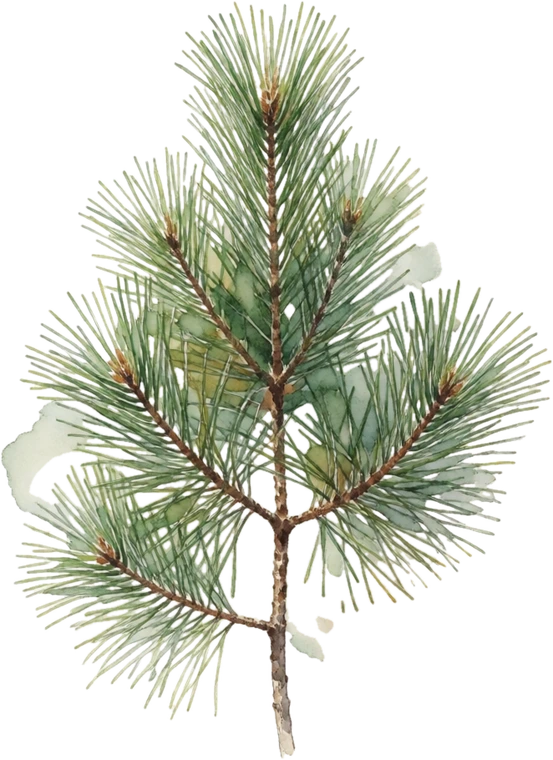
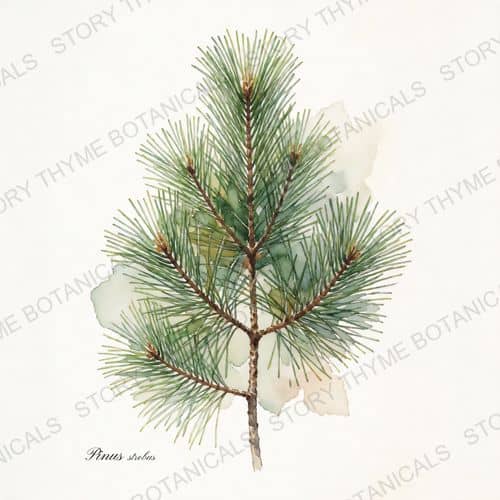
Botanical illustration of Eastern White Pine
Tree · Pinus strobus

The soft one — five-needle plumes you can run a hand through, unlike every spiky spruce. Grows fast into whispering 70-footers; colonial navies fought over these trunks for masts. Note the currant/gooseberry conflict for food-forest planners.

Tree · NativeFull Sun to Light ShadeModerate waterFAST growthNative to North America

Where to buy the plant — 2 nurseries

White Pine — a print from the Evergreens collection

From the print shop

Growing eastern white pine? Hang it.

Our Evergreens collection carries eastern white pinePinus strobus, print Nº 3, “White Pine.”

16 designsfrom $21.99white or black groundmatte poster, unframed

Shop Evergreens botanical prints →

I

Overview

Will eastern white pine suit your garden, and what goes wrong.

Will it fruit where you are?

Enter your ZIP — we look up your USDA hardiness zone (2023 map) and check it against what eastern white pine actually needs.

Hardy inZones 3-8

Eastern White Pine at a glance

HardinessUSDA 3–8
Mature size50-80 ft, soft-plumed
PollinationWind; seeds feed crossbills, squirrels
Chill requirementNot yet established
Bloom seasonSpring
Harvest seasonEdible-ish: needle tea (vitamin C, historic scurvy cure)
Growth rateFAST (2-3 ft/yr young)

Common eastern white pine problems

  • White Pine Weevil (kills leaders — prune out, retrain)
  • Bagworms
  • WHITE PINE BLISTER RUST (don't plant near currants/gooseberries — the alternate host)
  • Salt burn near roads

II

Growing

Light, water, soil, propagation and the season’s jobs.

How to grow eastern white pine: light, water & soil

LightFull Sun to Light Shade
WaterModerate; intolerant of salt + pollution
SoilAcid, sandy loam · pH 4.5 - 6.0
FertilizerNone
PruningPrune candles in early summer for density — One annual candle-pinch makes hedge-dense windbreak trees; otherwise let it soar.
Spacing20-30 ft (windbreak rows)

How to plant & propagate eastern white pine

PropagateSeed (stratify), cuttings, or layering

When to spray eastern white pine

Growing season. The currant conflict is real: Ribes within a few hundred yards sustains rust cycles.

The eastern white pine growing playbook

Field-tested instructions for every job eastern white pine asks of you, compiled from university extension guidance — in the order the season brings them.

Planting out

Plant it on acid sand or loam, never clay

Set white pine in non-compacted sandy or loamy soil with good drainage and a pH between 5.5 and 6.5. Keep it well back from roads, driveways, and drain fields that get winter salt, and off heavy clay or any spot where water stands. Almost every case of white pine decline traces back to the site rather than a pathogen - the tree does not grow well and often dies on clay or where soil pH runs above 7, and its roots are unusually intolerant of salt, compaction, and moisture extremes.

Pruning

Cut out the shepherd's crook before the weevils fly

When a leader wilts into a curled shepherd's crook and turns yellow-red, cut it off well below the dead tissue and burn or bag it - do not leave it on the ground. Then pick one live lateral shoot in the top whorl to become the new leader, and cut the remaining laterals in that whorl back by at least half. The larvae are still finishing under that dead bark and will chew out as new adults in late summer to overwinter in the duff and attack again. Removing the leader early takes the brood with it, and shortening the competing laterals lets a single shoot take over instead of leaving a forked, multi-stemmed tree.

Blister rust: cut cankered branches six inches past the symptom

In spring, when orange blisters erupt from swollen bark, scan branches for cankers. Cut any cankered branch at least six inches beyond the visible symptom on the trunk side, taking it back to a branch union, and never remove more than a third of the canopy at once. On young trees of five to seven years, also strip the lowest branches, working up to no more than a third to half the tree's height and repeating every other year until the lower eight or nine feet of trunk are clear. If a canker has already reached the trunk, the tree cannot be saved by pruning. Cronartium ribicola infects needles on the lowest, dampest branches and grows toward the trunk over years, so a branch cut before the fungus arrives at the main stem ends the infection - but a trunk canker eventually girdles and kills the tree. Removing low branches takes away the humid infection court where the spores land.

Pruned branches can be left on the ground - the pathogen cannot survive in dried-out tissue. The disease needs currants or gooseberries to complete its cycle, so clearing wild Ribes within about 200 feet lowers pressure, though it will not eliminate it.

Shape by pinching candles, never by cutting into old wood

If you want to hold this pine's size, pinch or cut the soft new candles back while they are still elongating - the moment to do it is when this year's needles are about half the length of last year's. Do not cut branches back behind the current year's growth. Pines set a whorl of buds only at the tip of each shoot and form no lateral buds along old stems, so a cut behind the candle leaves a stub that can never push a new branch. Pinching while the shoot is still growing leaves time for it to set terminal buds for next year.

What to watch for

White pine weevil: read the leader for resin droplets

Start in the first warm days of early spring, as soon as the ground thaws and warms past about 50 degrees F — in most of the range that is late March to mid-April, well before the leader looks like anything is wrong. Examine the top 10 to 12 inches of the topmost leader, right up under the terminal bud cluster, for glistening pin-sized droplets of resin. Check the leader again a week later, because those punctures are the only warning you get. Overwintered adult weevils climb the leader to feed and cut egg sites just below the terminal bud, and a female deposits an average of 100 eggs. The resin beads are the tree bleeding from those punctures - by the time the leader curls in summer, the season's growth is already lost.

Needle damage: yellowing and heavy needle drop in early summer

In early summer, look for older needles yellowing and browning and then shedding, leaving thin tufts of only the current year's growth at the branch tips. If it recurs, thin crowded groves and limb up to move air through the canopy, and remove dead and diseased branches. Fungicides are rarely worthwhile on a landscape white pine because the damage you see was set a year earlier, and the right product differs by which pathogen you have - identify it through your county Extension office before spending on any spray. Brown spot needle blight, Bifusella needle cast, and Dooks needle blight all infect the new needles during wet weather while they are elongating from May to July, but the browning does not appear until roughly a year later - so what you are seeing is last year's wet spring, and the main lever you have is drying the canopy faster.

Spraying

White pine weevil: treat the leader only, at forsythia bloom

If this tree has been weeviled before, spray bifenthrin, permethrin, or cyfluthrin on the terminal leader and upper trunk in early spring, around 25 to 65 growing degree days base 50 - roughly when forsythia blooms nearby, and as soon as resin droplets show. A second application two weeks later maintains coverage. Spray the leader and upper trunk only, never the whole tree. The insecticide is aimed at overwintered adults during the short window when they are climbing the leader to feed and lay eggs. Once eggs hatch, the larvae are under bark where no contact spray reaches them.

Bifenthrin, permethrin, and cyfluthrin are pyrethroids and highly toxic to bees - treat only the leader and upper trunk, and never let drift reach flowering plants under the tree. Imidacloprid soil drenches are a fall alternative but neonicotinoids now require purchase from a licensed dealer in some states. Read and follow the current label - it is the applicator's legal responsibility.

III

The year

What eastern white pine asks for, month by month.

The eastern white pine year, month by month

MonthJanFebMarAprMayJunJulAugSepOctNovDec
Bloom
Prune

What each band means

  • Bloomflowers open — pollinators working, frost on blossoms is the danger.
  • Pruneshape it now — cuts heal cleanly and structure is visible.

The eastern white pine year as text

  • Jan quiet month
  • Feb quiet month
  • Mar bloom
  • Apr bloom
  • May bloom
  • Jun pruning
  • Jul quiet month
  • Aug quiet month
  • Sep quiet month
  • Oct quiet month
  • Nov quiet month
  • Dec quiet month

These are the species' typical months — expect them a few weeks earlier in warm zones and later in cold ones. Watch the plant, not just the calendar.

IV

Ecology & uses

What it does for the garden, and what it is grown for.

Eastern White Pine in the garden system

  • Canopy layer tree
  • Keystone: Keystone — hosts 200+ caterpillar species
AttractsBirds
HabitatWoodland, Dry/rocky
MoistureFacultative / average
DeerBrowsed — protect young plants
OriginNative to North America

What eastern white pine is grown for

! Some parts toxic — see notesNeedles mildly toxic to cattle

UseWindbreaks
UseSoft screening
UseNeedle tea
Edible value3/5

Harvesting & storing eastern white pine

Edible-ish: needle tea (vitamin C, historic scurvy cure).

Edibility, identification, and traditional-use notes here are general reference — not medical or veterinary advice, and not a claim that any plant treats or prevents anything. Medicinal ratings record how strongly a plant features in herbal tradition, nothing more. Never eat or dose a plant you have not positively identified. More on how to use this library.

V

Cultivars

Named varieties of eastern white pine, ruled as a catalogue.

Best eastern white pine varieties & cultivars

6 on file

Named varieties of eastern white pine differ in winter-chill needs, ripening time, hardiness, and whether they set fruit on their own — pick one that fits your climate.

Glauca · Blue Eastern White Pine

Zones3-7Size50 to 80 feet tall, 50 to 60 feet wide

Full-size shade tree with a pyramidal to oval crown and the species' layered whorls of branching. Wants loamy, moist, well-drained ground and fails on clay or above pH 7; poor tolerance of drought, compaction, and heat keeps it to cooler climates.

Where to buy ‘Glauca

Story Thyme Farms may earn a small commission from these links, at no cost to you — it never changes what we recommend.

Fastigiata

Zones3-8Size40 feet tall, 8 feet wide

Columnar form that keeps the species' soft texture in a fifth of the footprint, which suits it to a screen or a narrow yard where a full white pine would not fit.

Where to buy ‘Fastigiata

Story Thyme Farms may earn a small commission from these links, at no cost to you — it never changes what we recommend.

Pendula · Weeping White Pine

Zones3-8SizeSemi-dwarf

Semi-dwarf with weeping branches; grown as a specimen and usually staked to whatever height you want the cascade to start from.

Where to buy ‘Pendula

Story Thyme Farms may earn a small commission from these links, at no cost to you — it never changes what we recommend.

Nana · Dwarf White Pine

Zones3-8SizeDwarf, slow growing

Slow-growing dwarf form that stays shrub-sized, so it never presents the tall exposed leader the white pine weevil hunts for.

Where to buy ‘Nana

Story Thyme Farms may earn a small commission from these links, at no cost to you — it never changes what we recommend.

Sea Urchin

Zones3-8SizeDwarf shrub

Compact dwarf shrub with thin blue needles, dense enough to read as a bun in a bed rather than a tree.

Where to buy ‘Sea Urchin

Story Thyme Farms may earn a small commission from these links, at no cost to you — it never changes what we recommend.

Paton's Silver Splendor

Zones3-8DiseaseWhite pine blister rustSizeAbout 100 feet tall, 35 feet wide at maturity

A University of Minnesota release, commercially available since 2011, named by UMN Extension as a white pine variety resistant to blister rust - the one disease of this species that is usually fatal once it reaches the trunk. Worth choosing anywhere currants or gooseberries grow nearby. Note this is a full-size forest tree, pyramidal with silvery foliage, so give it the room a 100-foot pine needs.

Where to buy ‘Paton's Silver Splendor

Story Thyme Farms may earn a small commission from these links, at no cost to you — it never changes what we recommend.

VI

Sources & plant ID

Where the care distinctions come from, and how the plant is filed.

Research basis

Sources behind this profile

No extension citations are attached to eastern white pineyet. The care figures below come from the library's own catalogue rather than a traced primary source.

Plant ID

BinomialPinus strobus
FamilyPinaceae
TypeTree · Perennial
USDA symbolPIST
OriginNative to North America
Invasive riskLow

VII

Where to buy

Third-party nurseries — not Story Thyme Farms.

Third-party nurseries, not Story Thyme Farms. Prices are theirs.

Story Thyme Farms may earn a small commission from these links, at no cost to you — it never changes what we recommend.

VIII

Questions

Eastern White Pine questions, answered straight.

Is eastern white pine safe for kids and pets?

With care. Needles mildly toxic to cattle Site it accordingly if children or pets roam the garden. This is general reference, not medical or veterinary advice — call a vet or poison control if something has actually been eaten.

When do you harvest eastern white pine?

Edible-ish: needle tea (vitamin C, historic scurvy cure).

How do you propagate eastern white pine?

Seed (stratify), cuttings, or layering.

IX

Elsewhere

Where eastern white pine sits in the library.

Where eastern white pine sits in the library

Grows in the same world