 PruningIn February and March
Dormant-prune your apple
Cut for an open center: remove crossing/inward growth water sprouts and one of any two competing leaders. Airflow and light cut disease and ripen fruit evenly.
Malus domestica
Family Rosaceae
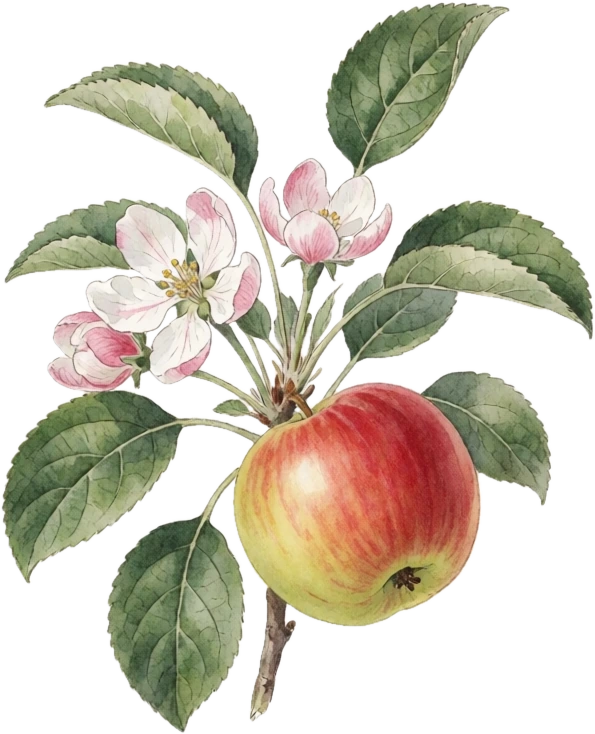
Sun-warmed and picked at full ripeness, a backyard apple is a different fruit from anything in a bag — crisp, honeyed, and yours by the basketful from September into October. Apples bred for gardens, like Liberty and Enterprise, carry flavor and disease resistance the supermarket kinds were never asked for.
On semi-dwarf roots the tree keeps to 12-20 feet — picking height, not ladder-at-full-stretch height — and its spring bloom brings the bees in white drifts. An apple needs a partner to set fruit, so plant two and settle in for cider, pie, and a cellar shelf that smells like fall.
 Full Sun
 Moderate water
 Moderate growth
 Excellent edible
 Attracts bees
 400-1000 winter chillNeeds a pollination partner
 Juglone-sensitive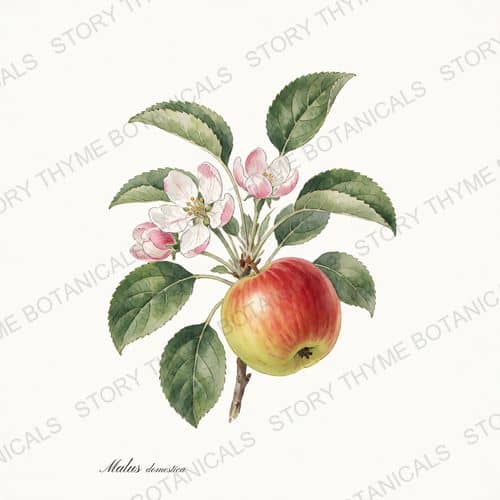
From the print shop
Our Plant Library collection carries apple — Malus domestica, print Nº 25, “Apple.”
526 designsfrom $12.99white or black backgroundmatte poster, unframed
Will it fruit where you are?
Enter your ZIP — we look up your USDA hardiness zone (2023 map) and check it against what apple actually needs.
 Hardy inZones 4-8PollinationPartner needed
Apple · Common problems

14 problems on file

7 problems on file
1 problem on file
Poor pollination → low fruit set (plant a partner)
Apple · Growing & propagation
LightWater Soil
Soil Fertilizer
Balanced 10-10-10 or compost.
PruningCentral Leader. Remove crossing branches, open center for light.
 SpacingPropagate
Seed won't come true
Apple · Harvest & keeping
 Years to first harvestTypical yieldWhat you eatHow to tell it is ready
A ripe apple twists off easily
How long it keepsApple · Seasonal care & spray guidance
Dormant season. Dormant Oil (Mites/Scale): Apply in late winter before bud break when temps >40°F for 24 hours. Copper (Fireblight): Apply at silver tip green tip stage.
Growing season. Petal Fall: Kaolin Clay or Insecticide (for Curculio). 10-14 days later: Repeat. Summer: Fungicide only if wet/humid. 'Liberty' & 'Enterprise' are disease resistant.
winter, before growth starts
2 jobsPruningIn February and MarchCut for an open center: remove crossing/inward growth water sprouts and one of any two competing leaders. Airflow and light cut disease and ripen fruit evenly.
PruningIn February and MarchWalk the tree in late winter looking for sunken, dark, cracked patches of bark and for blackened shoots that held their dead leaves all winter. Cut through healthy wood at least 8 inches below the discolored bark of any canker, and burn or bury what you remove rather than leaving it in the row. The bacterium overwinters at the margins of these cankers and oozes out of them right as the tree blooms, so every canker you leave is the launch point for next spring's blossom infections. Late winter is the right time because both tree and bacteria are dormant, which means the cuts cannot spread infection and will not push a flush of soft sucker growth.
early spring
3 jobsFeedingIn springBefore you feed anything, measure last season's shoot growth. A bearing apple should put on about 8 to 12 inches a year and a young non-bearing tree 12 to 18 inches. If the tree hit those numbers, add nothing. If it fell short, work compost around the root zone in early spring before the leaves come out. Nitrogen is normally the only nutrient an apple needs on an annual basis. Apples are one of the few fruit trees that are far more often over-fed than under-fed. Lush nitrogen-driven growth is soft, succulent tissue that fire blight infects readily, and it delays a young tree coming into bearing while keeping an older one from setting fruit.
SprayingIn MarchApply horticultural oil at green tip on a dry day above 40F. Smothers overwintering mites scale and aphid eggs.
SprayingAt green tipWhen the leaf buds have swollen and opened enough to show about a half inch of green tissue, spray captan or wettable sulfur. Repeat every 7 to 10 days through the week after petal fall, tightening the interval in rainy stretches and stretching it in dry ones. By mid-June look the leaves over: if you find no scab lesions you can stop, and if you find them keep spraying through the season. The fungus spends winter in last year's fallen leaves and shoots its spores into the air as the tree breaks bud, so the new leaves are infected before any spot is visible. The spores need several hours of continuous wetness to take hold, which is why spring rains drive the epidemic and why a fungicide applied after lesions appear cannot cure them.
at bloom
1 jobWhat to watch forAt bloomThrough bloom and the couple of weeks after, check flower clusters and shoot tips. Look for clusters that go water-soaked then droop, shrivel, and turn brown or black, and for young shoots that wilt into a downward hook with the dead leaves hanging on. Cut any strike out at least 8 inches below the discolored bark, sterilizing the blades between cuts. Bacteria ooze from overwintering cankers at the same moment the tree blooms, and bees carry them straight into the open flowers. The infection then runs from the blossom down into the wood, so a strike caught at the flower cluster is a small cut and one caught in August is a limb.
as the fruit sets
1 jobSprayingAt petal fallWait until most or all of the petals have dropped from the blossoms, then spray spinosad, carbaryl, malathion, or esfenvalerate. Make a second application 7 to 10 days later. Hang a pheromone trap first if you can - if it catches no moths, you may not need to spray at all. First-generation adults emerge from overwintering just before bloom and each female lays up to 100 eggs on the developing fruitlets. The larvae tunnel straight to the core to feed on the seeds, and once they are inside the apple no spray can reach them, so the only window that works is while the eggs and newly hatched larvae are still on the surface.
the growing season
1 jobThinningIn JuneThin to one fruit per cluster about a hand-width apart. Bigger fruit and prevents biennial bearing.
as it ripens, and picking
1 jobHarvestingAt harvestWatch the background color - the part of the skin not covered in red - and start checking once it shifts from green toward greenish-yellow. Then pick a few that look ready and eat them. An unripe apple is starchy and leaves a sticky film on your teeth. A ripe one has developed its aromatic flavor and lost that starchiness - it may still taste tart, which is normal for baking and cider varieties, so judge by aroma and the absence of starch rather than by sweetness alone. Keep tasting every few days rather than picking the whole tree at once. Red blush colors up well before the fruit is actually ripe, so it is a poor signal. What you are really waiting for is the tree converting stored starch into sugar, and the background color plus the taste of the flesh are the two things a grower can read without lab equipment.
autumn, and putting it to bed
1 job MulchingAfter harvest
Once the leaves come down, get them out from under the tree before the first snowfall. Rake and burn, bury, or compost them, or run a mulching mower over them to chop them up. Pick up dropped apples too, and store the fruit you keep well away from any windfalls. Diseased fallen leaves are the overwintering site for apple scab - the fungus survives in that litter and fires next spring's spores from it, so leaves left in place are the entire seed stock for next year's infection. Dropped fruit does the same job for codling moth larvae looking for a place to spin their cocoons.
Apple · Companion plants
Good companions
Avoid
Underlined names have their own growing guide in this library.
Apple · Calculators & field guides
Apple · Yearly calendar
No calendar activity is listed for this month.
 BloomPruneHarvest
BloomMay
PruneFebruary to March
HarvestSeptember to October
These are the species' typical months — expect them a few weeks earlier in warm zones and later in cold ones. Watch the plant, not just the calendar.
Apple · Ecology & uses
Malus domestica
 AttractsMoisture
 Deer
DeerProtect young plants
 OriginJuglone
The toxin exuded by black walnut, butternut, and their relatives. Keep it 50+ ft from any walnut or hickory, or its leaves will yellow, wilt, and die back for no obvious reason.
✓ Commonly eatendon't eat seeds in quantity
UseUseUseUseEdible valueSeptember - October.
Edibility, identification, and traditional-use notes here are general reference — not medical or veterinary advice, and not a claim that any plant treats or prevents anything. Medicinal ratings record how strongly a plant features in herbal tradition, nothing more. Never eat or dose a plant you have not positively identified. More on how to use this library.
Apple · Varieties & cultivars
Named varieties of apple differ in winter-chill needs, ripening time, hardiness, and whether they set fruit on their own — pick one that fits your climate.
19 varieties
Needs a pollinizer
tart-sweet — One of the most disease-resistant apples
Story Thyme Farms may earn a small commission from these links, at no cost to you — it never changes what we recommend.
Needs a pollinizer
crisp sweet-tart — Needs a compatible pollinizer nearby
Story Thyme Farms may earn a small commission from these links, at no cost to you — it never changes what we recommend.
Needs a pollinizer
tart; stores for months — Very disease-resistant and a great keeper
Story Thyme Farms may earn a small commission from these links, at no cost to you — it never changes what we recommend.
Also known as Royal Gala, Imperial Gala
Partly self-fertile
mild sweet, crisp; kid-friendly fresh eating — Reliable early-ripening dessert apple with moderate chill, adaptable across much of the US but disease-prone in humid areas.
Story Thyme Farms may earn a small commission from these links, at no cost to you — it never changes what we recommend.
Partly self-fertile
very sweet, dense, crisp; excellent keeper — Sweetest of the mainstream apples and stores for months, but it ripens very late so it needs a long, warm season.
Story Thyme Farms may earn a small commission from these links, at no cost to you — it never changes what we recommend.
Also known as Yellow Delicious
Partly self-fertile
sweet, mild, tender; great fresh, baking, and sauce — One of the most widely adapted apples and among the best all-purpose pollinizers for other varieties.
Story Thyme Farms may earn a small commission from these links, at no cost to you — it never changes what we recommend.
Partly self-fertile
very tart, firm, green; top choice for pies and cooking — The classic tart green cooking apple, but it ripens very late and needs a long frost-free season to color and sweeten.
Story Thyme Farms may earn a small commission from these links, at no cost to you — it never changes what we recommend.
Also known as Cripps Pink
Partly self-fertile
crisp, sweet-tart, effervescent; excellent fresh and keeps well — Moderate chill needs but one of the latest to ripen, requiring a very long season, so it suits warm regions with a long autumn.
Story Thyme Farms may earn a small commission from these links, at no cost to you — it never changes what we recommend.
Partly self-fertile
sweet-tart, crisp when fresh; Golden Delicious style — A top low-chill apple that actually fruits in Florida, the Gulf Coast, and mild California, ripening remarkably early.
Story Thyme Farms may earn a small commission from these links, at no cost to you — it never changes what we recommend.
Also known as Golden Dorsett
Partly self-fertile
sweet, firm, golden; resembles Golden Delicious — One of the lowest-chill apples available and the standard pollinizer for Anna in the Deep South and mild-winter areas.
Story Thyme Farms may earn a small commission from these links, at no cost to you — it never changes what we recommend.
Also known as Co-op 38
Needs a pollinizer
intensely tangy-sweet, dense; superb keeper — The longest-storing scab-immune apple, but it ripens very late so it is not for short-season northern gardens.
Story Thyme Farms may earn a small commission from these links, at no cost to you — it never changes what we recommend.
Needs a pollinizer
tart, firm, juicy; excellent for pies and keeping — A tough Minnesota-bred apple that survives Zone 3 winters, making it a go-to for the Upper Midwest and northern Plains.
Story Thyme Farms may earn a small commission from these links, at no cost to you — it never changes what we recommend.
Also known as Zestar!, Minnewashta
Needs a pollinizer
crisp, sweet-tart with a brown-sugar note; great fresh — A cold-hardy University of Minnesota apple (cultivar 'Minnewashta') that ripens early and eats crisp, ideal for short northern seasons.
Story Thyme Farms may earn a small commission from these links, at no cost to you — it never changes what we recommend.
Needs a pollinizer
crisp, juicy, sweet-tart with creamy white flesh — A McIntosh-Red Delicious cross that keeps about three months. The unusual pairing of fire blight and rust resistance with scab susceptibility means the scab program still matters but the fire blight scouting matters less.
Story Thyme Farms may earn a small commission from these links, at no cost to you — it never changes what we recommend.
Also known as Crispin
Needs a pollinizer
aromatic, juicy, sweet, spicy, a little tart — A triploid, so it is self-sterile and is also poor at pollinating other apple trees. Planting it means you need at least one other variety for Mutsu and, if that variety also needs a partner, a third tree to cover it.
Story Thyme Farms may earn a small commission from these links, at no cost to you — it never changes what we recommend.
Also known as Rome Beauty, Red Rome
Partly self-fertile
sweet and smooth fresh, tart enough for pies; goes mealy in storage — The classic baking apple - it holds its shape sauteed or baked rather than collapsing. It blooms late, which makes it one of the better choices for sites that get spring freezes after the earlier varieties have already opened. Disease pressure is frequent, so plan on the scab program.
Story Thyme Farms may earn a small commission from these links, at no cost to you — it never changes what we recommend.
Also known as Stayman Winesap
Needs a pollinizer
crisp and juicy, sweet-tart; good fresh, for pies, and for cider — Keeps up to six months near 40F. Another triploid, so it needs a pollinizer and will not reliably return the favor. It ripens mid-to-late October and so wants a long autumn.
Story Thyme Farms may earn a small commission from these links, at no cost to you — it never changes what we recommend.
Needs a pollinizer
crisp, juicy, aromatic, sour-sweet — A Jonathan-Golden Delicious cross with excellent flavor and several months of refrigerated storage, but it is the highest-maintenance apple on this list: sterile triploid pollen plus susceptibility to all three of the major apple diseases. Only worth it if you will actually run the spray program.
Story Thyme Farms may earn a small commission from these links, at no cost to you — it never changes what we recommend.
Needs a pollinizer
sweet and mild, juicy and crisp; fresh eating and dessert — The most widely planted apple tree in North America and a common pollinizer recommendation for other varieties, which is the main reason to give it space in a small planting. Flavor is mild rather than complex.
Story Thyme Farms may earn a small commission from these links, at no cost to you — it never changes what we recommend.
Sources & plant identity
Malus domestica
Hardiness, size and timing vary with your cultivar, soil and climate.
University extension research, brought together with hands-on growing experience at Story Thyme Farms.
 Cornell University
 Iowa State University
 NC State Extension
 New Mexico State University
 Penn State
 Purdue University
 University of Florida
 University of Minnesota
 University of Missouri
Publisher marks identify sources, not sponsorship or endorsement.
Apple questions, answered straight.
Most often: it has no genetically distinct partner nearby. Apple can't pollinate itself — cross-pollination required (both bloom mid-late). Plant a second, unrelated one nearby; two different cultivars, or a cultivar plus a seedling, is the classic pairing.
Apple needs roughly 400-1000 hours of winter chill (hours between 32–45°F) to break dormancy and set fruit. Mild-winter growers should count their chill hours before planting.
Apple is commonly eaten and isn't considered toxic, but "commonly eaten" isn't a guarantee for any particular person or animal — allergies, quantity, and which part you eat all matter. One caveat on this one: don't eat seeds in quantity. Never eat a plant you haven't positively identified, and check with a vet before letting pets or livestock graze anything new.
September - October.
Where apple sits in the library.
 Peach
Peach Plum
Plum Pluot
Pluot Cocktail Tree