The illustrated growing guide

Edamame (Soybean)

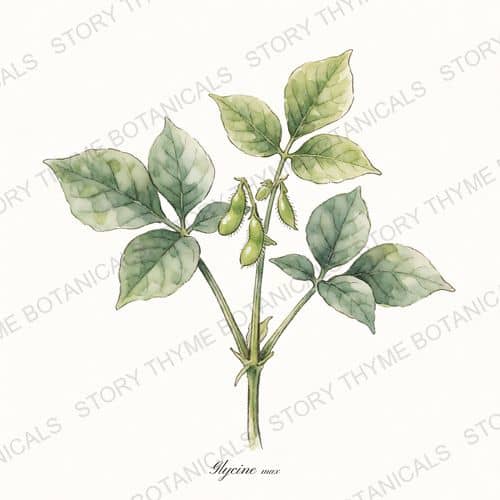
Glycine max

Family Fabaceae

Grown as an annual

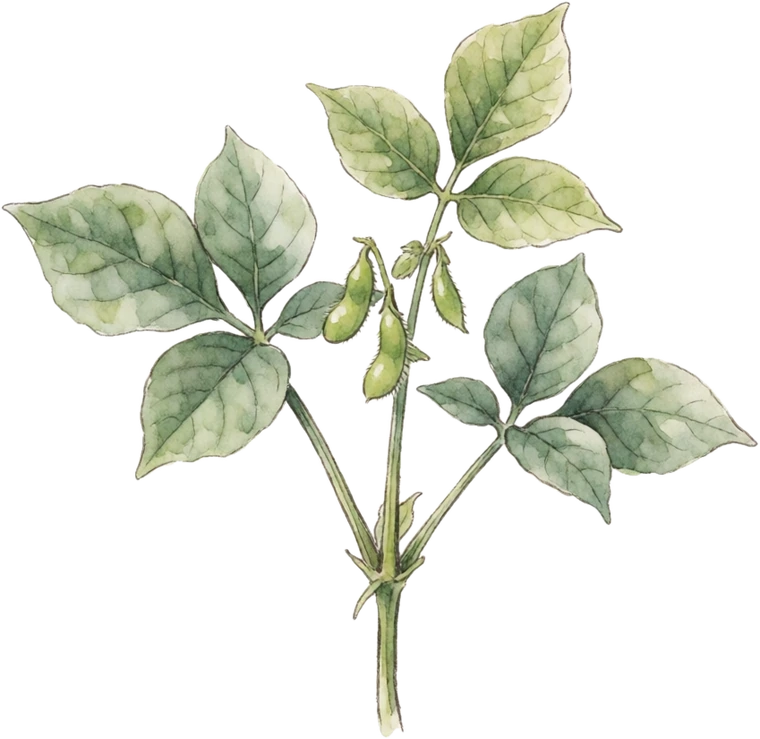
Botanical illustration of Edamame (Soybean)
Annual · Glycine max

The fresh soybean of the appetizer plate — easy to grow, nitrogen-fixing, and far better fresh than frozen. The catch is timing: the whole plant's pods fill within a few days and stay prime only briefly, so pick promptly and sow a new short row every couple of weeks for a steady supply. Deer and rabbits love it, so protect young plants. Boil in the pod and pop the beans out with salt.

AnnualFull SunModerate waterFast growthExcellent edibleAttracts beesNone winter chill

Where to buy the plant — 1 nursery

Soybean — a print from the Beans & Legumes collection

From the print shop

Growing edamame (soybean)? Hang it.

Our Beans & Legumes collection carries edamame (soybean)Glycine max, print Nº 11, “Soybean.”

16 designsfrom $21.99white or black groundmatte poster, unframed

Shop Beans & Legumes botanical prints →

I

Overview

Will edamame (soybean) suit your garden, and what goes wrong.

Will it fruit where you are?

Enter your ZIP — we look up your USDA hardiness zone (2023 map) and check it against what edamame (soybean) actually needs.

Life cycleAnnual
Winter chillNone
PollinationSelf-fertile

Edamame (Soybean) at a glance

Life cycleAnnual
Mature size2-3 ft bushes
PollinationSelf-pollinating
Chill requirementNone (not chill-dependent)
Bloom seasonSummer (small, self-fertile)
Harvest seasonHarvest pods when plump but still bright green (a short window) — boil in the pod, pop out the beans
Growth rateFast

Common edamame (soybean) problems

  • Bean Beetles
  • Stink Bugs
  • Deer (love it)
  • Almost none

II

Growing

Light, water, soil, propagation and the season’s jobs.

How to grow edamame (soybean): light, water & soil

LightFull Sun
WaterModerate, even — especially at pod fill
SoilRich, well-drained; nitrogen-fixer · pH 6.0 - 7.0
FertilizerNone — fixes its own nitrogen
PruningNone — Direct-sow after frost in warm soil. Nearly the whole plant's pods ripen at once, so succession-sow every 2 weeks for a longer harvest.
Spacing4-6 in

How to plant & propagate edamame (soybean)

Maturity70-90 days
From seedDirect-sow after frost, soil 60°F+
PropagateFrom seed

When to spray edamame (soybean)

Growing season. Row cover from rabbits/deer.

The edamame (soybean) growing playbook

Field-tested instructions for every job edamame (soybean) asks of you, compiled from university extension guidance — in the order the season brings them.

Sowing

Direct-sow into warm soil, no deeper than half an inch

Direct-sow after your last frost, once soil has warmed to at least 55 degrees F, placing seed only a quarter to a half inch deep, 2 to 4 inches apart, in rows about 30 inches apart. Handle the seed gently - breaking the seed skin cuts germination. Sow into soil that is already moist rather than watering hard afterward; if the soil is dry, irrigate before you plant. Direct seeding is the norm, but a short-season grower can raise transplants under cover instead. Edamame seed is mostly sold untreated and germinates less reliably than field soybean seed, so it rots or emerges in patches in cold wet ground. The seedlings are weak and cannot push up from a deeper sowing, and irrigating after planting crusts the surface and traps them.

Watering

Water hardest from flowering through pod fill

From the first flowers through full pod fill, supply about three quarters to 1 inch of water a week in humid regions and 1 to 1.5 inches a week in arid ones. Water deeply on a 3 to 5 day interval rather than lightly every day. Flowering through pod fill is the crop's peak water demand, losing up to 0.3 inch a day, and a shortage in that stretch shows up directly as flat pods and aborted beans. Watering more often than every 3 to 5 days keeps the canopy damp and raises disease risk.

Feeding

Inoculate the seed with soybean rhizobia, then hold back the nitrogen

If soybeans or edamame have never grown in this ground, dust the seed with Bradyrhizobium japonicum soybean inoculant before sowing. Bean, pea, and clover inoculants are different bacteria and will not work. On an inoculated crop skip the nitrogen fertilizer entirely, and set phosphorus and potassium from a soil test instead. Aim for a soil pH of 6.0 to 6.5. Only Bradyrhizobium japonicum forms the root nodules that fix nitrogen for soybean. Feeding an inoculated crop extra nitrogen does not reliably raise yield, and it can suppress that fixation and delay flowering, which on a short-day crop can cost you the harvest.

What to watch for

Scout for bean leaf and Mexican bean beetles before pods set

Walk the rows weekly once the plants are up, looking for chewed leaves and the beetles themselves: bean leaf beetles are small and often tan with black borders and spots, and Mexican bean beetles are copper-colored ladybeetle look-alikes whose larvae are yellow and spiny. Only act at about 20 percent defoliation or 2 to 3 beetles per plant. Catching these beetles while they are still working on leaves keeps their numbers from building into the later generation that chews directly into the filling pods, which is the damage that actually costs you the crop.

Never spray an insecticide while the crop is flowering. Rutgers rates the pyrethroid and neonicotinoid products labeled for edamame beetles as highly toxic to bees.

Check filling pods for stink bugs and aphids

Once pods are filling, check for stink bugs on the pods and for soybean aphid colonies at the growing tips. Treatment thresholds are 7 stink bugs per 50 sweeps during pod development, and 250 aphids per plant while pods are still filling. Brown and brown marmorated stink bugs shrug off pyrethroids more than green ones do. Stink bugs and pod-feeding caterpillars pierce and chew straight through the pod wall, and a holed pod is simply lost. Once pods have finished filling the plant tolerates over 1000 aphids with no yield loss, so a late aphid flare rarely justifies spraying at all.

Watch the pre-harvest interval closely here - edamame is often picked within days of treatment, and several labeled aphid materials require 7 days.

Spraying

Two-spotted spider mite: sulfur at the first stippling

In hot dry weather check leaf undersides weekly, starting at the edges of the planting, for fine white stippling along the veins. Press a damaged leaf against white paper to confirm crushed mites. Spot-treat the affected edges with sulfur as soon as you find it rather than treating the whole planting. Escalate to treating the whole planting only if live mites are numerous, about 20 to 30 per leaflet, and more than half the plants show stippling, yellowing, or defoliation. Mites build up first on the hot dry margins and work inward, so treating the edges at the first stippling holds the infestation there and spares you a full-cover spray. If it has already gone planting-wide it is still treatable, but it then takes a whole-planting application rather than spot work.

Sulfur carries a 0-day pre-harvest interval on edamame and a 24-hour re-entry interval. Rutgers rates sulfur moderately toxic to bees, so keep it off open flowers. Do not reach for broad-spectrum pyrethroids or organophosphates (Group 1B, 3) for mites - they knock mites down briefly but numbers quickly recover, and continued use can drive a worse outbreak.

Protection

Screen the seedlings from birds, fence the stand from deer

Net or row-cover the seedlings as they emerge and leave it on until the plants have several trifoliate leaves. If deer or elk range on your land, fence the planting before pods start to form. Birds do extensive damage to young edamame plants, and deer and elk can be devastating to a mature stand right when the pods are worth eating.

Harvesting

Pick at R6, and chill the pods the same hour

Harvest when the pods are plump and bright green and the beans almost touch inside the pod, soybean stage R6. Check every day or two as they approach it, because the window can be as short as 3 to 4 days. Pull whole plants once most pods are ready, pick in the cool of early morning, and get the pods down to 32 to 37 degrees F right away. The moment pods show any yellow the sugars have gone to starch and the sweet nutty flavor with them. Sugars and amino acids also start breaking down within 3 to 10 hours of picking if the pods stay warm, which is the only reason garden edamame beats frozen.

Raw edamame is not edible - boil the pods about 3 to 5 minutes before eating.

III

The year

What edamame (soybean) asks for, month by month.

The edamame (soybean) year, month by month

MonthJanFebMarAprMayJunJulAugSepOctNovDec
Bloom

What each band means

  • Bloomflowers open — pollinators working, frost on blossoms is the danger.

The edamame (soybean) year as text

  • Jan quiet month
  • Feb quiet month
  • Mar quiet month
  • Apr quiet month
  • May quiet month
  • Jun bloom
  • Jul bloom
  • Aug bloom
  • Sep quiet month
  • Oct quiet month
  • Nov quiet month
  • Dec quiet month

These are the species' typical months — expect them a few weeks earlier in warm zones and later in cold ones. Watch the plant, not just the calendar.

IV

Ecology & uses

What it does for the garden, and what it is grown for.

Edamame (Soybean) in the garden system

  • Herbaceous layer annual
  • N-fixer
AttractsBees
MoistureFacultative / average
DeerBrowsed — protect young plants
OriginIntroduced

What edamame (soybean) is grown for

✓ Commonly eatenRaw beans not for eating — must be cooked; boiled edamame safe

UseFresh appetizer
UseProtein crop
UseSoil building
Edible value4/5

Harvesting & storing edamame (soybean)

Harvest pods when plump but still bright green (a short window) — boil in the pod, pop out the beans. About 70-90 days from planting.

Edibility, identification, and traditional-use notes here are general reference — not medical or veterinary advice, and not a claim that any plant treats or prevents anything. Medicinal ratings record how strongly a plant features in herbal tradition, nothing more. Never eat or dose a plant you have not positively identified. More on how to use this library.

V

Cultivars

Named varieties of edamame (soybean), ruled as a catalogue.

Best edamame (soybean) varieties & cultivars

11 on file

Named varieties of edamame (soybean) differ in days to maturity, disease resistance, flavor, and habit — pick one that fits your season and space.

Fiskby · Fiskeby

Self-fertile
Zones2-11

The earliest cultivar in WSU's Washington maturity table, at 89 days at Vancouver - no other cultivar in the table matures sooner. WSU cautions that catalogs list edamame at 70-90 days but cool northern seasons add 30-plus days, so treat 89 as a cool-climate figure and expect faster in a hot summer.

Where to buy ‘Fiskby

Story Thyme Farms may earn a small commission from these links, at no cost to you — it never changes what we recommend.
Envy · Envy (Green)

Self-fertile
Zones2-11SizeShortest plant in the WSU trial at 22 inches

Small beans - lowest 100-pod weight in the trial — One of only five cultivars with near 100 percent emergence in WSU's 2002 trial, and early to mature at 102 days. Beans are notably small. WSU found Envy among the cultivars affected by a poty virus in 2002.

Where to buy ‘Envy

Story Thyme Farms may earn a small commission from these links, at no cost to you — it never changes what we recommend.

Beer Friend

Self-fertile
Zones2-11

Among the largest-bean cultivars in the WSU trial — The earliest cultivar to flower in WSU's 2002 trial at 49 days after planting, and early to mature at 102 days. Slower out of the ground than most, emerging at 14.5 days against a trial mean of 11.8.

Where to buy ‘Beer Friend

Story Thyme Farms may earn a small commission from these links, at no cost to you — it never changes what we recommend.

Sapporo Midori

Self-fertile
Zones2-11

Rated among the top three for overall flavor by a WSU taste panel; large beans — Matures at 107 days at Vancouver, WA. One of five cultivars with near 100 percent emergence in WSU's 2002 trial, early maturing, and among the largest-beaned. A 14-member public taste panel rated it in the top three of eight cultivars.

Where to buy ‘Sapporo Midori

Story Thyme Farms may earn a small commission from these links, at no cost to you — it never changes what we recommend.

Kitanosuzu

Self-fertile
Zones2-11

Rated among the top three for overall flavor by a WSU taste panel — Matures at 110 days at Vancouver, WA, and was one of five cultivars with near 100 percent emergence in WSU's 2002 trial.

Where to buy ‘Kitanosuzu

Story Thyme Farms may earn a small commission from these links, at no cost to you — it never changes what we recommend.

Sayakomachi

Self-fertile
Zones2-11

Rated top of eight cultivars for overall flavor by a WSU taste panel; large beans — Matures at 112 days at Vancouver, WA. Across WSU trials from 1995 to 2002 it was the second highest yielding cultivar tested in two or more years, at 1368 g of 2-3-bean pods per 10 row-feet, and it also topped the taste panel.

Where to buy ‘Sayakomachi

Story Thyme Farms may earn a small commission from these links, at no cost to you — it never changes what we recommend.

Misono Green

Self-fertile
Zones2-11

Large beans, but among the two lowest-rated of eight cultivars by a WSU taste panel (2.4 of 5) — The highest yielding cultivar across WSU trials from 1995 to 2002 among those tested two or more years, at 1429 g of 2-3-bean pods per 10 row-feet. Matured at 110 days at Vancouver and Chehalis and 105 at Prosser. WSU found it affected by a poty virus in 2002, and a 14-member taste panel scored it 2.4 out of 5, among the two lowest of the eight varieties tasted, so it trades flavor for yield.

Where to buy ‘Misono Green

Story Thyme Farms may earn a small commission from these links, at no cost to you — it never changes what we recommend.
Sayamusume

Self-fertile
Zones2-11

One of the few cultivars WSU matured at all three Washington sites, at 110 days at Vancouver, 110 at Chehalis, and 103 at Prosser, and one of five with near 100 percent emergence in the 2002 trial.

Where to buy ‘Sayamusume

Story Thyme Farms may earn a small commission from these links, at no cost to you — it never changes what we recommend.

Butterbeans · Butterbeans (Green)

Self-fertile
Zones2-11

Matured at all three WSU Washington sites: 108 days at Vancouver, 112 at Chehalis, 103 at Prosser. It also had the highest unmarketable pod weight of any cultivar in the 2002 trial, so expect to cull more pods.

Where to buy ‘Butterbeans

Story Thyme Farms may earn a small commission from these links, at no cost to you — it never changes what we recommend.

Midori Giant

Self-fertile
Zones2-11

Widely sold, but a photoperiod warning: in WSU's 2002 trial at Vancouver, WA, Midori Giant did not flower at all, and it is absent from WSU's Washington maturity table. Edamame is a short-day crop, and strongly photosensitive cultivars will not flower at northern latitudes until August, too late to mature before fall rain and frost. Better suited to southern gardens with shorter summer days.

Where to buy ‘Midori Giant

Story Thyme Farms may earn a small commission from these links, at no cost to you — it never changes what we recommend.

VT Sweet

Self-fertile
Zones2-11SizeLarge pods

Released by Virginia Tech for Mid-Atlantic growing. Maturity group 5, 125 to 135 days to harvest, so it is a long-season cultivar for warm regions and a poor fit for short northern seasons. Only about 15 percent single-bean pods, against the usual higher rate, which matters because most people want two or three beans per pod.

Where to buy ‘VT Sweet

Story Thyme Farms may earn a small commission from these links, at no cost to you — it never changes what we recommend.

VI

Sources & plant ID

Where the care distinctions come from, and how the plant is filed.

Research basis

Sources behind this profile

No extension citations are attached to edamame (soybean)yet. The care figures below come from the library's own catalogue rather than a traced primary source.

Plant ID

BinomialGlycine max
FamilyFabaceae
TypeAnnual
USDA symbolGLMA4
OriginIntroduced
Invasive riskLow

VII

Where to buy

Third-party nurseries — not Story Thyme Farms.

Third-party nurseries, not Story Thyme Farms. Prices are theirs.

Story Thyme Farms may earn a small commission from these links, at no cost to you — it never changes what we recommend.

VIII

Questions

Edamame (Soybean) questions, answered straight.

Do I need two edamame (soybean) plants to get fruit?

No — edamame (soybean) is self-fertile, so a single plant will set a crop. A second one usually improves yields, but it isn't required.

Is edamame (soybean) safe for kids and pets?

Edamame (Soybean) is commonly eaten and isn't considered toxic, but "commonly eaten" isn't a guarantee for any particular person or animal — allergies, quantity, and which part you eat all matter. One caveat on this one: Raw beans not for eating — must be cooked; boiled edamame safe. Never eat a plant you haven't positively identified, and check with a vet before letting pets or livestock graze anything new.

When do you harvest edamame (soybean)?

Harvest pods when plump but still bright green (a short window) — boil in the pod, pop out the beans. From planting, expect about 70-90 days to maturity.

How do you propagate edamame (soybean)?

From seed.

IX

Elsewhere

Where edamame (soybean) sits in the library.

Where edamame (soybean) sits in the library

Grows in the same world