The illustrated growing guide

Flowering Quince

Chaenomeles speciosa

Family Rosaceae

Est. zones 4-9

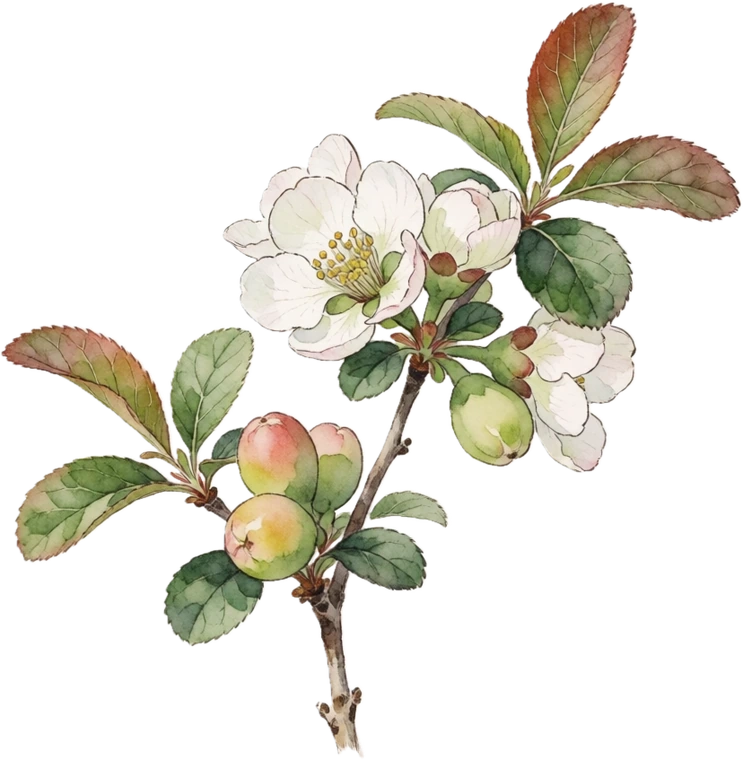
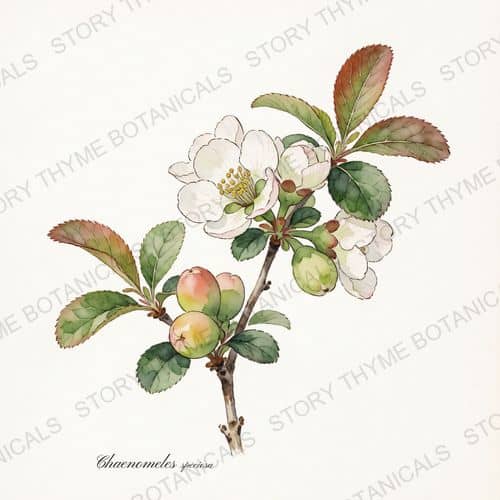
Botanical illustration of Flowering Quince
Shrub · Chaenomeles speciosa

A double gift from an old-fashioned shrub: gem-colored flowers on bare branches in earliest spring (force them indoors, and they feed the first bees), then hard aromatic fruits that cook into a fragrant rose-colored jelly and quince paste. Thorny and drought-tough enough for a barrier hedge. The 'Double Take' types trade fruit for extra-showy blooms.

ShrubFull Sun to Part ShadeLow waterModerate growthExcellent edibleAttracts beesNeeds a pollination partner

Where to buy the plant — 3 nurseries

I

Overview

Will flowering quince suit your garden, and what goes wrong.

Will it fruit where you are?

Enter your ZIP — we look up your USDA hardiness zone (2023 map) and check it against what flowering quince actually needs.

Hardy inZones 4-9
PollinationPartner needed

Flowering Quince at a glance

HardinessUSDA 4–9
Mature size3-6 ft, thorny
PollinationEARLY flowers feed the first bees; a very early nectar source
Chill requirementNot yet established
Bloom seasonVery Early Spring — vivid red, orange, pink, or white flowers on bare thorny branches
Harvest seasonHard, aromatic yellow-green fruits in fall — inedible raw but superb cooked into jelly, paste, and preserves (like true quince)
Growth rateModerate

Common flowering quince problems

  • Almost none (occasional scale, aphids)
  • Cedar-Quince Rust (cosmetic)
  • Fireblight (minor)
  • Poor pollination → low fruit set (plant a partner)

II

Growing

Light, water, soil, propagation and the season’s jobs.

How to grow flowering quince: light, water & soil

LightFull Sun to Part Shade
WaterLow once established
SoilAny well-drained · pH 6.0 - 7.0
FertilizerNone
PruningRight after flowering — One of the earliest shrubs to bloom — jewel-toned flowers studding bare thorny branches before forsythia, feeding the first bees. Cut budded branches to force indoors in late winter. The knobby fall fruits are rock-hard and sour raw but make a fragrant, rose-tinted jelly and paste like their tree-quince relative. Tough, thorny (good barrier hedge), drought-proof.
Spacing4-6 ft

How to plant & propagate flowering quince

PropagateGrafted, or from cuttings/layering (seed won't come true)

The flowering quince growing playbook

Field-tested instructions for every job flowering quince asks of you, compiled from university extension guidance — in the order the season brings them.

Feeding

Feed sparingly, and go easy on the nitrogen

Flowering quince tolerates a wide range of soil and rarely needs feeding. If you feed at all, keep nitrogen low. If the leaves turn yellow while the veins stay green, read that as iron chlorosis from alkaline soil, not hunger - correct the pH rather than adding more fertilizer. Excess nitrogen pushes soft succulent shoots, and succulent growth is what fire blight infects most easily. Separately, this shrub tolerates a wide range of soils except very alkaline ones, which cause iron chlorosis that no amount of nitrogen will fix; Virginia Cooperative Extension pub 2901-1044 puts its workable pH range at 3.7 to 7.0.

Pruning

Renewal prune as soon as the flowers finish

Once the last petals drop, cut about a third of the wood to the ground, taking the oldest branches and any weak twiggy growth first. If you want fruit, go lighter than that; if you only want flowers, this shrub tolerates hard pruning. Flowering quince blooms on old wood and sets next spring's flower buds over the summer, so the window between petal fall and bud set is the only time you can cut without throwing away next year's bloom.

The stems of most varieties are thorny and interlace densely - wear leather gauntlets and eye protection when reaching into the crown.

Cut out fire blight cankers while the shrub is dormant

Walk the shrub while it is leafless and look for blackened, sunken cankers and dead twigs. Cut at least 8 to 12 inches below any sign of infected tissue, into healthy wood, and destroy what you remove. The fire blight bacterium overwinters in cankers and twigs, and those cankers are the source of the ooze that starts next spring's infections. Cutting in the dormant season removes the inoculum when the bacteria are not active and cannot be spread by the cuts themselves.

Disinfect pruners between cuts with a 10% bleach solution (1 part household bleach to 9 parts water) or 70% alcohol; rinse and oil the tools afterward, since bleach corrodes them. Do not do this pruning during the growing season - cutting then spreads the disease.

What to watch for

Watch for fire blight strikes while the shrub is in flower

During and just after bloom, look for blossoms and shoot tips that suddenly blacken and wilt, with the tip curling into a shepherd's crook. Flag the strikes now and leave them - cut them out during the dormant season. Fire blight bacteria enter through open flowers in warm, wet weather and run down the shoot from there, which is why the damage shows first at the blossom clusters and shoot tips.

Do not spray any insecticide while flowers are open - flowering quince is one of the earliest nectar sources of the year and is worked heavily by bees. Do not prune the strikes out now either; growing-season cuts spread the bacteria.

Check shoot tips and fruit for cedar-quince rust

In mid to late summer, inspect shoot tips, fruit, and leaves for pinkish tendril-like aecia, and note any swollen, distorted stem cankers. Prune out cankered stems in the dormant season. Do not plant new quince right beside junipers or eastern redcedar. Cedar-quince rust needs both a juniper and a rose-family host to complete its cycle. Spores blow from juniper swellings to the quince during cool, wet spring weather, and the infection only becomes visible on the quince months later, in mid to late summer.

Fungicides are rarely recommended for cedar-quince rust because none have proven very effective - do not reach for a spray here. Removing nearby junipers may still not control it, since the spores travel long distances.

Protection

Expect late frosts to take some of the bloom

This shrub opens its flowers on bare branches very early, ahead of most of the garden, so a late spring frost will brown some of the open blooms. On a small plant you can throw a light cover over it the night a hard frost is forecast; on a large one, accept the loss. The plant itself is hardy well below freezing when dormant, but open flowers are not - and every flower killed by frost is a fruit that will not form, since the bloom comes all at once on old wood.

Harvesting

Pick the fruit in early fall, once it turns from green to yellow

The hard, aromatic pomes ripen in early fall, going from greenish to yellow. Pick them then and cook them - they are far too hard and bitter to eat off the shrub, but they are excellent in preserves and jelly, and the juice works as a lemon substitute. The fruit is a pome that stays rock hard on the bush and never softens to dessert quality; its value is aroma, acidity, and pectin, all of which peak once the skin colors up in early fall.

The Royal Horticultural Society advises that the seeds contain toxins and should be removed before you eat or cook the fruit (RHS, Chaenomeles speciosa: https://www.rhs.org.uk/plants/3463/chaenomeles-speciosa/details).

III

The year

What flowering quince asks for, month by month.

The flowering quince year, month by month

MonthJanFebMarAprMayJunJulAugSepOctNovDec
Bloom
Harvest

What each band means

  • Bloomflowers open — pollinators working, frost on blossoms is the danger.
  • Harvestpicking time — check ripeness every few days.

The flowering quince year as text

  • Jan quiet month
  • Feb quiet month
  • Mar bloom
  • Apr bloom
  • May quiet month
  • Jun quiet month
  • Jul quiet month
  • Aug quiet month
  • Sep harvest
  • Oct harvest
  • Nov harvest
  • Dec quiet month

These are the species' typical months — expect them a few weeks earlier in warm zones and later in cold ones. Watch the plant, not just the calendar.

IV

Ecology & uses

What it does for the garden, and what it is grown for.

Flowering Quince in the garden system

  • Shrub layer shrub
  • Nectary/insectary
AttractsBees
MoistureUpland / dry
DeerBrowsed — protect young plants
OriginIntroduced

What flowering quince is grown for

✓ Commonly eatenFruit edible cooked (not raw); safe

UseEarly bloom
UseQuince jelly
UseBarrier hedge
UseForcing
Edible value4/5

Harvesting & storing flowering quince

Hard, aromatic yellow-green fruits in fall — inedible raw but superb cooked into jelly, paste, and preserves (like true quince).

Edibility, identification, and traditional-use notes here are general reference — not medical or veterinary advice, and not a claim that any plant treats or prevents anything. Medicinal ratings record how strongly a plant features in herbal tradition, nothing more. Never eat or dose a plant you have not positively identified. More on how to use this library.

V

Cultivars

Named varieties of flowering quince, ruled as a catalogue.

Best flowering quince varieties & cultivars

7 on file

Named varieties of flowering quince differ in winter-chill needs, ripening time, hardiness, and whether they set fruit on their own — pick one that fits your climate.

Toyo-Nishiki

Ripensearly fallZones5-9Size5-10 ft tall and wide, rounded and spreading

Fragrant, hard and bitter raw; for jelly and jam — Carries red, white, and pink flowers on the same plant, sometimes all three on a single flower. Thorny gray-brown stems. Fruit is a yellowish-green pome 1-3 inches long with a reddish blush, ripening in early fall.

Where to buy ‘Toyo-Nishiki

Story Thyme Farms may earn a small commission from these links, at no cost to you — it never changes what we recommend.

Texas Scarlet

RipensfallZones5-9Size3-5 ft tall and wide

Aromatic, for jams and jellies — Single vivid red cup-shaped flowers in spring, followed by aromatic green fruit ripening to yellow in autumn. RHS rates it H6, hardy to -20 to -15C; the USDA range shown here follows the species range given by NC State rather than a cultivar-specific figure.

Where to buy ‘Texas Scarlet

Story Thyme Farms may earn a small commission from these links, at no cost to you — it never changes what we recommend.

Cameo

RipensfallZones5-9Size3-5 ft tall, spreading 5-8 ft wide

Aromatic, for jams and jellies — Double peach-pink cup-shaped flowers in spring; bears aromatic green fruit ripening to yellow in autumn. RHS rates it H6, hardy to -20 to -15C; the USDA range shown here follows the species range given by NC State rather than a cultivar-specific figure.

Where to buy ‘Cameo

Story Thyme Farms may earn a small commission from these links, at no cost to you — it never changes what we recommend.

Nivalis

RipensfallZones5-9Size5-8 ft tall and wide

Aromatic green-yellow fruit, for jams and jellies — Clusters of single pure white flowers about 4 cm wide along bare branches before the leaves. Takes 5-10 years to reach full size. RHS rates it H6, hardy to -20 to -15C; the USDA range shown here follows the species range given by NC State rather than a cultivar-specific figure.

Where to buy ‘Nivalis

Story Thyme Farms may earn a small commission from these links, at no cost to you — it never changes what we recommend.

Jet Trail

RipensfallZones5-9Size2-3 ft tall and wide, rounded

Aromatic, for jams and jellies — Pure white single flowers up to 4.5 cm across on bare stems in early spring, followed by aromatic green fruit ripening to yellow. RHS rates it H6, hardy to -20 to -15C; the USDA range shown here follows the species range given by NC State rather than a cultivar-specific figure.

Where to buy ‘Jet Trail

Story Thyme Farms may earn a small commission from these links, at no cost to you — it never changes what we recommend.

Double Take Scarlet · Scarlet Storm

Zones5-9Size4-5 ft tall, 3-4 ft wide, mounded

Large red double flowers like camellias in early to mid spring. Thornless and deer-resistant. The introducer states this selection does not produce fruit - choose it for flowers only, not for jelly.

Where to buy ‘Double Take Scarletverified

Story Thyme Farms may earn a small commission from these links, at no cost to you — it never changes what we recommend.

Double Take Peach · Peach Storm

Zones5-9Size4-5 ft tall and wide

Soft peach double flowers in spring on old wood. Thornless, unlike older flowering quince, which makes it the easy one to cut for forcing indoors. The Double Take series is sold as an ornamental line; treat fruit set as unreliable.

Where to buy ‘Double Take Peachverified

Story Thyme Farms may earn a small commission from these links, at no cost to you — it never changes what we recommend.

VI

Sources & plant ID

Where the care distinctions come from, and how the plant is filed.

Research basis

Sources behind this profile

No extension citations are attached to flowering quinceyet. The care figures below come from the library's own catalogue rather than a traced primary source.

Plant ID

BinomialChaenomeles speciosa
FamilyRosaceae
TypeShrub · Perennial
USDA symbolCHSP12
OriginIntroduced
Invasive riskLow

VII

Where to buy

Third-party nurseries — not Story Thyme Farms.

Third-party nurseries, not Story Thyme Farms. Prices are theirs.

Story Thyme Farms may earn a small commission from these links, at no cost to you — it never changes what we recommend.

Flowering Quince needs a pollination partner — plant two genetically distinct plants (two different cultivars, or a cultivar plus a seedling).

VIII

Questions

Flowering Quince questions, answered straight.

Why isn't my flowering quince fruiting?

Most often: it has no genetically distinct partner nearby. Flowering Quince can't pollinate itself — early flowers feed the first bees; a very early nectar source. Plant a second, unrelated one nearby; two different cultivars, or a cultivar plus a seedling, is the classic pairing.

Is flowering quince safe for kids and pets?

Flowering Quince is commonly eaten and isn't considered toxic, but "commonly eaten" isn't a guarantee for any particular person or animal — allergies, quantity, and which part you eat all matter. One caveat on this one: Fruit edible cooked (not raw); safe. Never eat a plant you haven't positively identified, and check with a vet before letting pets or livestock graze anything new.

When do you harvest flowering quince?

Hard, aromatic yellow-green fruits in fall — inedible raw but superb cooked into jelly, paste, and preserves (like true quince).

How do you propagate flowering quince?

Grafted, or from cuttings/layering (seed won't come true).

IX

Elsewhere

Where flowering quince sits in the library.

Where flowering quince sits in the library

Grows in the same world