The illustrated growing guide

Gooseberry

Ribes uva-crispa

Family Grossulariaceae

Est. zones 3-8

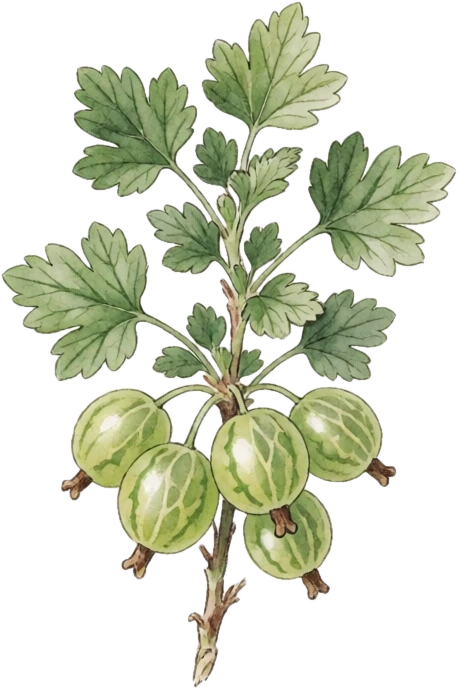
Botanical illustration of Gooseberry
Shrub · Ribes uva-crispa

Thorns are vicious on some varieties. Fruit is tart, best for cooking. 'Hinnonmaki Red' is sweet enough for fresh.

ShrubPart ShadeModerate waterModerate growthExcellent edibleAttracts butterflies800-1200 winter chill (unconfirmed)

Where to buy the plant — 2 nurseries

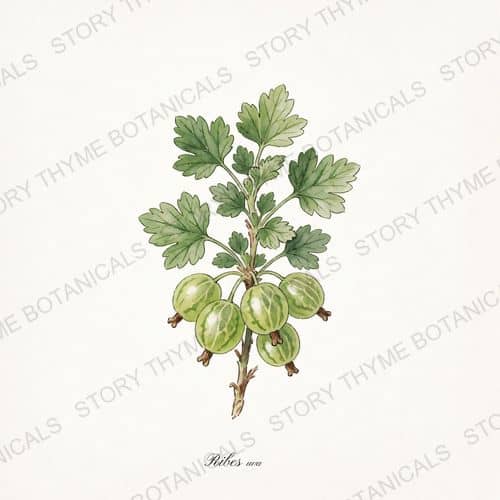
Gooseberry — a print from the Berry Plants collection

From the print shop

Growing gooseberry? Hang it.

Our Berry Plants collection carries gooseberryRibes uva-crispa, print Nº 4, “Gooseberry.”

16 designsfrom $21.99white or black groundmatte poster, unframed

Shop Berry Plants botanical prints →

I

Overview

Will gooseberry suit your garden, and what goes wrong.

Will it fruit where you are?

Enter your ZIP — we look up your USDA hardiness zone (2023 map) and check it against what gooseberry actually needs.

Hardy inZones 3-8
Winter chill800-1200
Unconfirmed

Commonly quoted, but we have not traced this range to a university extension trial or another primary source, and published figures for the same plant often disagree. Chill-hour requirements were only ever established by trial for a handful of commercial fruit crops; for most species the work was never funded. Treat it as a starting point and check your local extension office before you plant on it.

PollinationSelf-fertile

Gooseberry at a glance

HardinessUSDA 3–8
Mature size3-5 ft
PollinationSelf-Fertile
Chill requirement800-1200
Unconfirmed

Commonly quoted, but we have not traced this range to a university extension trial or another primary source, and published figures for the same plant often disagree. Chill-hour requirements were only ever established by trial for a handful of commercial fruit crops; for most species the work was never funded. Treat it as a starting point and check your local extension office before you plant on it.

Bloom seasonEarly Spring
Harvest seasonJuly
Growth rateModerate

Common gooseberry problems

II

Growing

Light, water, soil, propagation and the season’s jobs.

How to grow gooseberry: light, water & soil

LightPart Shade (Afternoon shade represents heat stress)
WaterModerate
SoilCool, Moist, Loamy · pH 6.0 - 7.0
FertilizerEarly Spring (Potassium loving)
PruningLate Winter — Open center (very thorny). Remove wood older than 3 years.
Spacing4-5 ft

How to plant & propagate gooseberry

PropagateGrafted, or from cuttings/layering (seed won't come true)

When to spray gooseberry

Dormant season. Dormant Oil: For Scale insects.

Growing season. Green Tip: Fungicide for Mildew. Post-bloom: Check for Currant Worms (stripped leaves).

The gooseberry growing playbook

Field-tested instructions for every job gooseberry asks of you, compiled from university extension guidance — in the order the season brings them.

Mulching

Renew two to four inches of mulch

Lay two to four inches of wood chips, pine needles or compost out to the drip line, and top it up every spring. Keep it off the crown itself. Gooseberry roots are shallow and fibrous, sitting right where the soil dries and heats first, so bare ground swings them between drought and drowning.

Wood chips and other low-nitrogen mulches tie up nitrogen as they break down - if leaves yellow, add nitrogen to compensate.

Bury the fallen leaves after harvest

Once the crop is off, rake up the fallen leaves and either remove them or cover them with fresh mulch. Put mildew-infected shoots and leaves in the trash or a hot compost pile, never a cold one. Anthracnose and septoria survive the winter in that leaf litter and nowhere else, so burying it is what breaks the cycle before the spring rains splash the spores back up into the new foliage.

Feeding

Feed the bush as growth starts in spring

Once a year in early spring, scatter 6 to 8 ounces of 10-10-10 in an 18-inch ring around the plant. Yellowing leaves and short new shoots are the sign it went hungry. Gooseberries fruit on one, two and three-year-old wood, so the bush has to push a fresh crop of canes every year to keep replacing the old ones, and that renewal runs on nitrogen.

Keep concentrated fertilizer off the crown and out of the planting hole - gooseberry roots are shallow and fibrous. Do not exceed the labeled rate.

Pruning

Renew gooseberry canesMar – Apr

Before growth starts, remove dead low or crowded stems and cut out the oldest canes at the base. Gooseberries fruit best on young wood; renewal pruning keeps airflow and productive shoots.

Check local Ribes rules where white pine blister rust restrictions apply.

What to watch for

Imported currantworm: check the low interior leaves

Once the flowers finish, look under the leaves low in the center of the bush for small holes and for green larvae with black spots. Hand-pick them. If they are numerous, spinosad or insecticidal soap will stop them - treat only if you actually find larvae. This sawfly lays on the undersides of the lowest leaves and the larvae eat outward from the center, so a bush can be stripped to bare canes within days while the outside still looks untouched.

Spinosad is toxic to bees until the spray dries - wait until bloom is fully over and spray in the evening when bees are not foraging. Follow the label's pre-harvest interval.

Pull the berries that color early - they are wormy

As the crop colors up, pick off any berry that reddens and softens ahead of the rest, and gather the drops daily. Destroy them, do not compost them. An infested berry ripens early and falls early, and every one you leave on the ground delivers a maggot into the soil to overwinter and reinfest the bush next spring.

Spraying

Powdery mildew: first sulfur spray before the blossoms open

Just before the flowers open, spray a sulfur product labeled for gooseberry. Repeat at full bloom and again two weeks later. Skip this entirely on a mildew-resistant variety like Invicta unless you have seen mildew before. Powdery mildew colonizes the new shoot tips and young berries as they expand, and once the felted white growth is on the fruit the crop is already unsalable - sulfur only prevents infection, it will not cure it.

Sulfur and many other pesticides turn phytotoxic when applied with or close behind an oil spray - check the label for the specific interval before pairing them. Repeated oil applications can delay ripening and reduce sugar in the berries. Some sulfur dusts are registered for gooseberry only, not currants - read the label.

Protection

Currant fruit fly: cover the fruit after pollination

After the petals drop and pollination is done, throw a floating row cover over the bush, and lay a tarp on the ground beneath it. Both come off at harvest. The female fly slips her eggs just under the skin of the developing berry, and the maggot feeds inside where no spray can reach it - the only reliable move is to keep her off the fruit and to stop the larvae from reaching the soil to pupate.

Do not cover before pollination is finished. If you spray instead, esfenvalerate is registered on gooseberry only and not on currants, and it is toxic to bees - apply in the evening.

Harvesting

Pick twice: green for the kitchen, ripe for the hand

Harvest runs four to six weeks, so pick over the bush more than once. Take the berries firm and green for pies and jelly, and leave the rest to reach full color and soften for fresh eating. Cool them right away. An underripe gooseberry is far higher in pectin and acid, which is exactly what sets a jelly, while the same berry left three weeks longer turns sweet and aromatic and will not set at all - one bush gives you two different fruits.

III

The year

What gooseberry asks for, month by month.

The gooseberry year, month by month

MonthJanFebMarAprMayJunJulAugSepOctNovDec
Bloom
Prune
Harvest

What each band means

  • Bloomflowers open — pollinators working, frost on blossoms is the danger.
  • Pruneshape it now — cuts heal cleanly and structure is visible.
  • Harvestpicking time — check ripeness every few days.

The gooseberry year as text

  • Jan quiet month
  • Feb pruning
  • Mar bloom, pruning
  • Apr bloom
  • May quiet month
  • Jun quiet month
  • Jul harvest
  • Aug quiet month
  • Sep quiet month
  • Oct quiet month
  • Nov quiet month
  • Dec quiet month

These are the species' typical months — expect them a few weeks earlier in warm zones and later in cold ones. Watch the plant, not just the calendar.

IV

Ecology & uses

What it does for the garden, and what it is grown for.

Gooseberry in the garden system

  • Shrub layer shrub
AttractsBirds, Butterflies
MoistureFacultative / average
DeerBrowsed — protect young plants
OriginIntroduced

What gooseberry is grown for

✓ Commonly eaten

UsePie
UseJam
UseFool
Edible value4/5

Harvesting & storing gooseberry

July.

Edibility, identification, and traditional-use notes here are general reference — not medical or veterinary advice, and not a claim that any plant treats or prevents anything. Medicinal ratings record how strongly a plant features in herbal tradition, nothing more. Never eat or dose a plant you have not positively identified. More on how to use this library.

V

Cultivars

Named varieties of gooseberry, ruled as a catalogue.

Best gooseberry varieties & cultivars

14 on file

Named varieties of gooseberry differ in winter-chill needs, ripening time, hardiness, and whether they set fruit on their own — pick one that fits your climate.

Invicta

Self-fertile
Chill800–1500 hrsRipensJulyZones3-8Diseaseexcellent (mildew-resistant)Size3-5 ft, vigorous sprawling, very thorny

large pale-green, mildly tart; culinary/dessert — The heaviest-yielding, most mildew-resistant European green gooseberry, but its big thorns make picking a chore. Self-fertile; chill figure is the species-level 800-1500 hr estimate.

Where to buy ‘Invicta

Story Thyme Farms may earn a small commission from these links, at no cost to you — it never changes what we recommend.
Hinnomaki Red · Hinnonmaki Red, Hinnonmaki Punainen

Self-fertile
Chill800–1500 hrsRipensJulyZones3-8Diseasegood (mildew-resistant)Size3-4 ft, upright

tangy skin, sweet flesh; excellent fresh eating — Finnish-bred for cold and mildew resistance, it is the go-to dessert gooseberry with sweet flesh and tart skin. Self-fertile; chill figure is the species-level 800-1500 hr estimate.

Where to buy ‘Hinnomaki Red

Story Thyme Farms may earn a small commission from these links, at no cost to you — it never changes what we recommend.

Poorman · Poor Man

Self-fertile
Chill800–1500 hrsRipensJulyZones3-8Diseaseexcellent (mildew and white pine blister rust resistant)Size3-5 ft, vigorous, few thorns

medium-large red, sweet-tart; best fresh American type — American cultivar selected in Brigham City, Utah (1890); widely regarded as the best-flavored American gooseberry for fresh eating, productive and largely thorn-free. Self-fertile; chill figure is the species-level 800-1500 hr estimate.

Where to buy ‘Poorman

Story Thyme Farms may earn a small commission from these links, at no cost to you — it never changes what we recommend.

Pixwell

Self-fertile
Chill800–1500 hrsRipensMid-summerZones3-8DiseasemoderateSize3-4 ft, nearly thornless

medium green ripening to pink-purple, tart; good for pies and jam — A tough, nearly thornless prairie standby (North Dakota, 1932) whose berries hang out from the cane for easy picking, ideal for cold northern gardens. Self-fertile; chill figure is the species-level 800-1500 hr estimate.

Where to buy ‘Pixwell

Story Thyme Farms may earn a small commission from these links, at no cost to you — it never changes what we recommend.

Captivator

Self-fertile
Chill900–1100 hrsRipensJulyZones3-8Diseasegood (mildew-resistant)Size3-4 ft, nearly thornless

deep pink/red teardrop, sweet when fully ripe; fresh and dessert — An American-European hybrid prized for being nearly thornless and mildew-resistant, a beginner-friendly pick hardy to zone 3. Chill need narrowed to the cultivar-specific 900-1100 hrs cited by extension/nursery sources. Self-fertile.

Where to buy ‘Captivator

Story Thyme Farms may earn a small commission from these links, at no cost to you — it never changes what we recommend.

Black Velvet

Self-fertile
Chill800–1500 hrsRipensJulyZones4-8Diseaseexcellent (mildew-resistant)Size3-4 ft, vigorous

small dark-red to purple-black, rich almost blueberry/grape-like; superb fresh — A gooseberry-worcesterberry hybrid (R. uva-crispa x R. hirtellum) with standout dark, sweet fruit and strong disease resistance; self-fertile and very hardy (to about zone 3). Chill figure is the species-level 800-1500 hr estimate.

Where to buy ‘Black Velvet

Story Thyme Farms may earn a small commission from these links, at no cost to you — it never changes what we recommend.

Jahns Prairie · Jahn's Prairie

Self-fertile
Chill800–1500 hrsRipensJulyZones3-8Diseaseexcellent (mildew, white pine blister rust, and leaf spot resistant)Size3-5 ft

pinkish-red, sweet-tart, dessert-quality; fresh and processing — A native selection (Ribes oxyacanthoides, from Alberta) that is exceptionally disease-resistant and hardy to -40F, the best choice for the coldest, most disease-prone sites. Self-fertile; chill figure is the species-level 800-1500 hr estimate.

Where to buy ‘Jahns Prairie

Story Thyme Farms may earn a small commission from these links, at no cost to you — it never changes what we recommend.
Jeanne

Self-fertile
Chill800–1500 hrsRipensJulyZones4-8Diseaseexcellent (mildew and white pine blister rust resistant)Size3-4 ft, upright, thornless

small deep-red, sweet-tart; fresh and preserves — A 2006 USDA (Corvallis, OR) release bred for outstanding resistance to mildew and white pine blister rust and hardy below -40F, a reliable disease-free thornless choice. No well-documented cultivar-specific chill figure; using the species-level 800-1500 hr estimate.

Where to buy ‘Jeanne

Story Thyme Farms may earn a small commission from these links, at no cost to you — it never changes what we recommend.

Hinnomaki Yellow · Hinnonmaki Yellow, Hinnonmaki Keltainen

Self-fertile
RipensJulyZones3-8Size3-4 ft, upright

large yellow berries with a distinct sweet apricot note; superb fresh — In the University of Wisconsin uncommon fruit trials it yielded well and was flagged, with Hinnonmaki Red and Invicta, as one of the three gooseberries with real commercial potential - the catch is that it is thorny and slow to pick.

Where to buy ‘Hinnomaki Yellow

Story Thyme Farms may earn a small commission from these links, at no cost to you — it never changes what we recommend.

Oregon Champion

Self-fertile
RipensJulyZones3-8Size3-5 ft

yellow-green berries, tart; a processing and pie gooseberry — An American-type gooseberry that Utah State names as producing yellow-green berries that work well for processing.

Where to buy ‘Oregon Champion

Story Thyme Farms may earn a small commission from these links, at no cost to you — it never changes what we recommend.

Downing

Self-fertile
RipensJulyZones3-8Diseasegood (mildew-resistant)Size3-5 ft

small green berries with very good flavor — An old American variety Utah State cites as mildew-resistant with very good flavor. The berries are small, so it trades size for the ability to be grown without a mildew spray program.

Where to buy ‘Downing

Story Thyme Farms may earn a small commission from these links, at no cost to you — it never changes what we recommend.

Achilles

Self-fertile
RipensJulyZones3-8Size3-5 ft

large green berries with excellent flavor and few hairs — A European gooseberry Utah State lists for large fruit and excellent flavor with few hairs on the skin. Like other European types it wants afternoon shade and airflow, and is more mildew-prone than the American varieties.

Where to buy ‘Achilles

Story Thyme Farms may earn a small commission from these links, at no cost to you — it never changes what we recommend.

Chautauqua

Self-fertile
RipensJulyZones3-8Diseasesomewhat resistant to mildewSizecompact

large green berries with good flavor — A compact European gooseberry that Utah State notes as possibly suited to container production, somewhat resistant to mildew, with large green fruit of good flavor - the pick for a patio or a small yard rather than for yield.

Where to buy ‘Chautauqua

Story Thyme Farms may earn a small commission from these links, at no cost to you — it never changes what we recommend.

Tixia

Self-fertile
RipensJulyZones3-8Size3-4 ft, upright

large bright red teardrop berries, dessert quality — Minnesota extension lists it as nearly thornless with large bright red teardrop fruit; Wisconsin's trial rated the fruit dessert-quality but found the plant adapted poorly at their site and counted the thorns as numerous though soft. Worth trying, not worth betting a planting on.

Where to buy ‘Tixia

Story Thyme Farms may earn a small commission from these links, at no cost to you — it never changes what we recommend.

VI

Sources & plant ID

Where the care distinctions come from, and how the plant is filed.

Research basis

Sources behind this profile

No extension citations are attached to gooseberryyet. The care figures below come from the library's own catalogue rather than a traced primary source.

Plant ID

BinomialRibes uva-crispa
FamilyGrossulariaceae
TypeShrub · Perennial
USDA symbolRIUV80
OriginIntroduced
Invasive riskLow

VII

Where to buy

Third-party nurseries — not Story Thyme Farms.

Third-party nurseries, not Story Thyme Farms. Prices are theirs.

Story Thyme Farms may earn a small commission from these links, at no cost to you — it never changes what we recommend.

VIII

Questions

Gooseberry questions, answered straight.

Do I need two gooseberry plants to get fruit?

No — gooseberry is self-fertile, so a single plant will set a crop. A second one usually improves yields, but it isn't required.

Will gooseberry fruit in a warm-winter climate?

Gooseberry needs roughly 800-1200 hours of winter chill (hours between 32–45°F) to break dormancy and set fruit. That range is commonly quoted but we have not traced it to a university extension trial, and published figures for this plant disagree — treat it as a starting point and check your local extension office. Mild-winter growers should count their chill hours before planting.

Is gooseberry safe for kids and pets?

Gooseberry is commonly eaten and isn't considered toxic, but "commonly eaten" isn't a guarantee for any particular person or animal — allergies, quantity, and which part you eat all matter. Never eat a plant you haven't positively identified, and check with a vet before letting pets or livestock graze anything new.

When do you harvest gooseberry?

July.

IX

Elsewhere

Where gooseberry sits in the library.

Where gooseberry sits in the library

Grows in the same world