Radicchio

Cichorium intybus var. foliosum

Family Asteraceae

BiennialZones 2-11

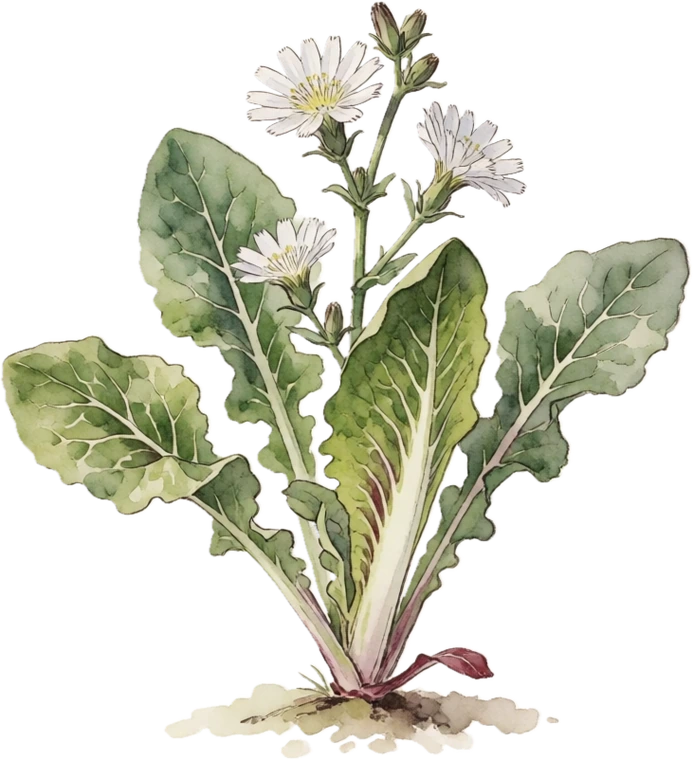
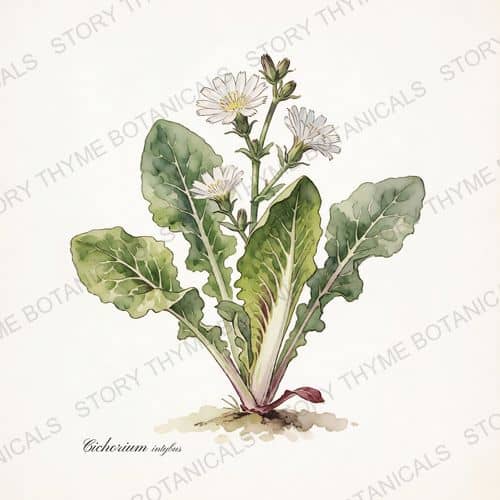
Botanical illustration of Radicchio

Radicchio rewards patience with transformation. In summer heat it's aggressively bitter; kissed by fall frost and then grilled or roasted, those burgundy-and-white heads turn sweet, nutty, and faintly smoky — the flavor that anchors real Italian winter cooking and costs accordingly at the market.

As a fall crop it's obliging — tight, glossy heads coloring up as nights cool, standing in the bed while you harvest as needed. Cold does the seasoning; the grill does the rest. If bitterness has kept you away, plant a fall row and let a hard frost make your case.

Where to buy radicchio — 3 nurseries compared

  • Full Sun
  • Moderate water
  • Moderate growth
  • Excellent edible
Radicchio — a print from the Plant Library collection

From the print shop

Growing radicchio? Hang it.

Our Plant Library collection carries radicchio — Cichorium intybus, print Nº 387, “Radicchio.”

526 designsfrom $12.99white or black backgroundmatte poster, unframed

Shop Plant Library botanical prints →

✓

Will it fruit where you are?

Enter your ZIP — we look up your USDA hardiness zone (2023 map) and check it against what radicchio actually needs.

Hardy inZones 2-11

Radicchio · Common problems

Common radicchio problems

Pests, diseases and weather to keep an eye on.

Pests

2 problems on file

Diseases

1 problem on file

  • Almost none

Radicchio · Growing & propagation

Growing radicchio

Light, water, soil, propagation and the season’s jobs.
What it needsThe details
Light
Full Sun
Water
Moderate, even
Soil
Rich, well-drained · pH 6.0 - 7.0
Fertilizer
Light
Pruning
None

A chicory bred to head up like a small cabbage. It's a fall/cool-season crop — heat makes it purely bitter, cold sweetens it. Some types are cut back in late summer to force a fresh tight head. Frost and grilling transform the bitterness into something wonderful.

Spacing
8-10 in

How to plant & propagate radicchio

Maturity
80-100 days
From seed
Sow early summer for fall heads

Cold sweetens it

Propagate
From seed or division

Radicchio · Seasonal care & spray guidance

The radicchio growing playbook

Field-tested instructions for every job radicchio asks of you, compiled from university extension guidance — in the order the season brings them.

Through summer

the growing season

5 jobs
SowingIn summer

Sow in summer for a fall crop, not in spring

Sow seed 1/4 to 1/2 inch deep in midsummer, either directly in the bed or indoors in flats about four weeks ahead of setting plants out. Aim to have plants sized up as the nights start cooling, and keep the seedbed shaded and damp if soil is running hot. Radicchio heads properly only as temperatures fall, and sustained heat above 75F pushes it to bolt instead of forming a head. A crop that matures into cooling fall weather colors up red and stays sweet, while a spring sowing runs to seed as days lengthen.

Planting outIn summer

Set plants out at head spacing, about four weeks after sowing

Move transplants to the bed about four weeks after sowing, in soil held between pH 6.0 and 6.8. Space them 10 to 12 inches apart for full-size heads, or 6 to 8 inches apart if you want mini heads about 4 to 5 inches across. Radicchio wraps a head rather than spreading, so spacing sets head size directly. Crowded plants trade head density for leaf, and heads that touch hold water between them and rot at the base.

WateringIn summer

Keep it at an inch of water a week, and do not let it check

Give the bed about one inch of water per week counting rainfall, and keep it steady rather than letting the bed swing between bone dry and soaked. Expect to water this crop a little longer into the season than you would lettuce on the same ground. Radicchio needs a longer run to maturity than lettuce, so it sits on the same shallow root zone for more weeks and needs the extra irrigation to finish. Steady moisture matters more than volume: when watering or rain follows a dry spell the plants resume growth suddenly, and that check-then-surge is what shows up as tipburn, the browning of leaf edges inside the head.

FeedingIn summer

Work in a complete fertilizer, then side-dress at four inches tall

Work a complete fertilizer into the bed at about two pounds per 100 square feet before planting. Once the plants stand about four inches tall, side-dress with roughly one pound for every 25 feet of row and water it in. The whole crop is leaf, so head weight tracks nitrogen supply during the frame-building weeks. Feeding the plant while it is still open and growing fills the head out before cold shuts growth down.

What to watch forIn summer

Scout for aster yellows, cutworms, slugs and flea beetles - pull, do not spray

Walk the bed weekly. Pull and destroy any plant that is stunted with yellowed leaves and stems, and keep perennial broadleaf weeds knocked back around the planting. Watch also for cutworms, slugs and flea beetles chewing young plants. Aster yellows is a phytoplasma carried by aster leafhoppers, and once a leafhopper picks it up it transmits the pathogen every time it feeds for the rest of its life. An infected plant never recovers, so it is only a reservoir the next leafhopper feeds from. The pathogen also survives in perennial weeds from one season to the next, which is why clearing them out of the planting matters.

Harvest time

as it ripens, and picking

1 job
HarvestingAt harvest

Cut when the head is full and solid, and let frost hit it first

Squeeze the heads and cut at soil level once they feel full and firm rather than spongy. Let a few frosts pass over the crop before you cut if you can, and trim off outer leaves the cold has burned. Store the cut heads cold and damp, at 32 to 34F and near-saturated humidity, where they will hold two to three weeks. Firmness, not the calendar, is what says the head has finished wrapping - days to maturity shift by variety and by how warm the run-up was. Cold weather deepens the red and takes the hard edge off the bitterness, and the tops shrug off short spells down to about 20F. If frost kills the outer green leaves, the red head underneath is usually fine.

After harvest

autumn, and putting it to bed

1 job
PruningIn autumn

Forcing types: cut back to the crown, then lift the roots to force

If you are growing a forcing type such as Red Verona or Treviso, cut the leaves off to within 1 inch of the crown about two to three weeks before your first frost. Then dig the roots and store them in a burlap bag in a cool, dark place - the head forms in storage, not in the bed. Do not leave the cut-back plants in the ground and wait for them to re-head. Forcing types do not wrap a tight head on their own in the field. Cutting the top away and lifting the root sends the root's stored reserves into a fresh, blanched, tightly folded head, and the cool dark storage is what blanches it. Leaving a cut-back crown in the bed through frost gives you neither the old leaves nor a forced head.

Radicchio · Calculators & field guides

A little help in the garden.

Calculators for the figures. Field guides for the hands-on work.

Radicchio · Yearly calendar

The radicchio year, month by month

What radicchio asks for, month by month.

Jan

HarvestSeptember to February

MonthJanFebMarAprMayJunJulAugSepOctNovDec
Harvest

HarvestSeptember to February

What each band means

  • Harvest — picking time — check ripeness every few days.

These are the species' typical months — expect them a few weeks earlier in warm zones and later in cold ones. Watch the plant, not just the calendar.

Radicchio · Ecology & uses

Ecology & uses

What it does for the garden, and what it is grown for.
Botanical illustration of Radicchio

Cichorium intybus var. foliosum

Radicchio in the garden system

  • Herbaceous layer biennial
Moisture
Facultative / average
Deer
Browsed

Protect young plants

Origin
Introduced

What radicchio is grown for

✓ Commonly eaten

Use
Grilled/roasted
Traditional use
Bitter salads
Use
Fall crop
Edible value
4/5

Harvesting & storing radicchio

Fall/winter: tight red-and-white heads — bitter raw, sweet-smoky grilled or roasted; frost improves them. About 80-100 days from planting.

Edibility, identification, and traditional-use notes here are general reference — not medical or veterinary advice, and not a claim that any plant treats or prevents anything. Medicinal ratings record how strongly a plant features in herbal tradition, nothing more. Never eat or dose a plant you have not positively identified. More on how to use this library.

Radicchio · Varieties & cultivars

Best radicchio varieties & cultivars

There are far more than these — the ones below are the named varieties of radicchio people actually plant.

Named varieties of radicchio differ in winter-chill needs, ripening time, hardiness, and whether they set fruit on their own — pick one that fits your climate.

10 varieties

Giorgione

Also known as Variegato di Castelfranco

Ripens
spring
Zones
2-11
Size
Early, pear-shaped, dense compact head

Balances classic chicory bitterness with sweetness, especially in fall - not a mild one — Open-pollinated Castelfranco type. Leaves are variable red-to-pink speckled on a cream ground rather than solid red, and the internal speckling intensifies in fall. Fastest of the group to a cuttable head. If you want the mild end of this catalog, that is Bel Fiore, not this.

Where to buy ‘Giorgione’

Story Thyme Farms may earn a small commission from these links, at no cost to you — it never changes what we recommend.

Sources & plant identity

Know what you’re growing.
See where the knowledge comes from.

Botanical illustration of Radicchio

Radicchio

Cichorium intybus var. foliosum

The plant, at a glance.

Botanical name
Cichorium intybus var. foliosum
Plant family
Asteraceae
Growth habit
Biennial · Perennial
Origin
Introduced
USDA plant symbol
CIIN
Invasive risk
Low
Every garden is different.

Hardiness, size and timing vary with your cultivar, soil and climate.

Rooted in research.

University extension research, brought together with hands-on growing experience at Story Thyme Farms.

Explore Radicchio’s sources8 reference links
for Radicchio

Research from these sources

Publisher marks identify sources, not sponsorship or endorsement.

Questions

Radicchio questions, answered straight.

Is radicchio safe for kids and pets?

Radicchio is commonly eaten and isn't considered toxic, but "commonly eaten" isn't a guarantee for any particular person or animal — allergies, quantity, and which part you eat all matter. Never eat a plant you haven't positively identified, and check with a vet before letting pets or livestock graze anything new.

When do you harvest radicchio?

Fall/winter: tight red-and-white heads — bitter raw, sweet-smoky grilled or roasted; frost improves them. From planting, expect about 80-100 days to maturity.

How do you propagate radicchio?

From seed or division.

Elsewhere

Where radicchio sits in the library.

Where radicchio sits in the library

Grows in the same world