The illustrated growing guide

Southern Pea (Cowpea/Black-Eyed Pea)

Vigna unguiculata

Family Fabaceae

Grown as an annual

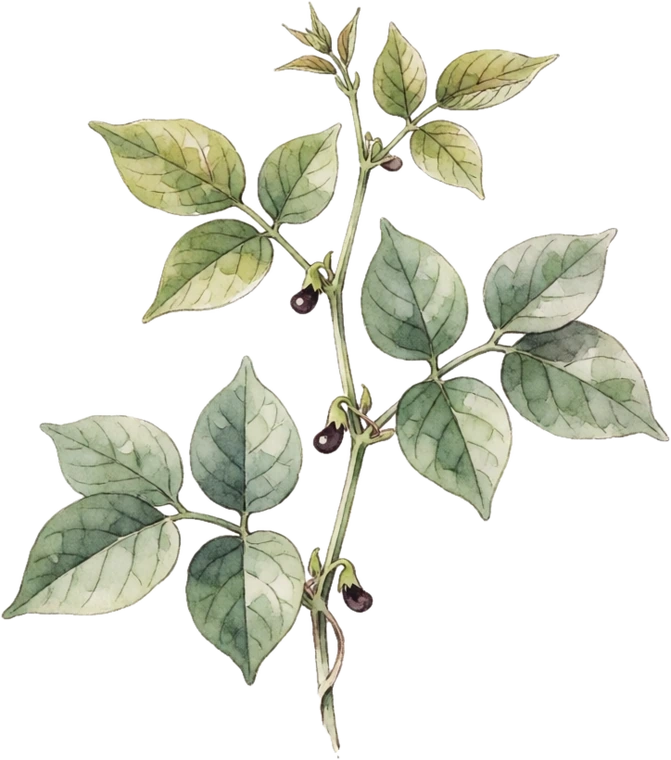
Botanical illustration of Southern Pea (Cowpea/Black-Eyed Pea)
Annual · Vigna unguiculata

The crop that loves the brutal heat everything else hates — a Southern staple that thrives in July, tolerates drought and poor soil, and fixes nitrogen (doubling as a cover crop). Pick young pods as snaps, shell fresh, or dry for the New Year's black-eyed peas. Essential where summers are too hot and dry for regular beans, and a genuine soil-builder for tired ground.

AnnualFull SunLow waterFast in heat growthExcellent edibleAttracts beesAttracts butterfliesNone winter chill

Where to buy the plant — 1 nursery

Black Eyed Pea — a print from the Beans & Legumes collection

From the print shop

Growing southern pea (cowpea/black-eyed pea)? Hang it.

Our Beans & Legumes collection carries southern pea (cowpea/black-eyed pea)Vigna unguiculata, print Nº 12, “Black Eyed Pea.”

16 designsfrom $21.99white or black groundmatte poster, unframed

Shop Beans & Legumes botanical prints →

I

Overview

Will southern pea (cowpea/black-eyed pea) suit your garden, and what goes wrong.

Will it fruit where you are?

Enter your ZIP — we look up your USDA hardiness zone (2023 map) and check it against what southern pea (cowpea/black-eyed pea) actually needs.

Life cycleAnnual
Winter chillNone
PollinationSelf-fertile

Southern Pea (Cowpea/Black-Eyed Pea) at a glance

Life cycleAnnual
Mature size2-3 ft (bush) or vining types
PollinationSelf-pollinating
Chill requirementNone (not chill-dependent)
Bloom seasonSummer (heat sets it beautifully)
Harvest seasonShell fresh 'green' for summer meals, or dry the beans for winter storage
Growth rateFast in heat

Common southern pea (cowpea/black-eyed pea) problems

  • Cowpea Curculio
  • Aphids
  • Deer
  • Almost none — very tough

II

Growing

Light, water, soil, propagation and the season’s jobs.

How to grow southern pea (cowpea/black-eyed pea): light, water & soil

LightFull Sun
WaterLow-Moderate — drought-tough once established
SoilAny, even poor; nitrogen-fixer · pH 5.5 - 7.0
FertilizerNone — fixes nitrogen, builds poor soil
PruningNone — Direct-sow after soil is warm; it LOVES the July heat that stalls green beans, tolerates drought and poor soil, and fixes nitrogen (also a great Southern cover crop). Pick young for snaps, shelly for fresh, or leave to dry.
Spacing3-4 in

How to plant & propagate southern pea (cowpea/black-eyed pea)

Maturity60-90 days
From seedDirect-sow when soil is warm (70°F+); loves heat
PropagateFrom seed

The southern pea (cowpea/black-eyed pea) growing playbook

Field-tested instructions for every job southern pea (cowpea/black-eyed pea) asks of you, compiled from university extension guidance — in the order the season brings them.

Sowing

Sow only after the soil hits 65F - not by the calendar

Wait until frost danger has passed and the soil in the top 4 inches has held 65F or above for a couple of days, then direct-sow 1 inch deep. Bush types go 4 to 6 seeds per foot, vining types 1 to 2 seeds per foot, in rows 20 to 42 inches apart. Germination runs best between 70F and 95F, and seed sown into cold wet ground rots or damps off instead of emerging. Plants that do survive a chilly start come up stunted and take longer to mature, giving away the head start you were chasing.

Fall crop: count back 65 to 75 days from your first frost

For a late crop, sow about 65 to 75 days before your average first frost date, and stagger sowings every couple of weeks if you want a steady picking rather than one flush. Southern peas tolerate midsummer heat that stalls beans, so summer sowing works well. Frost injures the pods outright, so the crop has to reach the mature green stage before it arrives. Anchoring the sowing to your own average frost date is what makes this work in Michigan and Georgia alike.

Watering

Water through bloom and pod fill - but not right before bloom

Give about 1 inch of water every 7 to 10 days and keep the moisture even from flowering through pod development. Avoid heavy overhead irrigation during bloom or in the 2 to 3 days just ahead of it; water at the base instead. Southern peas shrug off drought better than most vegetables, but bloom and pod fill are the one stretch where moisture converts directly into peas. Soaking the flowers disrupts pollination, delays fruit set, and pushes the plant back toward vine growth.

Feeding

Inoculate the seed, and go light on nitrogen

Coat the seed with a Rhizobium inoculant before sowing, especially on ground that has not grown peas or beans recently. Apply only a light fertilizer at or before planting and target a soil pH of 5.8 to 7.0; let the soil test set the rate rather than guessing high. Southern peas fix their own nitrogen once the root nodules form, so added nitrogen is not a boost but a redirection. Overfertilized plants build big vines and set almost no pods, which is the single most common reason a lush-looking planting yields nothing.

What to watch for

Beat-sheet for cowpea curculio once flowering starts

Walk the planting weekly or more often from first flower on, holding a beat sheet under the plants and shaking the adults off to count them. Check field edges and weedy margins first, since the adults move in from overwintering weeds. Do not spray an insecticide while the flowers are open - just count now and act as pods form. The adult female bores into young pods and lays eggs, and the larvae feed on the developing seeds inside where no spray can reach them. Peak larval feeding lands about two weeks after peak adult activity, so what you count at bloom tells you what is coming.

Spraying

Cowpea curculio: first spray as the pods start forming

As the flowers drop and the first small pods appear, spray bifenthrin if your scouting turned up adults, and repeat at 3 to 5 day intervals per the label while pods are filling. Rotate to a different mode of action rather than spraying bifenthrin all season. The window is narrow: once a larva is inside the pod it is untouchable, so the target is the adult in the few days between pod set and egg laying. Southeastern curculio populations have been shrugging off pyrethroids since esfenvalerate resistance was documented in Georgia in 1987, which is why rotating chemistry matters more here than on most vegetables.

Bifenthrin is toxic to bees - never apply it to open flowers; wait until petals have dropped. Pre-harvest interval is 3 days for succulent green-shell peas and 14 days for dry peas.

Protection

Turn the residue under, and move the patch next year

After the last picking, plow or turn the crop residue so the soil and debris are exposed to winter freezing, and clean up weedy margins. Rotate southern peas onto fresh ground rather than following peas with peas, and use a nonhost like sweet corn where nematodes are a problem. Curculio larvae leave the pods and burrow 1 to 3 inches down to pupate, so the next generation is already in your ground when you finish picking. Extension reports fall tillage and sanitation may help slow that buildup, though the practice has not been formally evaluated - treat it as cheap insurance rather than a proven fix. Rotation is the better-established half: it starves Fusarium wilt and root-knot nematodes, which build up wherever peas follow peas.

Harvesting

Pick at the mature green stage, and pick again

Harvest when the pods are completely filled and the seeds are fully grown but have not begun to dry - the mature green or roasting ear stage, roughly 50 to 80 days after sowing depending on variety. Hand-picked plantings need going over several times as pods reach that stage. For dry peas instead, leave the pods on the plant until it dies down but pull them before they split open. The seed is at full size and still tender at mature green; a few days later the starch sets and the eating quality is gone. Purple hull types announce it for you - the pod turns bright purple when the peas are ready.

Get the picked peas out of the sun immediately. Peas left in hot field baskets turn brown or black, and shelled peas spoil quickly if they are not cooled fast.

III

The year

What southern pea (cowpea/black-eyed pea) asks for, month by month.

The southern pea (cowpea/black-eyed pea) year, month by month

MonthJanFebMarAprMayJunJulAugSepOctNovDec
Bloom
Harvest

What each band means

  • Bloomflowers open — pollinators working, frost on blossoms is the danger.
  • Harvestpicking time — check ripeness every few days.

The southern pea (cowpea/black-eyed pea) year as text

  • Jan harvest
  • Feb harvest
  • Mar quiet month
  • Apr quiet month
  • May quiet month
  • Jun bloom, harvest
  • Jul bloom, harvest
  • Aug bloom, harvest
  • Sep quiet month
  • Oct quiet month
  • Nov quiet month
  • Dec harvest

These are the species' typical months — expect them a few weeks earlier in warm zones and later in cold ones. Watch the plant, not just the calendar.

IV

Ecology & uses

What it does for the garden, and what it is grown for.

Southern Pea (Cowpea/Black-Eyed Pea) in the garden system

  • Herbaceous layer annual
  • N-fixer
AttractsBees, Butterflies
MoistureUpland / dry
DeerBrowsed — protect young plants
OriginIntroduced

What southern pea (cowpea/black-eyed pea) is grown for

✓ Commonly eatenCook before eating (as all dry beans)

UseHeat-proof protein
UsePoor-soil crop
UseCover crop
UseSouthern tradition
Edible value4/5

Harvesting & storing southern pea (cowpea/black-eyed pea)

Shell fresh 'green' for summer meals, or dry the beans for winter storage. About 60-90 days from planting.

Edibility, identification, and traditional-use notes here are general reference — not medical or veterinary advice, and not a claim that any plant treats or prevents anything. Medicinal ratings record how strongly a plant features in herbal tradition, nothing more. Never eat or dose a plant you have not positively identified. More on how to use this library.

V

Cultivars

Named varieties of southern pea (cowpea/black-eyed pea), ruled as a catalogue.

Best southern pea (cowpea/black-eyed pea) varieties & cultivars

10 on file

Named varieties of southern pea (cowpea/black-eyed pea) differ in days to maturity, disease resistance, flavor, and habit — pick one that fits your season and space.

Mississippi Silver · MS Silver

Self-fertile
RipensmidZones2-11DiseaseFusarium wilt, nematodesSizesemi-bush

cream crowder — Cream crowder type with good yield and quality; the Arkansas home garden table rates it 75 days.

Where to buy ‘Mississippi Silver

Story Thyme Farms may earn a small commission from these links, at no cost to you — it never changes what we recommend.

California Blackeye #5 · Blackeye #5; California #5

Self-fertile
RipensmidZones2-11DiseaseFusarium wiltSizeerect bush

blackeye — The standard blackeye pea; erect plant type with good yield.

Where to buy ‘California Blackeye #5

Story Thyme Farms may earn a small commission from these links, at no cost to you — it never changes what we recommend.

Pinkeye Purple Hull BVR · Pink Eye Purple Hull BVR

Self-fertile
RipensmidZones2-11Diseasebacterial and virus resistantSizelow bush

pinkeye — Low, bushy purple hull type; BVR denotes the bacteria and virus resistant selection.

Where to buy ‘Pinkeye Purple Hull BVR

Story Thyme Farms may earn a small commission from these links, at no cost to you — it never changes what we recommend.

Elite

Self-fertile
RipensearlyZones2-11DiseaseFusarium wiltSizeerect bush

cream — Arkansas release; cream type, erect plant habit, good yield and quality.

Where to buy ‘Elite

Story Thyme Farms may earn a small commission from these links, at no cost to you — it never changes what we recommend.

Top Pick Pinkeye · Top Pick

Self-fertile
RipensearlyZones2-11Sizeerect bush

pinkeye — Arkansas release, also sold in Cream and Brown Crowder selections; erect plant type with high yield.

Where to buy ‘Top Pick Pinkeye

Story Thyme Farms may earn a small commission from these links, at no cost to you — it never changes what we recommend.

Zipper Cream · Zipper cream

Self-fertile
RipenslateZones2-11Sizerunner/creeping

cream — White pod, cream seed, runner or creeping habit. The Arkansas variety table rates it late maturity, which that publication defines as 80 to 90 days.

Where to buy ‘Zipper Cream

Story Thyme Farms may earn a small commission from these links, at no cost to you — it never changes what we recommend.

Texas Pinkeye

Self-fertile
RipensmidZones2-11Sizebush/erect

browneye — Purple pod on a bush erect plant. The Arkansas variety table rates it medium maturity, which that publication defines as 70 to 78 days, and records mid-pack fresh-market yields (1,986 lbs/A shelled).

Where to buy ‘Texas Pinkeye

Story Thyme Farms may earn a small commission from these links, at no cost to you — it never changes what we recommend.

Louisiana Purple Hull · Quick Pick; LA Purple Hull

Self-fertile
Zones2-11Sizebush/erect

pinkeye — Purple pod, pinkeye seed, bush erect habit. The Arkansas variety table leaves its maturity class blank, so no days-to-maturity figure is claimed here. Extension names it the variety to pick for machine harvest.

Where to buy ‘Louisiana Purple Hull

Story Thyme Farms may earn a small commission from these links, at no cost to you — it never changes what we recommend.

White Acre · Whiteacre

Self-fertile
Zones2-11Sizebush

cream — Small-seeded cream type listed among Georgia's recommended cream varieties. Alabama Extension relays a University of Georgia observation that it appears more resistant to cowpea curculio than Pinkeye Purple Hull.

Where to buy ‘White Acre

Story Thyme Farms may earn a small commission from these links, at no cost to you — it never changes what we recommend.

Texas Cream 12

Self-fertile
Zones2-11DiseaseFusarium wilt, nematodesSizebush

cream — Listed by Georgia Extension among recommended cream types, flagged there as Fusarium and nematode resistant.

Where to buy ‘Texas Cream 12

Story Thyme Farms may earn a small commission from these links, at no cost to you — it never changes what we recommend.

VI

Sources & plant ID

Where the care distinctions come from, and how the plant is filed.

Research basis

Sources behind this profile

No extension citations are attached to southern pea (cowpea/black-eyed pea)yet. The care figures below come from the library's own catalogue rather than a traced primary source.

Plant ID

BinomialVigna unguiculata
FamilyFabaceae
TypeAnnual
USDA symbolVIUN
OriginIntroduced
Invasive riskLow

VII

Where to buy

Third-party nurseries — not Story Thyme Farms.

Third-party nurseries, not Story Thyme Farms. Prices are theirs.

Story Thyme Farms may earn a small commission from these links, at no cost to you — it never changes what we recommend.

VIII

Questions

Southern Pea (Cowpea/Black-Eyed Pea) questions, answered straight.

Do I need two southern pea (cowpea/black-eyed pea) plants to get fruit?

No — southern pea (cowpea/black-eyed pea) is self-fertile, so a single plant will set a crop. A second one usually improves yields, but it isn't required.

Is southern pea (cowpea/black-eyed pea) safe for kids and pets?

Southern Pea (Cowpea/Black-Eyed Pea) is commonly eaten and isn't considered toxic, but "commonly eaten" isn't a guarantee for any particular person or animal — allergies, quantity, and which part you eat all matter. One caveat on this one: Cook before eating (as all dry beans. Never eat a plant you haven't positively identified, and check with a vet before letting pets or livestock graze anything new.

When do you harvest southern pea (cowpea/black-eyed pea)?

Shell fresh 'green' for summer meals, or dry the beans for winter storage. From planting, expect about 60-90 days to maturity.

How do you propagate southern pea (cowpea/black-eyed pea)?

From seed.

IX

Elsewhere

Where southern pea (cowpea/black-eyed pea) sits in the library.

Where southern pea (cowpea/black-eyed pea) sits in the library

Grows in the same world