The illustrated growing guide

Wasabi

Eutrema japonicum

Family Brassicaceae

Est. zones 7-9

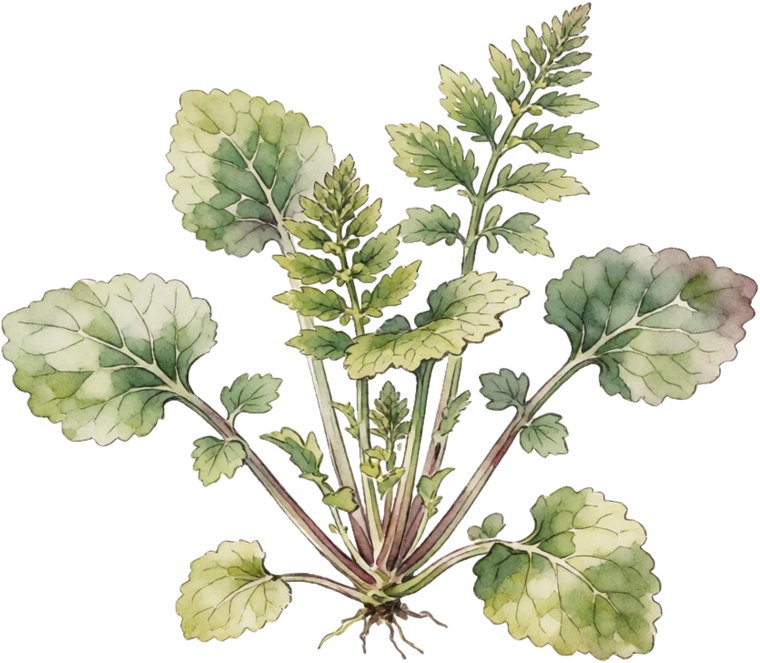
Botanical illustration of Wasabi
Perennial · Eutrema japonicum

The hardest crop in this database, and the most legendary — true wasabi, which almost no one has tasted (that green paste is dyed horseradish). It demands a cool, deep-shaded, constantly-fresh-flowing-water setting and up to two years' patience. Even if the rhizome defeats you, the pungent leaves and flowers are a gourmet consolation prize. For the obsessed grower with a shady cold stream.

PerennialDeep Shade — never direct sunHigh waterVery Slow growthExcellent edible

Where to buy the plant — 1 nursery

I

Overview

Will wasabi suit your garden, and what goes wrong.

Will it fruit where you are?

Enter your ZIP — we look up your USDA hardiness zone (2023 map) and check it against what wasabi actually needs.

Hardy inZones 7-9

Wasabi at a glance

HardinessUSDA 7–9
Mature size1-2 ft
PollinationSmall white flowers
Chill requirementNot yet established
Bloom seasonSpring (edible flowers and leaves)
Harvest seasonThe grated rhizome is real wasabi (most 'wasabi' is dyed horseradish); leaves, stems, and flowers are also edibly pungent
Growth rateVery Slow (18-24 months to harvest)

Common wasabi problems

II

Growing

Light, water, soil, propagation and the season’s jobs.

How to grow wasabi: light, water & soil

LightDeep Shade — never direct sun
WaterHIGH and constant — running or constantly fresh water, cool
SoilGritty, constantly wet, cool · pH 6.0 - 7.0
FertilizerLight
PruningRemove old outer leaves — Notoriously difficult — it demands deep shade, cool temperatures, and constantly moving fresh water (streamside or a shaded, cool, wet bed), and takes up to two years to size a rhizome. But real wasabi is a revelation next to the dyed horseradish paste sold as it, and even the leaves and flowers are a pungent delicacy. A challenge crop for cool, wet, shady spots.
Spacing12 in

How to plant & propagate wasabi

PropagateDivision or seed

The wasabi growing playbook

Field-tested instructions for every job wasabi asks of you, compiled from university extension guidance — in the order the season brings them.

Sowing

Sow wasabi seed in late winter, after two months of coldFeb – Mar

Stratify seed at about 41F for two months first, then sow a half inch deep and two inches apart in a well-draining sand and compost or vermiculite-perlite-peat mix. Sow once outside temperatures sit in the 50F to 57F range, which is February into March in mild climates and later where it still freezes. Keep the mix moist but never saturated; seedlings emerge in about 20 days. Freshly harvested wasabi seed is deeply dormant and simply will not germinate without a cold spell; in the wild it is winter that breaks dormancy and the seed sprouts in February.

Planting out

Transplant wasabi in early fall so it roots before frostSep – Oct

Move seedlings out when they are about four inches tall with at least four leaves. Set each plant so the crown sits roughly a half inch above the soil surface, and give extra shade until the plants take hold. September through October is the best window. Plants must establish roots before temperatures drop below freezing; at 27F the central stem starts to freeze, and while offshoots usually survive and regrow, an unrooted transplant will not.

Feeding

Build the bed before you plant, not afterSep – Oct

Broadcast and incorporate compost from poultry or dairy manure, green manure, or 12-12-12 at a rate supplying about 100 lb plant-available nitrogen per acre, plus 25 to 40 lb of sulfate-form sulfur per acre. Add borax at 18 lb per acre broadcast, or 9 lb banded, only if a soil test shows boron deficiency. Test both soil and water before planting. Wasabi wants an open, friable soil high in organic matter, and the sulfur feeds the isothiocyanate chemistry that makes the stem pungent in the first place. Working it in before planting is the only clean chance you get under a perennial crop that sits two years.

Adding fertilizer to a semiaquatic system whose water returns to a stream or other natural water source is illegal in the Pacific Northwest, and water-law permits may be required before you divert water at all. In flowing-water systems apply nothing and let the water carry the nutrients.

Foliar sulfur one to three months before you pull the crop

In a soil-based planting, spray a foliar sulfur application one to three months ahead of harvest. In New Zealand trials, Daruma given 560 kg sulfur per hectare at 380 days after planting reached 2,486 ppm isothiocyanates in the harvested stem. Sulfur is the raw material for allyl isothiocyanate, the compound that gives wasabi its heat, and loading it late puts the pungency into the stem right before you cut it rather than letting the plant spend it on growth.

Do not apply to a semiaquatic system that drains to a stream or other natural water source; that is illegal in the Pacific Northwest. This rule is for soil-based field or tunnel plantings only.

Dividing

Split off the plantlets as you harvest, but only for three rounds

Each mother plant throws up to 20 plantlets around the crown. As you lift plants for market, cut the healthy plantlets free and replant them immediately, keeping the crown intact. Use only plantlets at least an inch and a half tall with four or five leaves, dark green and free of leaf spots. Harvest and replant together in fall or spring. After three consecutive vegetative generations, start over from tissue-cultured or seed-grown stock. Offshoots are clones of the mother and carry her diseases with her; blackleg overwinters as mycelium in infected tissue, so each vegetative round concentrates it. Japanese growers cycle back to seed or tissue culture specifically to break that chain and rejuvenate the planting.

What to watch for

Walk the beds for white blister rust, aphids, and slugs

Turn leaves over and look for the small shiny spots of white blister rust that swell and turn milky white; it shows up in spring and fall, spreading around 55F to 57F and stalling once it hits 66F. Check for green peach and turnip aphids causing leaf discoloration and distortion, and hand-pick slugs, which are worst in the first two months after planting and can take out young plants entirely. Pull weeds around the planting by hand. Aphids matter less for the chewing than for the viruses they carry, and weeds beside a wasabi bed have been found hosting the very same white blister rust fungus infecting the crop, so they act as a reservoir that reinfects it.

Do not reach for chemical controls. No pesticides are approved and no herbicides are registered for wasabi, and these plantings usually sit in or drain to stream habitat. Remove slugs and weeds by hand.

Protection

Shade wasabi hard through the heat

Hold the planting under heavy shade from shade cloth, shade trees such as black alder or poplar, or an evergreen canopy. Up to 70% shade suits established plants and up to 80% suits seedlings; a straw cover also works. Measure air temperature two feet above the plants and add shade if it climbs past 77F. Aim for 54F to 59F, and treat 46F to 64F as the workable band. Above 77F, and especially past 82F, soft rot and blackleg take hold and leaves burn outright. In nature wasabi grows on shaded, wet banks of cold mountain streams, and heat is the fastest way to lose the crop.

Harvesting

Pull the stem early in year two, before it flowers

Start checking size early in the second year of growth. Harvest when the stem is about 6 in. long and 2 in. across, typically 16 to 20 months in a rock-mat semiaquatic bed. Pull the whole plant up by hand, wash the stem, cut away dead leaves and any diseased tissue, keep the newest center leaves, and trim leaf stems to about a third of their length. Store cold and humid for up to four weeks. Per NC State Extension Gardener Plant Toolbox (https://plants.ces.ncsu.edu/plants/eutrema-japonicum/), the best flavor comes from grating the cleaned stem within thirty minutes of harvest. The stem reaches peak harvestable size early in year two and before flowering, and the plant then diverts itself into bloom. An evenly tapered, medium green stem brings the highest price; uneven taper is the plant telling you growing conditions wobbled.

Buyers read heavy trimming as a sign of disease and downgrade the stem, so fix the rot in the bed rather than cutting it off at the wash station.

III

The year

What wasabi asks for, month by month.

The wasabi year, month by month

MonthJanFebMarAprMayJunJulAugSepOctNovDec
Bloom

What each band means

  • Bloomflowers open — pollinators working, frost on blossoms is the danger.

The wasabi year as text

  • Jan quiet month
  • Feb quiet month
  • Mar bloom
  • Apr bloom
  • May bloom
  • Jun quiet month
  • Jul quiet month
  • Aug quiet month
  • Sep quiet month
  • Oct quiet month
  • Nov quiet month
  • Dec quiet month

These are the species' typical months — expect them a few weeks earlier in warm zones and later in cold ones. Watch the plant, not just the calendar.

IV

Ecology & uses

What it does for the garden, and what it is grown for.

Wasabi in the garden system

  • Herbaceous layer perennial
MoistureFacultative / average
DeerBrowsed — protect young plants
OriginIntroduced

What wasabi is grown for

✓ Commonly eatenpungent

UseReal wasabi rhizome
UseGourmet leaves
UseChallenge crop
Edible value4/5

Harvesting & storing wasabi

The grated rhizome is real wasabi (most 'wasabi' is dyed horseradish); leaves, stems, and flowers are also edibly pungent.

Edibility, identification, and traditional-use notes here are general reference — not medical or veterinary advice, and not a claim that any plant treats or prevents anything. Medicinal ratings record how strongly a plant features in herbal tradition, nothing more. Never eat or dose a plant you have not positively identified. More on how to use this library.

V

Cultivars

Named varieties of wasabi, ruled as a catalogue.

Best wasabi varieties & cultivars

7 on file

Named varieties of wasabi differ in winter-chill needs, ripening time, hardiness, and whether they set fruit on their own — pick one that fits your climate.

Daruma

Needs a pollinizer
Zones7-9DiseaseTolerant of soft rot and Phoma; named as resistant to internal black rot syndromeSizeThick green stem

Excellent flavor — One of only two cultivars commonly available in the United States. Heart-shaped or round green leaves and petioles, upright to spreading habit. Seed dormancy broke best at 41F for two months in trials on this cultivar.

Where to buy ‘Daruma

Story Thyme Farms may earn a small commission from these links, at no cost to you — it never changes what we recommend.

Mazuma

Needs a pollinizer
Zones7-9DiseaseSusceptible to soft rot and blacklegSizeLarge, stiff stem

Hotter than Daruma (per Utah State University Extension) — The other cultivar commonly available in the US. PNW605 Table 1 rates it large and stiff with good storage but poor market quality, on spreading leaves with purple and green petioles. Utah State Extension notes Mazuma tends to be the hotter variety. Its disease susceptibility makes shade and water temperature discipline non-negotiable.

Where to buy ‘Mazuma

Story Thyme Farms may earn a small commission from these links, at no cost to you — it never changes what we recommend.

Sanpoo

Needs a pollinizer
Zones7-9DiseaseTolerant of soft rot; named as resistant to internal black rot syndromeSizeEarly, spindle-shaped stem

Rated inferior quality — Heart-shaped green leaves. Named alongside Shimane 3 and Daruma as a cultivar to plant where internal black rot is a known problem. Trades eating quality for earliness and disease tolerance.

Where to buy ‘Sanpoo

Story Thyme Farms may earn a small commission from these links, at no cost to you — it never changes what we recommend.

Shimane 3

Needs a pollinizer
Zones7-9DiseaseTolerant of soft rot and Phoma; named as resistant to internal black rot syndromeSizeConical stem

Good quality — Spreading, round light green leaves on petioles that run reddish or greenish white and turn red at maturity. Spreading habit. One of the three cultivars named for internal black rot resistance, and the best-quality stem among them.

Where to buy ‘Shimane 3

Story Thyme Farms may earn a small commission from these links, at no cost to you — it never changes what we recommend.

Fuji Daruma

Needs a pollinizer
Zones7-9SizeHigh grade stem within one year

Heart-shaped, round, thick leaves with green to purple petioles, spreading habit. Reaches high grade in about a year, against the 16 to 20 months typical of a rock-mat bed, which shortens the window in which disease can find the planting.

Where to buy ‘Fuji Daruma

Story Thyme Farms may earn a small commission from these links, at no cost to you — it never changes what we recommend.

Shizukei 12

Needs a pollinizer
Zones7-9DiseaseTolerant of soft rotSizeMedium-sized stem

High quality — Heart-shaped, large green leaves with fat light green petioles, spreading habit.

Where to buy ‘Shizukei 12

Story Thyme Farms may earn a small commission from these links, at no cost to you — it never changes what we recommend.

Kamogiko 13

Needs a pollinizer
Zones7-9DiseaseTolerant of soft rot

High quality, spicy and sticky — Heart-shaped large green leaves on thick light purple petioles, spreading habit.

Where to buy ‘Kamogiko 13

Story Thyme Farms may earn a small commission from these links, at no cost to you — it never changes what we recommend.

VI

Sources & plant ID

Where the care distinctions come from, and how the plant is filed.

Research basis

Sources behind this profile

No extension citations are attached to wasabiyet. The care figures below come from the library's own catalogue rather than a traced primary source.

Plant ID

BinomialEutrema japonicum
FamilyBrassicaceae
TypePerennial
USDA symbolWAJA
OriginIntroduced
Invasive riskLow

VII

Where to buy

Third-party nurseries — not Story Thyme Farms.

Third-party nurseries, not Story Thyme Farms. Prices are theirs.

Story Thyme Farms may earn a small commission from these links, at no cost to you — it never changes what we recommend.

VIII

Questions

Wasabi questions, answered straight.

Is wasabi safe for kids and pets?

Wasabi is commonly eaten and isn't considered toxic, but "commonly eaten" isn't a guarantee for any particular person or animal — allergies, quantity, and which part you eat all matter. One caveat on this one: pungent. Never eat a plant you haven't positively identified, and check with a vet before letting pets or livestock graze anything new.

When do you harvest wasabi?

The grated rhizome is real wasabi (most 'wasabi' is dyed horseradish); leaves, stems, and flowers are also edibly pungent.

How do you propagate wasabi?

Division or seed.

IX

Elsewhere

Where wasabi sits in the library.

Where wasabi sits in the library

Grows in the same world