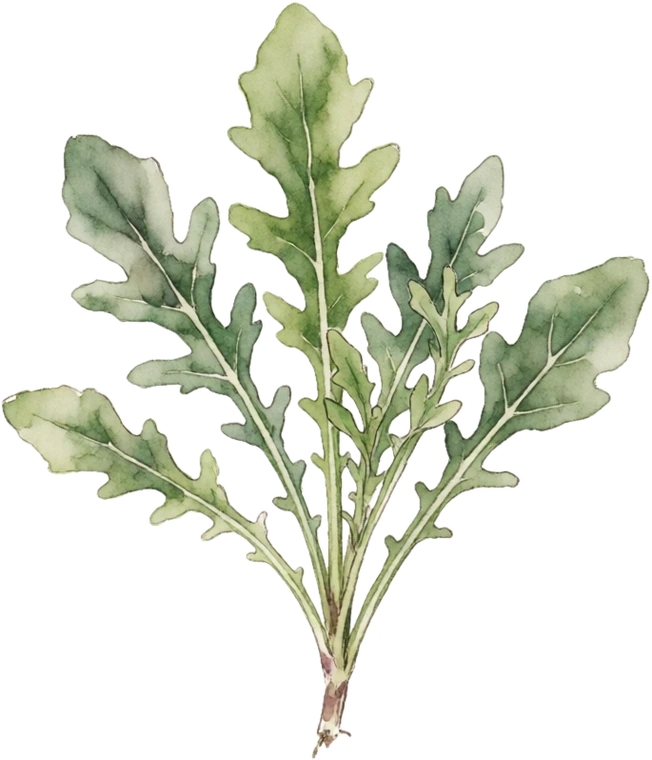
Arugula

Eruca vesicaria

Family Brassicaceae

Annual annualZones 2-11

Botanical illustration of Arugula

Twenty-one days from seed packet to salad — arugula is the fastest real food a garden makes. The peppery, nutty leaves that cost boutique prices in plastic boxes grow like a weed twice a year, April through June and again September through November.

At six to twelve inches it fits anywhere — bed edges, pots, the gap the tomatoes haven't filled yet — and bees visit whatever bolts. Fall sowings under a frost blanket run to Thanksgiving. Scatter a row this weekend; you'll be eating it before the month ends.

Where to buy arugula — 4 nurseries compared

  • Full Sun
  • Moderate water
  • Very Fast growth
  • Excellent edible
  • Attracts bees
  • None winter chill
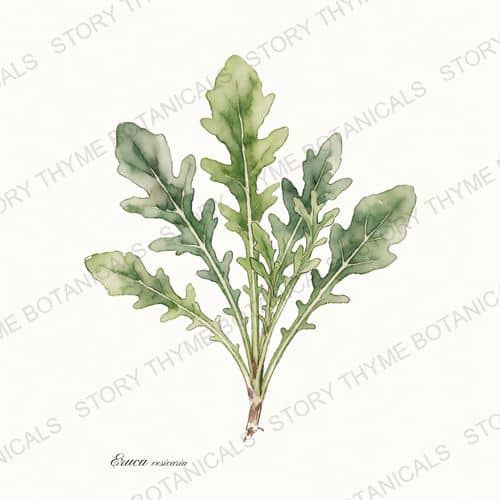
Arugula — a print from the Plant Library collection

From the print shop

Growing arugula? Hang it.

Our Plant Library collection carries arugula — Eruca vesicaria, print Nº 32, “Arugula.”

526 designsfrom $12.99white or black backgroundmatte poster, unframed

Shop Plant Library botanical prints →

✓

Will it fruit where you are?

Enter your ZIP — we look up your USDA hardiness zone (2023 map) and check it against what arugula actually needs.

Life cycleAnnual
Winter chillNone

Arugula · Common problems

Common arugula problems

Pests, diseases and weather to keep an eye on.

Pests

3 problems on file

Diseases

1 problem on file

  • None significant

Arugula · Growing & propagation

Growing arugula

Light, water, soil, propagation and the season’s jobs.
What it needsThe details
Light
Full Sun (spring/fall)

Part shade stretches spring harvest

Water
Moderate

Stress makes it nuclear-spicy

Soil
Any decent soil · pH 6.0 - 7.0
Fertilizer
None needed for a 30-day crop
Pruning
None

Cut-and-come-again twice, then resow — succession every 2 weeks.

Spacing
4-6 in

How to plant & propagate arugula

Maturity
30-40 days
From seed
Direct-sow spring/fall

Very fast; succession every 2 wks

Propagate
From seed

Arugula · Seasonal care & spray guidance

The arugula growing playbook

Field-tested instructions for every job arugula asks of you, compiled from university extension guidance — in the order the season brings them.

When to spray arugula

Growing season. Row cover = hole-free leaves; or accept the polka dots.

As growth begins

early spring

5 jobs
SowingIn spring

Direct sow arugula as soon as the soil can be worked

Sow seed a quarter inch deep and about an inch apart in rows, or broadcast it across a bed. There is no need to start it indoors - it germinates in soil as cool as 40F, so it goes straight in the ground as soon as the bed can be worked. Then sow a fresh short row every 2 to 3 weeks rather than one big planting. Arugula germinates in days in cold soil and is harvestable in about four weeks, so the whole crop finishes before summer heat arrives. Successive small sowings keep young mild leaves coming instead of giving you one flush that all bolts at once.

WateringIn spring

Water before the bed dries, not after

Keep the soil consistently moist, watering when the top inch is dry to the touch. Aim for steady moisture rather than a soaking followed by a drought, and do not let the bed sit waterlogged. Dry soil is one of the three levers, along with long days and heat, that flips arugula from making leaves to making a flower stalk. Moisture stress also intensifies the mustard oils, which is what turns a pleasantly peppery leaf acrid.

ThinningIn spring

Thin to 3 to 6 inches, and eat the thinnings

Once seedlings are up, thin gradually to 3 to 6 inches apart if you want full individual plants. If you are growing cut-and-come-again baby leaf instead, leave the planting dense and skip thinning. Every thinning is salad - do not compost them. Crowded plants compete for water and shade each other, and drought stress is one of the triggers that pushes arugula into flower. Spacing also opens the canopy so leaves dry after rain, which is what holds downy mildew back.

What to watch forIn spring

Check seedlings for flea beetle shotholes

Look at the young leaves for tiny round shotholes and for small dark beetles that jump when you disturb them. On seedlings and transplants, act when you find more than about five flea beetles per plant or 10 to 30 percent of the leaf area is gone. The reliable fix is a floating row cover laid at sowing and sealed at the edges. Flea beetles overwinter as adults in leaf litter, hedgerows and wooded edges and move onto the first green thing in spring, and they are drawn hardest to the sharp mustard oils in arugula. A seedling has no reserves - beetles that would only freckle a mature plant can kill it outright.

HarvestingIn spring

Cut the whole plant an inch above the soil, and it grows back

Start once leaves are 2 to 3 inches long, usually 3 to 4 weeks from sowing. Rather than pulling plants, cut the stand about an inch above the ground with shears - it will regrow for another cutting in 5 to 14 days. Cut often and cut young. Cutting above the growing point leaves the crown intact to push a second and third harvest from one sowing. Frequent harvest of young leaves also delays bolting, since the plant keeps being pushed back into vegetative growth.

Through summer

the growing season

1 job
ProtectionIn summer

Shade the summer planting to buy weeks before it bolts

Once days run above about 85F, give arugula afternoon shade or run 30 to 50 percent shade cloth over the bed. Light shade will not stop bolting forever, but it slows it enough to be worth doing. Heat and long days together are what trigger the flowering stem, and reducing heat load is the only lever a grower actually controls in midsummer. Once the stalk is up, the leaves turn bitter and no amount of care brings them back.

After harvest

autumn, and putting it to bed

2 jobs
SowingIn autumn

Sow again for the fall crop, the better-tasting one

Start sowing again once the worst summer heat breaks, and keep making plantings every 2 to 3 weeks into late fall as long as soil stays above 40F, the low end of arugula's germination range. Under a low tunnel or cold frame you can keep cutting well past your first frost. Arugula grown into shortening days and falling temperatures does not get the long-day, high-heat signal that triggers bolting, so leaves stay tender and mild far longer than a spring crop that is racing summer. A fall sowing can give you multiple harvests, running on until the plant finally bolts the following spring.

ProtectionIn autumn

Row cover the fall crop and keep cutting into winter

Arugula shrugs off light freezes on its own. When nights start dropping below freezing, put frost cloth, a low tunnel, or a cold frame over the bed. In a cool greenhouse or high tunnel a late-summer sowing will feed you through the winter. Arugula is hardier and faster than lettuce, so a few degrees of protection is the difference between a crop that stops in October and one that keeps producing for months. Cold also sweetens the leaves and takes the harsh edge off the pepper.

Arugula · Calculators & field guides

A little help in the garden.

Calculators for the figures. Field guides for the hands-on work.

Arugula · Yearly calendar

The arugula year, month by month

What arugula asks for, month by month.

Jan

No calendar activity is listed for this month.

MonthJanFebMarAprMayJunJulAugSepOctNovDec
Harvest

HarvestApril to June, then September to November

What each band means

  • Harvest — picking time — check ripeness every few days.

These are the species' typical months — expect them a few weeks earlier in warm zones and later in cold ones. Watch the plant, not just the calendar.

Arugula · Ecology & uses

Ecology & uses

What it does for the garden, and what it is grown for.
Botanical illustration of Arugula

Eruca vesicaria

Arugula in the garden system

  • Herbaceous layer annual
Attracts
Bees
Moisture
Facultative / average
Deer
Browsed

Protect young plants

Origin
Introduced

What arugula is grown for

✓ Commonly eaten

Use
Salads
Use
Pizza topping
Use
Pesto
Edible value
4/5

Harvesting & storing arugula

April - June; September - November. About 30-40 days from planting.

Edibility, identification, and traditional-use notes here are general reference — not medical or veterinary advice, and not a claim that any plant treats or prevents anything. Medicinal ratings record how strongly a plant features in herbal tradition, nothing more. Never eat or dose a plant you have not positively identified. More on how to use this library.

Arugula · Varieties & cultivars

Best arugula varieties & cultivars

There are far more than these — the ones below are the named varieties of arugula people actually plant.

Named varieties of arugula differ in days to maturity, disease resistance, flavor, and habit — pick one that fits your season and space.

6 varieties

Sources & plant identity

Know what you’re growing.
See where the knowledge comes from.

Botanical illustration of Arugula

Arugula

Eruca vesicaria

The plant, at a glance.

Botanical name
Eruca vesicaria
Plant family
Brassicaceae
Growth habit
Annual
Origin
Introduced
USDA plant symbol
ERVE5
Invasive risk
Low
Every garden is different.

Hardiness, size and timing vary with your cultivar, soil and climate.

Rooted in research.

University extension research, brought together with hands-on growing experience at Story Thyme Farms.

Explore Arugula’s sources7 reference links
for Arugula

Research from these sources

Publisher marks identify sources, not sponsorship or endorsement.

Questions

Arugula questions, answered straight.

Is arugula safe for kids and pets?

Arugula is commonly eaten and isn't considered toxic, but "commonly eaten" isn't a guarantee for any particular person or animal — allergies, quantity, and which part you eat all matter. Never eat a plant you haven't positively identified, and check with a vet before letting pets or livestock graze anything new.

When do you harvest arugula?

April - June; September - November. From planting, expect about 30-40 days to maturity.

How do you propagate arugula?

From seed.

Elsewhere

Where arugula sits in the library.

Where arugula sits in the library

Grows in the same world