The illustrated growing guide

Celery

Apium graveolens

Family Apiaceae

Est. zones 2-11

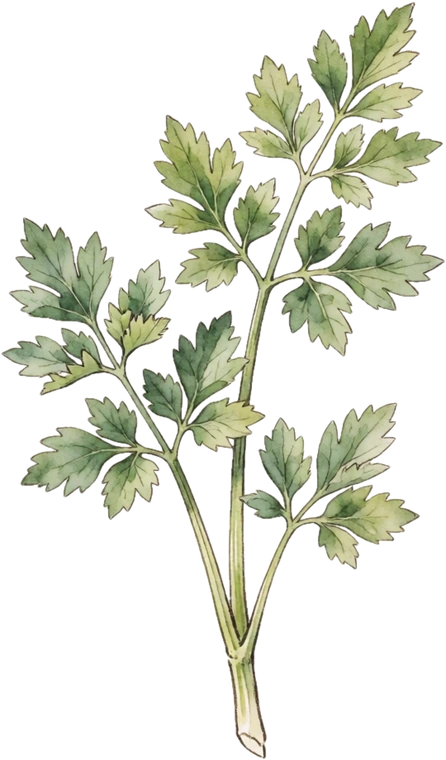
Botanical illustration of Celery
Annual · Apium graveolens

Honestly hard — a swamp plant demanding steady water for four months. Shortcut: grow cutting celery for the same flavor in soups with a tenth of the fuss.

AnnualFull Sun to light afternoon shadeHigh waterSlow growthExcellent edibleAttracts beesAttracts butterflies

Where to buy the plant — 3 nurseries

Celeriac — a print from the Roots & Alliums collection

From the print shop

The closest print we make

Our Roots & Alliums collection carries Apium graveolens var. rapaceum — the same species as celery — but the print shows “Celeriac,” a different cultivar of it, not celery itself.

16 designsfrom $21.99white or black groundmatte poster, unframed

Shop Roots & Alliums botanical prints →

I

Overview

Will celery suit your garden, and what goes wrong.

Will it fruit where you are?

Enter your ZIP — we look up your USDA hardiness zone (2023 map) and check it against what celery actually needs.

Life cycleBiennial, grown as an annual

Celery at a glance

Life cycleBiennial, grown as an annual
Mature size1-2 ft
PollinationN/A
Chill requirementNot yet established
Bloom seasonBolts from cold snaps on young plants
Harvest seasonAugust - Frost; cut outer stalks or whole heads
Growth rateSlow (120+ days)

Common celery problems

II

Growing

Light, water, soil, propagation and the season’s jobs.

How to grow celery: light, water & soil

LightFull Sun to light afternoon shade
WaterHIGH and never-miss — celery is 95% water and 100% grudge
SoilRich, moisture-retentive, composted · pH 6.0 - 7.0
FertilizerEvery 2-3 weeks; heavy feeder
PruningNone — Hill soil or wrap stems 2 weeks pre-harvest for paler, milder stalks (optional — dark green = more flavor).
Spacing8-10 in

How to plant & propagate celery

Maturity100-130 days
From seedStart indoors 10-12 wks early; slow, needs light + warmth to germinate
PropagateFrom seed

When to spray celery

Growing season. Even water prevents most of it; that's the whole secret.

The celery growing playbook

Field-tested instructions for every job celery asks of you, compiled from university extension guidance — in the order the season brings them.

Sowing

Start seed indoors 10 to 12 weeks before your last frost

Sow indoors about 10 to 12 weeks before your last spring frost, pressing the tiny seed onto the surface rather than burying it. Expect 14 to 21 days to germinate, with 50 to 70F the optimum range, and plan on 8 to 10 weeks of growing before the seedlings have the 3 or 4 mature leaves and established roots they need to go out. Buy disease-indexed seed, or use seed that is three years old. Celery germinates slowly and needs a long head start to size up in a short season. The seed also carries the late blight fungus Septoria apiicola, and MSU reports those spores live up to two years on seed, so three-year-old seed is clean seed.

Planting out

Transplant only once nights hold above 55F, or the crop bolts

Set plants out 6 to 7 inches apart in rows 24 to 34 inches apart, but wait until temperatures stay above 55F. Harden off by easing back on water, not by chilling the seedlings, since cool temperatures induce bolting. If a cold snap is forecast in the first weeks after planting, throw a floating row cover over the bed. Celery is a biennial, and MSU reports that plants exposed to temperatures below 55F for 7 days or longer often form a seedstalk in their first year. It builds a seedstalk instead of the thick petioles you meant to eat.

Watering

One to two inches a week, from below, never let it check

Give celery 1 to 2 inches of water per week and never let the bed dry out. Use drip or a soaker hose rather than a sprinkler, and mulch once plants reach 6 inches tall. Water needs climb sharply above 85F. Celery is shallow rooted, so it feels drought fast. Any check in moisture makes stalks stringy and strong flavored, and because calcium moves through the plant only in the water stream, a dry spell in heat starves the growing heart of calcium and turns it black.

Feeding

Sidedress nitrogen at four weeks after transplanting, then again at eight

Wait about four weeks after transplanting, then sidedress a quarter cup of 21-0-0 per 10 feet of row, and repeat at eight weeks. Do not push nitrogen harder than this in a home bed. Celery demand for nitrogen is low during its first 25 days in the field, then climbs rapidly as it builds petioles, so fertilizer applied at planting is largely leached or wasted before the crop can use it.

What to watch for

Aster leafhoppers: check once or twice a week while plants are young

Look for small wedge shaped leafhoppers once or twice a week, most closely while plants are young. A floating row cover over young plants keeps them off entirely. Pull and destroy any plant showing twisted, yellowed, stunted growth, and keep grassy weed hosts down around the bed. The leafhopper itself does little feeding damage. It matters because it injects the aster yellows phytoplasma, which has no cure once a plant has it. The phytoplasma must incubate about three weeks inside the leafhopper before that insect can transmit it, so infective leafhoppers arriving in your bed are ones that fed on an infected host well upwind.

Row cover and roguing are the home garden controls. UC IPM states there are no pesticide controls for the phytoplasma and that insecticides alone will not prevent leafhopper transmission. If you do treat, follow the pre-harvest interval printed on your product's label, and never spray an insecticide on plants in bloom.

Spraying

Late blight: spray at the first spots, not after

Watch for small yellow spots peppered with small, dark, round bodies (pycnidia); older lesions turn tan and papery. At the first appearance of symptoms, spray chlorothalonil, or copper hydroxide if you garden organically, and reapply at the interval your product's label specifies while wet weather lasts. Stop overhead watering, and stay out of the bed while the foliage is wet. Septoria apiicola spreads when splashing water moves its spores from leaf to leaf, and rain, heavy dew, fog, or sprinkler irrigation above 70F favor infection. Development ceases entirely below 55F. Every pass you make through a wet planting can carry spores from diseased to healthy plants.

Chlorothalonil carries a 7 day pre-harvest interval on celery, copper hydroxide 0 days. Confirm celery is named on your product's label, since home garden chlorothalonil labels vary by brand, and follow the label's own reapplication interval and rate limits.

Harvesting

Cut whole heads inside the six to eight day window

Take outer petioles any time once they pass a foot in length, which lets one plant feed you for weeks. For whole heads, cut at the base once the plant is 3 inches or more across. The inner stalks stay the most tender. MSU reports that once celery is growing rapidly it stays at harvest quality for only about six to eight days. Past that the petioles go pithy and hollow, so the window is short and worth watching for.

III

The year

What celery asks for, month by month.

The celery year, month by month

MonthJanFebMarAprMayJunJulAugSepOctNovDec
Harvest

What each band means

  • Harvestpicking time — check ripeness every few days.

The celery year as text

  • Jan quiet month
  • Feb quiet month
  • Mar quiet month
  • Apr quiet month
  • May quiet month
  • Jun quiet month
  • Jul quiet month
  • Aug harvest
  • Sep quiet month
  • Oct quiet month
  • Nov quiet month
  • Dec quiet month

These are the species' typical months — expect them a few weeks earlier in warm zones and later in cold ones. Watch the plant, not just the calendar.

IV

Ecology & uses

What it does for the garden, and what it is grown for.

Celery in the garden system

  • Herbaceous layer annual
AttractsBees, Butterflies
HabitatWetland
MoistureWetland / wet-tolerant
DeerBrowsed — protect young plants
OriginIntroduced

What celery is grown for

✓ Commonly eaten

UseSoup base
UseStocks
UseBraising
Edible value4/5

Harvesting & storing celery

August - Frost; cut outer stalks or whole heads. About 100-130 days from planting.

Edibility, identification, and traditional-use notes here are general reference — not medical or veterinary advice, and not a claim that any plant treats or prevents anything. Medicinal ratings record how strongly a plant features in herbal tradition, nothing more. Never eat or dose a plant you have not positively identified. More on how to use this library.

V

Cultivars

Named varieties of celery, ruled as a catalogue.

Best celery varieties & cultivars

8 on file

Named varieties of celery differ in winter-chill needs, ripening time, hardiness, and whether they set fruit on their own — pick one that fits your climate.

Conquistador

Zones2-11SizeTall Utah type, smooth petioles

A highly refined Tall Utah 52-75 selection with dark green color and smooth petioles, released 1992. MSU Extension calls it a relatively fast maturing celery that is easier to grow than longer season types like Green Bay.

Where to buy ‘Conquistador

Story Thyme Farms may earn a small commission from these links, at no cost to you — it never changes what we recommend.

Ventura · FM 1213

Zones2-11DiseaseField tolerance to fusariumSizeTall Utah type with long petioles

Tall Utah type with long petioles, glossy green with very smooth ribbing. Released 1983. Similar to Calmario Tall Utah 52-75.

Where to buy ‘Ventura

Story Thyme Farms may earn a small commission from these links, at no cost to you — it never changes what we recommend.

Tall Utah 52-70R Improved · Utah 52-70

Zones2-11SizeModerate petiole length, compact plant habit

A selection of T.U. 52-70R with moderate petiole length, dark green color and compact plant habit, grown as a western shipper. Utah State Extension recommends Utah types generally for home gardens and notes they stay green rather than needing blanching.

Where to buy ‘Tall Utah 52-70R Improved

Story Thyme Farms may earn a small commission from these links, at no cost to you — it never changes what we recommend.

Summit · E0223

Zones2-11DiseaseTolerance to fusarium yellows in infested fieldsSizeCompact plants, long petioles 11 to 13 inches

Early type, 85 days to maturity after transplanting, with long 11 to 13 inch petioles, medium green color and very uniform tops.

Where to buy ‘Summit

Story Thyme Farms may earn a small commission from these links, at no cost to you — it never changes what we recommend.

Matador

Zones2-11DiseaseFusarium yellows race 2SizeTall Utah type, smooth petioles

Tall Utah type with smooth petioles and medium green color, released 1990. Described as a good replacement for T.U. 52-70R. Moderate bolting tolerance.

Where to buy ‘Matador

Story Thyme Farms may earn a small commission from these links, at no cost to you — it never changes what we recommend.

Command · PYC 2531

Zones2-11DiseaseFusarium yellowsSizeSomewhat shorter than Matador, smooth dark green petioles

Similar to Matador though somewhat shorter, with smoother, darker green petioles and slower bolting. Released 2004.

Where to buy ‘Command

Story Thyme Farms may earn a small commission from these links, at no cost to you — it never changes what we recommend.

Sonora · 248-C

Zones2-11DiseaseModerate to fusarium yellowsSizeMedium height, compact

Fresh market celery, medium height and compact with smooth dark green petioles. Released 1997. Similar to T.U. 52-75.

Where to buy ‘Sonora

Story Thyme Farms may earn a small commission from these links, at no cost to you — it never changes what we recommend.

Green Bay · XP-166

Zones2-11DiseaseFusarium yellows race 2, suckeringSizeTall, dark green plant, compact upright bunch

Tall dark green plant suited to mid season processing and to early and late fresh market, with a compact upright bunch and moderately smooth petioles. Moderate bolting tolerance. MSU Extension describes it as a longer season type than Conquistador.

Where to buy ‘Green Bay

Story Thyme Farms may earn a small commission from these links, at no cost to you — it never changes what we recommend.

VI

Sources & plant ID

Where the care distinctions come from, and how the plant is filed.

Research basis

Sources behind this profile

No extension citations are attached to celeryyet. The care figures below come from the library's own catalogue rather than a traced primary source.

Plant ID

BinomialApium graveolens
FamilyApiaceae
TypeAnnual · Biennial
USDA symbolAPGR2
OriginIntroduced
Invasive riskLow

VII

Where to buy

Third-party nurseries — not Story Thyme Farms.

Third-party nurseries, not Story Thyme Farms. Prices are theirs.

Story Thyme Farms may earn a small commission from these links, at no cost to you — it never changes what we recommend.

VIII

Questions

Celery questions, answered straight.

Is celery safe for kids and pets?

Celery is commonly eaten and isn't considered toxic, but "commonly eaten" isn't a guarantee for any particular person or animal — allergies, quantity, and which part you eat all matter. Never eat a plant you haven't positively identified, and check with a vet before letting pets or livestock graze anything new.

When do you harvest celery?

August - Frost; cut outer stalks or whole heads. From planting, expect about 100-130 days to maturity.

How do you propagate celery?

From seed.

IX

Elsewhere

Where celery sits in the library.

Where celery sits in the library

Grows in the same world