The illustrated growing guide

Mizuna

Brassica rapa var. niposinica

Family Brassicaceae

Grown as an annual

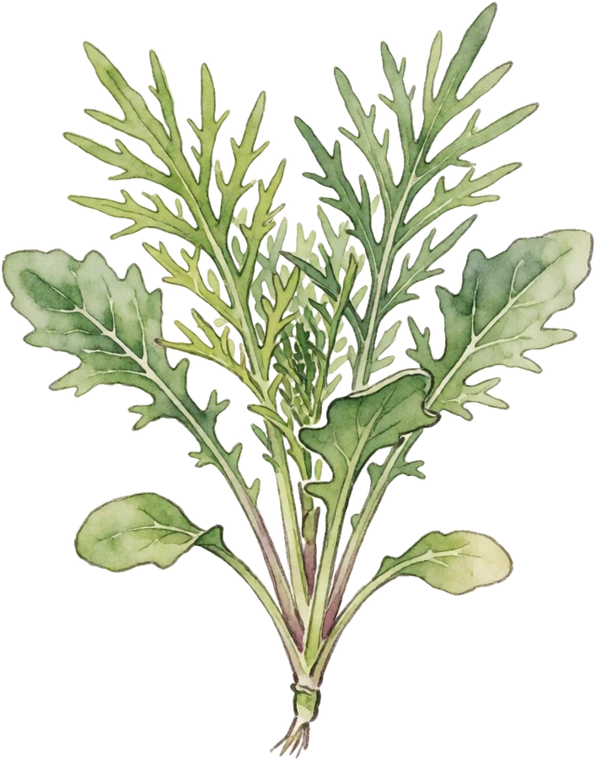
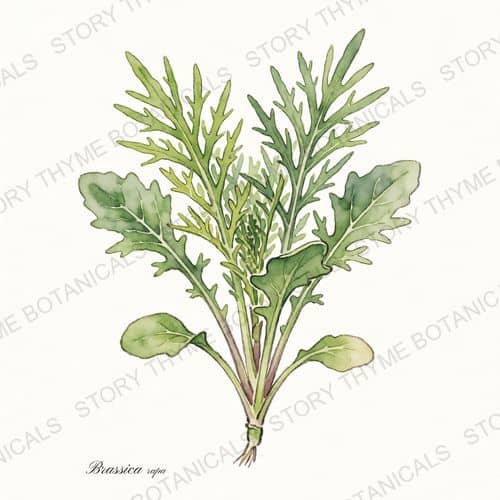
Botanical illustration of Mizuna
Annual · Brassica rapa var. niposinica

The feathery, mildly peppery Japanese green that's nearly foolproof: fast from seed, slow to bolt, cold-hardy into winter, and it regrows after every cutting for weeks. Milder than arugula, it goes in salads, stir-fries, and soups. A salad-mix and cut-and-come-again staple.

AnnualFull Sun to Part ShadeModerate waterVery Fast growthExcellent edibleAttracts beesNone winter chill

Where to buy the plant — 1 nursery

Turnip — a print from the Roots & Alliums collection

From the print shop

The closest print we make

Our Roots & Alliums collection carries Brassica rapa subsp. rapa — the same species as mizuna — but the print shows “Turnip,” a different cultivar of it, not mizuna itself.

16 designsfrom $21.99white or black groundmatte poster, unframed

Shop Roots & Alliums botanical prints →

I

Overview

Will mizuna suit your garden, and what goes wrong.

Will it fruit where you are?

Enter your ZIP — we look up your USDA hardiness zone (2023 map) and check it against what mizuna actually needs.

Life cycleAnnual
Winter chillNone

Mizuna at a glance

Life cycleAnnual
Mature size10-18 in feathery
PollinationBolting flowers feed bees
Chill requirementNone (not chill-dependent)
Bloom seasonBolts in heat
Harvest seasonSpring & fall: feathery, mildly peppery Japanese green — cut-and-come-again for weeks
Growth rateVery Fast

Common mizuna problems

II

Growing

Light, water, soil, propagation and the season’s jobs.

How to grow mizuna: light, water & soil

LightFull Sun to Part Shade
WaterModerate
SoilRich, moist · pH 6.0 - 7.0
FertilizerLight
PruningNone — One of the easiest and most forgiving Asian greens — fast, cold-hardy, slow to bolt, and endlessly cut-and-come-again. Mild mustard flavor, great raw in salads or quick-cooked. Grows in the cool shoulders of the season and even overwinters under cover.
Spacing6-8 in

How to plant & propagate mizuna

Maturity40 days (full); 21 baby
From seedDirect-sow spring/fall; cut-and-come-again
PropagateFrom seed

When to spray mizuna

Growing season. Row cover for flea beetle.

The mizuna growing playbook

Field-tested instructions for every job mizuna asks of you, compiled from university extension guidance — in the order the season brings them.

Sowing

Direct sow shallow in early spring

Sow seed into moist soil a quarter to a half inch deep once the soil can be worked, in a bed with a pH near 6.0 to 6.5 and at least six hours of sun. Mizuna is best seeded straight into the ground rather than started indoors, and it germinates from 55 to 75F and will still come up in soil as cold as 40F. Seed buried deeper than half an inch usually never emerges, and mizuna is a cool-season green that sizes up best before summer heat pushes it to bolt.

Sow a fall crop, counting back from your first frost

Look up your own average first frost date and count back roughly 30 to 40 days to set your sowing date, then keep sowing a small patch every few weeks for a steady supply of young leaves. Mizuna and its mustard relatives mature in about a month and survive light frost, so a crop timed off your local frost date rides the cooling weather instead of fighting summer heat.

Feeding

Light nitrogen side dressing after each cutting

After you take a cutting, side dress lightly with a nitrogen source alongside the row and water it in. Cutting the crop removes most of the leaf the plant built, and a light shot of nitrogen after cropping is what pushes it to develop new leaves for the next harvest.

What to watch for

Check seedlings twice a week until 4 to 5 true leaves

Look over the seedlings at least twice weekly, hunting for shallow pits and rounded shot holes under an eighth of an inch. Keep it up until plants carry four to five true leaves, then ease off. Treat seedlings if you find roughly one to five beetles per plant. Flea beetle injury is severe on young plants and shrugged off later, so the entire decision window is the few weeks between emergence and the fourth or fifth true leaf.

Spraying

Flea beetles: spinosad only if seedlings pass threshold

If scouting finds about one beetle per plant or ten percent leaf damage on young plants and cover was not an option, spray spinosad, which had the greatest efficacy of the organic materials in trials. Kaolin clay and pyrethrin are weaker alternatives. Spray only while plants are seedlings, then stop. Only the adult beetle chewing seedling leaves is worth a spray, since a plant past four or five true leaves outgrows the feeding and the crop is a leaf you eat raw.

The spinosad preharvest interval for leafy brassica greens differs by product, so read your own label and count the days to your next cutting before you spray, since mizuna is cut again and again. Never spray a plant that has bolted into flower, because bees work those blooms; pull the bolted plant instead.

Protection

Row cover the bed the day you seed it, on rotated ground

Lay floating row cover or insect netting immediately after seeding and bury or weight every edge so nothing can walk under it. Put the bed somewhere you did not grow brassicas last fall. Crucifer and striped flea beetles overwinter as adults in shrubby borders and emerge in May hunting exactly this crop, and mizuna is one of the tender non-waxy greens they prefer over cabbage or kale. Cover is only a barrier if it goes on before they arrive and the ground underneath is not already holding them.

Throw cover over the greens below 25F

For a late crop under a tunnel or cold frame, keep row cover on hand and pull it over the greens whenever the forecast drops below 25F. Harvest by cutting an inch or two above the soil and the rosette will regrow, faster in warm spells and slowly in cold ones. Mizuna keeps producing well past frost under protection, and 25F is the point where the crop needs a cover over it rather than the tunnel alone.

Harvesting

Cut two inches above the crown and let it come again

Harvest in the morning once the dew has dried but before the heat softens the leaves. For repeat cuts, shear the greens two inches or more above the ground and leave the crown; to end the crop, cut the whole plant off near the soil. The growing point sits low in the rosette, so a cut above it leaves the plant intact to push a fresh flush, and leaves picked cool and dry hold their texture instead of wilting.

III

The year

What mizuna asks for, month by month.

The mizuna year, month by month

MonthJanFebMarAprMayJunJulAugSepOctNovDec
Harvest

What each band means

  • Harvestpicking time — check ripeness every few days.

The mizuna year as text

  • Jan quiet month
  • Feb quiet month
  • Mar harvest
  • Apr harvest
  • May harvest
  • Jun quiet month
  • Jul quiet month
  • Aug quiet month
  • Sep harvest
  • Oct harvest
  • Nov harvest
  • Dec quiet month

These are the species' typical months — expect them a few weeks earlier in warm zones and later in cold ones. Watch the plant, not just the calendar.

IV

Ecology & uses

What it does for the garden, and what it is grown for.

Mizuna in the garden system

  • Herbaceous layer annual
AttractsBees
MoistureFacultative / average
DeerBrowsed — protect young plants
OriginIntroduced

What mizuna is grown for

✓ Commonly eaten

UseSalad mix
UseStir-fry
UseCut-and-come-again
Edible value4/5

Harvesting & storing mizuna

Spring & fall: feathery, mildly peppery Japanese green — cut-and-come-again for weeks. About 40 days (full); 21 baby from planting.

Edibility, identification, and traditional-use notes here are general reference — not medical or veterinary advice, and not a claim that any plant treats or prevents anything. Medicinal ratings record how strongly a plant features in herbal tradition, nothing more. Never eat or dose a plant you have not positively identified. More on how to use this library.

V

Cultivars

Named varieties of mizuna, ruled as a catalogue.

Best mizuna varieties & cultivars

5 on file

Named varieties of mizuna differ in days to maturity, disease resistance, flavor, and habit — pick one that fits your season and space.

Mizuna · Kyona; Japanese Mustard

RipensSpring and fall, cut-and-come-againZones2-11

Mild, faintly peppery — The classic open-pollinated Japanese green, Brassica rapa var. japonica, with the recognizable serrated leaf. Cold tolerant enough for cool greenhouse and high tunnel growing from late summer and early fall sowings, and it also performs in hydroponic systems.

Where to buy ‘Mizunaverified

Story Thyme Farms may earn a small commission from these links, at no cost to you — it never changes what we recommend.

Early Mizuna

RipensSpring and fallZones2-11SizeVigorous upright plant

Mild, without the usual mustard heat — Brassica rapa with delicate, finely cut, fern-like foliage on vigorous upright plants. Prefers the cooler weather of spring and fall; hot summer weather may cause premature bolting, so treat it as a shoulder-season crop rather than a summer one.

Where to buy ‘Early Mizuna

Story Thyme Farms may earn a small commission from these links, at no cost to you — it never changes what we recommend.

Red Kingdom

RipensSpring and fall, and through heat better than mostZones2-11SizeBroad leaf with scalloped margins

Mild — An F1 Brassica rapa and All-America Selections winner. Dark purple leaf over a bright green stem, with dark purple veining on a light green underside. Listed as performing in both cold and heat, and suited to hydroponic systems. An improvement on Red Rain.

Where to buy ‘Red Kingdom

Story Thyme Farms may earn a small commission from these links, at no cost to you — it never changes what we recommend.

Purple Mizuna

RipensSpring and fallZones2-11SizeSharply serrated foliage

Mild mustard — Open-pollinated Brassica rapa with purple-veined, sharply serrated leaves; the color deepens in late summer harvests. Described as slow to bolt.

Where to buy ‘Purple Mizuna

Story Thyme Farms may earn a small commission from these links, at no cost to you — it never changes what we recommend.

Miz America

RipensSpring and fall, tolerates heatZones2-11SizeUniform leaf size and shape

Mild for a mustard, good raw in salad mix — Sold and grown as a red mizuna type but botanically Brassica juncea, a mustard rather than true B. rapa mizuna, so expect a little more bite. Very dark red, deeply lobed and toothed leaves colored red on both sides. An F1 listed as both cold and heat tolerant.

Where to buy ‘Miz America

Story Thyme Farms may earn a small commission from these links, at no cost to you — it never changes what we recommend.

VI

Sources & plant ID

Where the care distinctions come from, and how the plant is filed.

Research basis

Sources behind this profile

No extension citations are attached to mizunayet. The care figures below come from the library's own catalogue rather than a traced primary source.

Plant ID

BinomialBrassica rapa var. niposinica
FamilyBrassicaceae
TypeAnnual
USDA symbolBRRA
OriginIntroduced
Invasive riskLow

VII

Where to buy

Third-party nurseries — not Story Thyme Farms.

Third-party nurseries, not Story Thyme Farms. Prices are theirs.

Story Thyme Farms may earn a small commission from these links, at no cost to you — it never changes what we recommend.

VIII

Questions

Mizuna questions, answered straight.

Is mizuna safe for kids and pets?

Mizuna is commonly eaten and isn't considered toxic, but "commonly eaten" isn't a guarantee for any particular person or animal — allergies, quantity, and which part you eat all matter. Never eat a plant you haven't positively identified, and check with a vet before letting pets or livestock graze anything new.

When do you harvest mizuna?

Spring & fall: feathery, mildly peppery Japanese green — cut-and-come-again for weeks. From planting, expect about 40 days (full); 21 baby to maturity.

How do you propagate mizuna?

From seed.

IX

Elsewhere

Where mizuna sits in the library.

Where mizuna sits in the library

Grows in the same world