The illustrated growing guide

Quince

Cydonia oblonga

Family Rosaceae

Est. zones 5-9

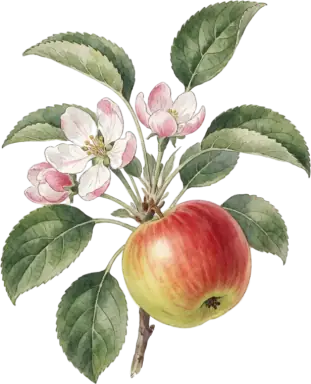
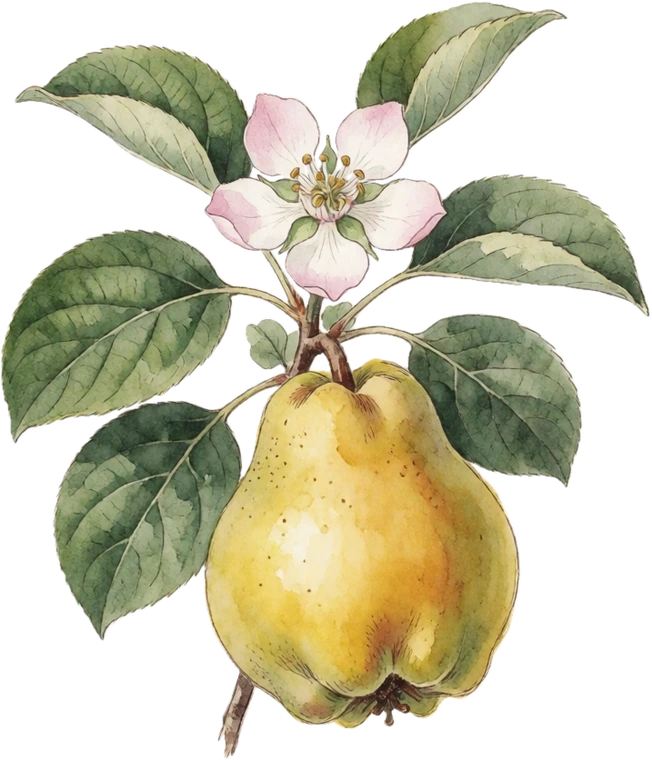
Botanical illustration of Quince
Tree · Cydonia oblonga

Rock-hard and astringent raw — then cooking transforms it: perfumed, rose-pink membrillo, the best poaching fruit there is. One tree scents a whole kitchen in October.

TreeFull SunModerate waterSlow-Moderate growthExcellent edibleAttracts bees300-500 winter chill (unconfirmed)

Where to buy the plant — 3 nurseries

Quince — a print from the Orchard Vol. 2 collection

From the print shop

Growing quince? Hang it.

Our Orchard Vol. 2 collection carries quinceCydonia oblonga, print Nº 3, “Quince.”

16 designsfrom $21.99white or black groundmatte poster, unframed

Shop Orchard Vol. 2 botanical prints →

I

Overview

Will quince suit your garden, and what goes wrong.

Will it fruit where you are?

Enter your ZIP — we look up your USDA hardiness zone (2023 map) and check it against what quince actually needs.

Hardy inZones 5-9
Winter chill300-500
Unconfirmed

Commonly quoted, but we have not traced this range to a university extension trial or another primary source, and published figures for the same plant often disagree. Chill-hour requirements were only ever established by trial for a handful of commercial fruit crops; for most species the work was never funded. Treat it as a starting point and check your local extension office before you plant on it.

PollinationSelf-fertile

Quince at a glance

HardinessUSDA 5–9
Mature size10-15 ft
PollinationSelf-fertile
Chill requirement300-500
Unconfirmed

Commonly quoted, but we have not traced this range to a university extension trial or another primary source, and published figures for the same plant often disagree. Chill-hour requirements were only ever established by trial for a handful of commercial fruit crops; for most species the work was never funded. Treat it as a starting point and check your local extension office before you plant on it.

Bloom seasonSpring (pink-white, late enough to dodge most frosts)
Harvest seasonSeptember - October (pick fully golden and fragrant)
Growth rateSlow-Moderate

Common quince problems

  • Codling Moth
  • Curculio
  • Oriental Fruit Moth
  • Fireblight (the big one)
  • Quince Rust
  • Fleck

II

Growing

Light, water, soil, propagation and the season’s jobs.

How to grow quince: light, water & soil

LightFull Sun
WaterModerate; tolerates heavier soil than most fruit
SoilDeep loam, tolerates clay · pH 6.0 - 7.0
FertilizerLight — vigorous feeding invites fireblight
PruningLate Winter — Open vase; minimal once shaped. Remove suckers and fireblight strikes promptly.
Spacing12-15 ft

How to plant & propagate quince

PropagateGrafted, or from cuttings/layering (seed won't come true)

When to spray quince

Dormant season. Copper at bud swell where fireblight or rust has history.

The quince growing playbook

Field-tested instructions for every job quince asks of you, compiled from university extension guidance — in the order the season brings them.

Mulching

Rake and destroy the fallen leaves

After harvest and leaf drop, rake up the fallen leaves and destroy them - burn, bin, or bury, but do not compost them and do not leave them as mulch under the tree. Take out dead shoots and blighted twig tips in the same pass. Quince leaf blight overwinters in diseased leaves and shoots, and those leaves are the entire source of the spores that are splashed up onto next spring's new foliage. Clearing them is the one control that acts before the season starts, and it is the reason a raked tree needs less copper in spring than an unraked one.

Feeding

Feed lightly - nitrogen is what fire blight eats

Give quince only a light nitrogen application in spring, and skip it altogether on a tree that is already growing vigorously or that showed blight strikes last season. Resist the urge to push a slow young tree with fertilizer. Fire blight bacteria colonize succulent, fast-growing shoot tips, and anything that favors rapid shoot growth increases the severity of the damage. On a host this susceptible, a heavy feeding buys you blight rather than fruit - which is why extension guidance for quince specifically calls for light nitrogen.

Pruning

Dormant pruning: open vase, suckers, and every blighted twig

While the tree is leafless, train it to an open vase and thin crossing wood - a mature quince needs little beyond the removal of suckers and watersprouts. Cut out all blackened, cankered wood now: find the lower edge of the canker, trace it back to where that branch attaches, and cut at the next branch juncture down without damaging the branch collar. Quince is one of the most fire-blight-susceptible plants grown, and Erwinia amylovora overwinters in those cankers. Winter is when the bacteria are not moving through the tree, so it is the safe time to cut; and the cankers you leave are the exact source of the ooze that infects next spring's blossoms.

Disinfect shears in 10% bleach between cuts on blighted wood, but note UC IPM's point that where you cut matters far more than how clean the tool is - when unsure, cut further back. Burn or bin the prunings; do not leave them under the tree.

What to watch for

Fire blight: walk the tree for shepherd's crooks

Through the growing season, look for shoot tips that have wilted and bent backward into a shepherd's crook, with leaves turned orange to brown and the wood beneath blackened. Look too for small shriveled fruitlets with blotchy necrosis that ooze in warm humid weather. On quince, cut these strikes out as soon as you find them rather than waiting for winter, removing and destroying the wood. Fire blight is devastating on European quince - dieback can kill a young tree in a single season and persist in an older one for years. Infections that begin in the blossoms run down into the wood, and a strike left in place is what becomes the overwintering canker, so on a host this susceptible the usual advice to wait for dormancy is outrun by the disease.

Remove and destroy infected parts with sanitized equipment; whole-tree removal is sometimes the honest answer on a young tree that has been overrun. Do not compost blighted wood.

Spraying

Plum curculio: kaolin clay at petal fall

Coat the fruit with kaolin clay (Surround WP) once the petals drop, and re-coat every 7 days through egg-laying - the white film only works while it is intact, so renew it after heavy rain. Expect white residue on the fruit. Curculio cuts crescent-shaped scars into young fruit to lay eggs; the clay film makes the surface unrecognisable to her rather than killing her, so it must be there before she arrives.

Kaolin names quince on its label and may be used up to the day of harvest. It is SUPPRESSION, not control. READ THE ACTIVE INGREDIENT BEFORE BUYING 'SEVIN': the product sold under that name today is zeta-cypermethrin, not carbaryl - it does name quince, at a 14-day pre-harvest interval, while every extension guide that says 'carbaryl (Sevin), 3 days' is describing a different chemical. Do NOT use spinosad for curculio here: quince is on its label at 7 days, but curculio is not among the pests it controls.

Quince leaf blight: copper on a protectant schedule through spring rains

Once the leaves are out and cool wet weather sets in, spray copper octanoate (Cueva) and repeat while the rains continue. Do not wait for spots to appear - this is a protectant and it must be on the leaf before the rain that carries the spores. Water at the ground rather than overhead so foliage is not left wet for hours. Diplocarpon mespili overwinters in diseased leaves and shoots, and its spores are splashed onto foliage by rain, needing only 8 to 12 hours of leaf wetness to infect. Susceptibility does not drop as leaves mature, so a wet spring can strip a quince bare and cost it the season's growth.

Cueva (copper octanoate) is labeled for quince and may be applied on the day of harvest - 4-hour reentry. If you reach for mancozeb (Dithane, Manzate, Penncozeb) instead, it cannot be applied within 77 days of harvest, which on a fall-ripening quince makes it a spring-only material. Avoid Bonide Fruit Tree and Plant Guard here: it carries an insecticide alongside the fungicide, so it is not something to put on a tree that bees are still working.

Codling moth: spinosad about 10 days after petal fall

If you are not bagging, spray spinosad about ten days after the petals have dropped, which is when the first eggs are hatching, and repeat on the label interval while the generation runs. Scout from late spring through harvest and pick off any fruit with a frass-filled hole, sealing it in a bag in the sun for a week rather than composting it. The larva is exposed only in the short window between hatching and boring into the fruit, so the material has to already be on the skin at egg hatch. A spray aimed at the adult moth, or at fruit already tunneled, does nothing.

Never spray this or any insecticide during bloom. Spinosad is toxic to bees while the spray is still wet, so apply at dusk once foraging has stopped and let it dry overnight. Confirm quince is on your product's label and read its pre-harvest interval before applying - PHIs differ between products with the same active ingredient.

Protection

Codling moth: bag the fruit 4 to 6 weeks after petal fall

When the fruitlets are half an inch to an inch across, roughly four to six weeks after petal fall, slip a paper bag or nylon footie over each fruit you intend to keep and close it at the stem. Bag only clean, uninfested fruit. It is tedious on a tall tree, but it is the most effective home control there is. Codling moth larvae hatch and bore into the fruit quickly, and once inside they are beyond the reach of any spray - which is why the frass-plugged entry hole is usually the first thing a grower notices. A physical barrier placed before egg hatch is the one control that does not depend on timing a spray to an insect you cannot see.

Harvesting

Pick when the fruit turns full gold and perfumes the air

Let the fruit colour on the tree from green through pale green to a deep even gold, and pick then - just ahead of the first frost. Handle each fruit gently and set it down rather than dropping it into the basket. Colour, not feel, is the maturity signal: quince is tough and hard even when fully ripe, so firmness tells you nothing and waiting for softness only walks the crop into a freeze. The gold stage in late fall, right before first frost, is the best time to pick.

III

The year

What quince asks for, month by month.

The quince year, month by month

MonthJanFebMarAprMayJunJulAugSepOctNovDec
Bloom
Prune
Harvest

What each band means

  • Bloomflowers open — pollinators working, frost on blossoms is the danger.
  • Pruneshape it now — cuts heal cleanly and structure is visible.
  • Harvestpicking time — check ripeness every few days.

The quince year as text

  • Jan quiet month
  • Feb pruning
  • Mar bloom, pruning
  • Apr bloom
  • May bloom
  • Jun quiet month
  • Jul quiet month
  • Aug quiet month
  • Sep harvest
  • Oct harvest
  • Nov quiet month
  • Dec quiet month

These are the species' typical months — expect them a few weeks earlier in warm zones and later in cold ones. Watch the plant, not just the calendar.

IV

Ecology & uses

What it does for the garden, and what it is grown for.

Quince in the garden system

  • Understory layer tree
AttractsBees
MoistureFacultative / average
DeerBrowsed — protect young plants
OriginIntroduced

What quince is grown for

! Some parts toxic — see notesSeeds toxic in quantity (like apple)

UseMembrillo
UsePoaching
UseJelly
UseFragrance
Edible value4/5

Harvesting & storing quince

September - October (pick fully golden and fragrant).

Edibility, identification, and traditional-use notes here are general reference — not medical or veterinary advice, and not a claim that any plant treats or prevents anything. Medicinal ratings record how strongly a plant features in herbal tradition, nothing more. Never eat or dose a plant you have not positively identified. More on how to use this library.

V

Cultivars

Named varieties of quince, ruled as a catalogue.

Best quince varieties & cultivars

9 on file

Named varieties of quince differ in winter-chill needs, ripening time, hardiness, and whether they set fruit on their own — pick one that fits your climate.

Pineapple · Pineapple Quince

Self-fertile
Chill300–400 hrsRipensOctZones5-9Diseasesusceptible to fireblight and quince leaf blightSize12-15 ft (semi-dwarf on quince roots)

tangy pineapple-like when cooked; classic for jelly, paste, and preserves — The most widely sold US quince (a Burbank introduction, 1890s) and a reliable, broadly adaptable choice for a first tree. Self-fruitful, so a single tree crops.

Where to buy ‘Pineapple

Story Thyme Farms may earn a small commission from these links, at no cost to you — it never changes what we recommend.

Aromatnaya · Aromatnaia

Self-fertile
Chill300–400 hrsRipensOctZones4-9Diseasepartial resistance to quince leaf blightSize10-15 ft

intensely fragrant, low astringency; one of the few that can be eaten fresh when fully ripe — Pick this if you want fruit tender enough to slice raw and the cold-hardiness to try quince in Zone 4-5 (among the hardiest quinces, listed to about -25 to -30F). Removed the erroneous 'Krymsk' alias, which is a rootstock series, not a synonym.

Where to buy ‘Aromatnaya

Story Thyme Farms may earn a small commission from these links, at no cost to you — it never changes what we recommend.

Smyrna

Self-fertile
Chill300–400 hrsRipensOct-NovZones5-9Diseasesusceptible to fireblightSize12-20 ft, vigorous

large, lemon-yellow, richly aromatic; excellent for cooking and paste — A vigorous, heavy-bearing Turkish variety with very large fruit and relatively low chill needs (~300 hrs); best where the season is long enough to ripen the big fruit. Self-fruitful.

Where to buy ‘Smyrna

Story Thyme Farms may earn a small commission from these links, at no cost to you — it never changes what we recommend.

Orange · Apple Quince, Orange Quince

Self-fertile
Chill300–400 hrsRipensSept-OctZones5-8Diseasesusceptible to fireblightSize10-15 ft

round apple-shaped fruit, orange-tinted flesh, strong flavor for jelly and paste — One of the earliest-ripening quinces, a good fit for shorter-season gardens wanting fruit before hard frost. Self-fruitful.

Where to buy ‘Orangeverified

Story Thyme Farms may earn a small commission from these links, at no cost to you — it never changes what we recommend.

Champion

Self-fertile
Chill300–500 hrsRipensOct-NovZones5-9Diseasesusceptible to fireblightSize10-15 ft

large pear-shaped fruit, tender light-green flesh, delicate lemon-like flavor — Late-ripening and productive with relatively tender flesh; needs a longer, warmer season and somewhat more chill than the early types. Self-fruitful.

Where to buy ‘Champion

Story Thyme Farms may earn a small commission from these links, at no cost to you — it never changes what we recommend.

Van Deman

Self-fertile
Chill300–500 hrsRipensSept-OctZones5-9Diseasesusceptible to fireblightSize10-15 ft

large, spicy-aromatic fruit; robust flavor prized for cooking and preserves — A Burbank cross of Orange and Portugal (1890s) noted for a rich spicy aroma; typically an early- to mid-fall ripener. Self-fruitful.

Where to buy ‘Van Deman

Story Thyme Farms may earn a small commission from these links, at no cost to you — it never changes what we recommend.

Serbian Gold · Leskovac, Leskovacka

Self-fertile
Chill300–500 hrsRipensOctZones5-9Diseasegood resistance to quince leaf blightSize10-15 ft

apple-shaped, aromatic; flesh turns rose-pink when cooked, excellent for paste and jelly — Choose this heavy-cropping Serbian variety (Leskovac) if quince leaf blight, common in humid, wet-summer regions, is your main worry. Self-fruitful.

Where to buy ‘Serbian Gold

Story Thyme Farms may earn a small commission from these links, at no cost to you — it never changes what we recommend.

Cooke's Jumbo · Jumbo

Self-fertile
Chill100–100 hrsRipensSept-early OctZones5-10Size12-15 ft

white flesh, mild; a cooking quince for pies, candy, and jelly — The low-chill quince: Dave Wilson lists it at about 100 hours, far under the 300-plus of the standard varieties, which makes it the one to try where winters are too mild to satisfy an Orange or a Pineapple. Fruit runs roughly twice the size of other quinces. Found at Dinuba, California and named for the L.E. Cooke Co.; University of Missouri Extension lists it among the standard quince cultivars as 'Jumbo'. No disease-resistance claim is made for it, so assume it is as fire-blight-prone as the rest.

Where to buy ‘Cooke's Jumbo

Story Thyme Farms may earn a small commission from these links, at no cost to you — it never changes what we recommend.

Karp's Sweet

Self-fertile
Zones5-9Size10-12 ft

unusually sweet and low in astringency; rich in pectin with a floral aroma, fine for jelly and preserves — The quince to plant if the point is eating it raw - named for fruit writer David Karp and brought north from Peru via Edgar Valdivia. The catch is that the sweetness depends on summer heat: Cloud Mountain, in the cool Pacific Northwest, says it is still best cooked there. Sourced as hardy to zone 5; the upper end follows the species range rather than a per-cultivar source. No source gives a chill figure for it, so chill is left blank rather than guessed.

Where to buy ‘Karp's Sweet

Story Thyme Farms may earn a small commission from these links, at no cost to you — it never changes what we recommend.

VI

Sources & plant ID

Where the care distinctions come from, and how the plant is filed.

Research basis

Sources behind this profile

No extension citations are attached to quinceyet. The care figures below come from the library's own catalogue rather than a traced primary source.

Plant ID

BinomialCydonia oblonga
FamilyRosaceae
TypeTree · Perennial
USDA symbolCYOB2
OriginIntroduced
Invasive riskLow

VII

Where to buy

Third-party nurseries — not Story Thyme Farms.

Third-party nurseries, not Story Thyme Farms. Prices are theirs.

Story Thyme Farms may earn a small commission from these links, at no cost to you — it never changes what we recommend.

VIII

Questions

Quince questions, answered straight.

Do I need two quince plants to get fruit?

No — quince is self-fertile, so a single plant will set a crop. A second one usually improves yields, but it isn't required.

Will quince fruit in a warm-winter climate?

Quince needs roughly 300-500 hours of winter chill (hours between 32–45°F) to break dormancy and set fruit. That range is commonly quoted but we have not traced it to a university extension trial, and published figures for this plant disagree — treat it as a starting point and check your local extension office. Mild-winter growers should count their chill hours before planting.

Is quince safe for kids and pets?

With care. Seeds toxic in quantity (like apple) Site it accordingly if children or pets roam the garden. This is general reference, not medical or veterinary advice — call a vet or poison control if something has actually been eaten.

When do you harvest quince?

September - October (pick fully golden and fragrant).

IX

Elsewhere

Where quince sits in the library.