The illustrated growing guide

Guava

Psidium guajava

Family Myrtaceae

Est. zones 9-11

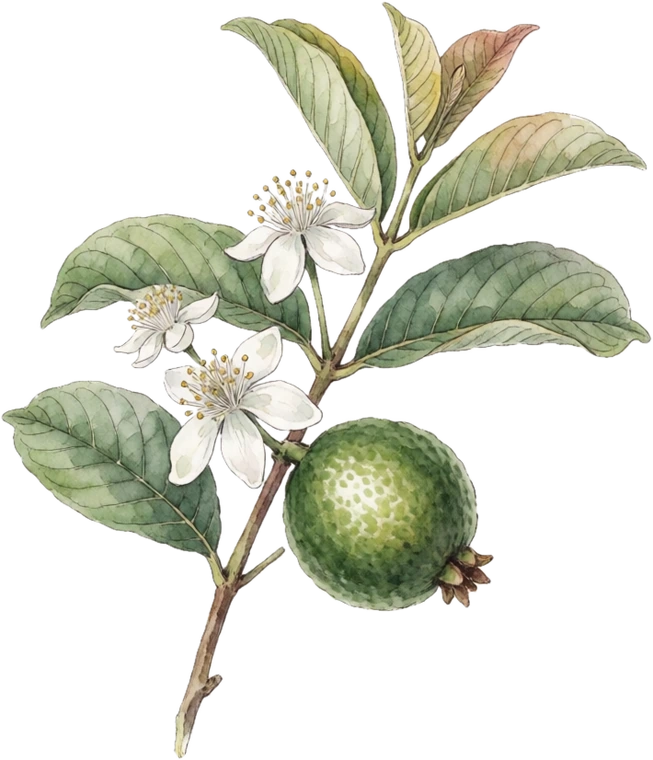
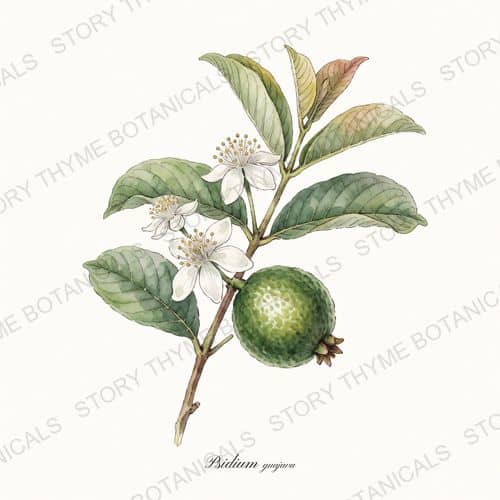
Botanical illustration of Guava
Shrub · Psidium guajava

One of the easiest tropical fruits to pot: fast, self-fertile, drought-tough, and it fruits on new wood so you can keep it small by pruning. A ripe guava perfumes a whole room. Fruit flies are the main headache where it's grown outdoors year-round.

ShrubFull SunModerate waterFast growthExcellent edibleAttracts beesNone winter chill

Where to buy the plant — 3 nurseries

I

Overview

Will guava suit your garden, and what goes wrong.

Will it fruit where you are?

Enter your ZIP — we look up your USDA hardiness zone (2023 map) and check it against what guava actually needs.

Life cyclePerennial zones 9–11, annual elsewhere
Winter chillNone
PollinationSelf-fertile

Guava at a glance

Life cyclePerennial zones 9–11, annual elsewhere
Mature size10-20 ft; pot 4-6 ft
PollinationSelf-fertile
Chill requirementNone (not chill-dependent)
Bloom seasonSpring-Summer (white, bee-loved)
Harvest seasonFruit ripens summer-fall; softens and perfumes when ripe
Growth rateFast

Common guava problems

II

Growing

Light, water, soil, propagation and the season’s jobs.

How to grow guava: light, water & soil

LightFull Sun
WaterModerate; drought-tough once established
SoilAdaptable, well-drained · pH 5.0 - 7.0
FertilizerLight balanced feed 3-4x in season
PruningLate Winter — Fruits on new growth — tip-prune after harvest to force fruiting wood and keep pot size.
Spacing8-12 ft

How to plant & propagate guava

PropagateGrafted, or from cuttings/layering (seed won't come true)

When to spray guava

Growing season. Bag fruit or trap flies in the South.

The guava growing playbook

Field-tested instructions for every job guava asks of you, compiled from university extension guidance — in the order the season brings them.

Watering

Don't let guava go dry from bloom through fruit fill

Once flowers open, water deeply and keep the root zone evenly moist right through fruit development. In a dry spell an established tree wants water twice a week. UF singles out bloom through fruit development as the window where drought stress costs a guava its crop - this is the one stretch the tree cannot buy back later.

Feeding

Feed guava three to four times across the growing season

Give a bearing tree 3 to 4 applications a year of a 6-6-6-2 or 8-3-9-2 formulation, spread through the growing season. A first-year tree wants a smaller dose every 1 to 2 months, starting near a quarter pound and working up toward a pound per application. Guava fruits on repeated flushes of new growth through the warm season, so the tree draws nutrients continuously rather than in one spring surge.

Keep grass and lawn care at least two feet back from the trunk, and cap a mature tree at 20 pounds of fertilizer per year. Roots run past the drip line, so heavy lawn feeding and watering nearby reaches the tree.

Micronutrient sprays through the warm months

Spread 3 to 4 foliar nutritional sprays carrying copper, zinc, manganese and boron across spring and summer. Sandy and high-pH soils tie these micronutrients up where roots cannot reach them, so guava takes them in faster through the leaf than through the ground.

Pruning

Keep guava low and open

Head young trees back at 1 to 2 feet to force branching, and hold bearing trees between 3 and 6 feet with selective cuts. Never let a guava climb past 10 feet. Guava flowers on new growth, so a cut both controls size and induces the next bloom, and an open canopy dries faster after rain, which is the main brake on anthracnose.

Avoid severe pruning heading into your cold season - the tender regrowth it forces is what a freeze kills. A guava allowed over 10 feet topples in strong wind.

Spraying

Copper for red alga in the warm wet months

When warm humid weather sets in and reddish-brown spots show on leaves, apply a copper-based fungicide periodically through the season. Cephaleuros algae colonize leaf and fruit surfaces during warm wet weather, and copper is the one material UF names as controlling them.

Follow the copper label's rate and reapplication interval. Pair it with pruning - opening the tree to light and air movement decreases severity, and is doing as much work as the spray.

Protection

Bag each guava at one inch across

As soon as a fruit reaches about 1 inch in diameter, slip a paper lunch bag or a knee-high nylon over it and tie the neck shut around the branch with a twist tie or string. Leave it on until the fruit is near mature size. Caribbean fruit fly does the most damage of any guava pest: the female lays into the fruit and the larvae tunnel through it until it is inedible. A bag is a physical barrier put on at the exact stage the fly starts finding fruit.

Bagging is the only fruit fly control UF names for the home landscape; for anything beyond it UF directs you to your local UF/IFAS Extension agricultural agent rather than to a spray. Exclusion plus prompt picking is the program here - do not improvise an insecticide on ripening fruit.

Guard guava through the freeze window

Site guava in the warmest corner of your landscape to begin with, and cover young trees whenever a freeze is forecast. A young guava dies at 27 to 28F, and even a mature tree only takes 25 to 26F briefly. Growth already stalls below 60F, so a marginal spot costs you all year, not just one night.

An air-layered tree killed to the ground can resprout from the base, but it takes 2 to 3 years to come back into fruit - protecting the trunk you have is far cheaper than regrowing it.

Harvesting

Pick pink guava at the color break, white guava still green

Pull pink and red-fleshed guava when the peel turns from light green to yellow, then finish ripening it at room temperature. Pick white-fleshed types like Crystal and Lotus at full size while still green - they are eaten crisp and unripe, not soft. Guava finishes ripening off the tree, so picking at the color break gets you the fruit rather than leaving a soft, fragrant target hanging where fruit flies find it.

Ripe or green, guava holds only 5 to 7 days in the refrigerator - pick to what you can eat or process.

III

The year

What guava asks for, month by month.

The guava year, month by month

MonthJanFebMarAprMayJunJulAugSepOctNovDec
Bloom
Prune
Harvest

What each band means

  • Bloomflowers open — pollinators working, frost on blossoms is the danger.
  • Pruneshape it now — cuts heal cleanly and structure is visible.
  • Harvestpicking time — check ripeness every few days.

The guava year as text

  • Jan quiet month
  • Feb pruning
  • Mar bloom, pruning
  • Apr bloom
  • May bloom
  • Jun bloom, harvest
  • Jul bloom, harvest
  • Aug bloom, harvest
  • Sep harvest
  • Oct harvest
  • Nov harvest
  • Dec quiet month

These are the species' typical months — expect them a few weeks earlier in warm zones and later in cold ones. Watch the plant, not just the calendar.

IV

Ecology & uses

What it does for the garden, and what it is grown for.

Guava in the garden system

  • Shrub layer shrub
AttractsBees, Birds
MoistureUpland / dry
DeerBrowsed — protect young plants
OriginIntroduced

What guava is grown for

✓ Commonly eaten

UseFresh eating
UsePaste/jelly
UseJuice
Edible value4/5

Harvesting & storing guava

Fruit ripens summer-fall; softens and perfumes when ripe.

Edibility, identification, and traditional-use notes here are general reference — not medical or veterinary advice, and not a claim that any plant treats or prevents anything. Medicinal ratings record how strongly a plant features in herbal tradition, nothing more. Never eat or dose a plant you have not positively identified. More on how to use this library.

V

Cultivars

Named varieties of guava, ruled as a catalogue.

Best guava varieties & cultivars

6 on file

Named varieties of guava differ in winter-chill needs, ripening time, hardiness, and whether they set fruit on their own — pick one that fits your climate.

Homestead · Ruby x Supreme

Partly self-fertile
RipensSummer main crop, light crop in early springZones9-11

sweet — A Ruby x Supreme cross and one of the pink-fleshed types UF recommends for Florida home landscapes.

Where to buy ‘Homestead

Story Thyme Farms may earn a small commission from these links, at no cost to you — it never changes what we recommend.

Hong Kong Pink

Partly self-fertile
RipensSummer main crop, light crop in early springZones9-11

sweet — Pink-fleshed and listed as recommended in UF's Florida guava variety table.

Where to buy ‘Hong Kong Pink

Story Thyme Farms may earn a small commission from these links, at no cost to you — it never changes what we recommend.

Patillo

Partly self-fertile
RipensSummer main crop, light crop in early springZones9-11

subacid, mild — Pink-fleshed, milder and less sweet than Homestead or Hong Kong Pink; UF recommended.

Where to buy ‘Patillo

Story Thyme Farms may earn a small commission from these links, at no cost to you — it never changes what we recommend.

Crystal

Partly self-fertile
RipensPicked full-size and green in summerZones9-11

mildly sweet, crunchy — A white-fleshed type eaten immature and crisp rather than ripened soft - a different fruit and a different harvest call than the pinks.

Where to buy ‘Crystal

Story Thyme Farms may earn a small commission from these links, at no cost to you — it never changes what we recommend.

Lotus

Partly self-fertile
RipensPicked full-size and green in summerZones9-11

mildly sweet, crunchy — White-fleshed crunchy type, UF recommended; harvested green like Crystal and Asian White.

Where to buy ‘Lotus

Story Thyme Farms may earn a small commission from these links, at no cost to you — it never changes what we recommend.

Asian White

Partly self-fertile
RipensPicked full-size and green in summerZones9-11

mildly sweet, crunchy — White-fleshed crunchy type on UF's recommended list, eaten immature.

Where to buy ‘Asian White

Story Thyme Farms may earn a small commission from these links, at no cost to you — it never changes what we recommend.

VI

Sources & plant ID

Where the care distinctions come from, and how the plant is filed.

Research basis

Sources behind this profile

No extension citations are attached to guavayet. The care figures below come from the library's own catalogue rather than a traced primary source.

Plant ID

BinomialPsidium guajava
FamilyMyrtaceae
TypeShrub · Tender Perennial
USDA symbolPSGU
OriginIntroduced
Invasive riskLow

VII

Where to buy

Third-party nurseries — not Story Thyme Farms.

Third-party nurseries, not Story Thyme Farms. Prices are theirs.

Story Thyme Farms may earn a small commission from these links, at no cost to you — it never changes what we recommend.

VIII

Questions

Guava questions, answered straight.

Do I need two guava plants to get fruit?

No — guava is self-fertile, so a single plant will set a crop. A second one usually improves yields, but it isn't required.

Is guava safe for kids and pets?

Guava is commonly eaten and isn't considered toxic, but "commonly eaten" isn't a guarantee for any particular person or animal — allergies, quantity, and which part you eat all matter. Never eat a plant you haven't positively identified, and check with a vet before letting pets or livestock graze anything new.

When do you harvest guava?

Fruit ripens summer-fall; softens and perfumes when ripe.

How do you propagate guava?

Grafted, or from cuttings/layering (seed won't come true).

IX

Elsewhere

Where guava sits in the library.

Where guava sits in the library

Grows in the same world