The illustrated growing guide

Yuzu

Citrus junos

Family Rutaceae

Est. zones 7-10

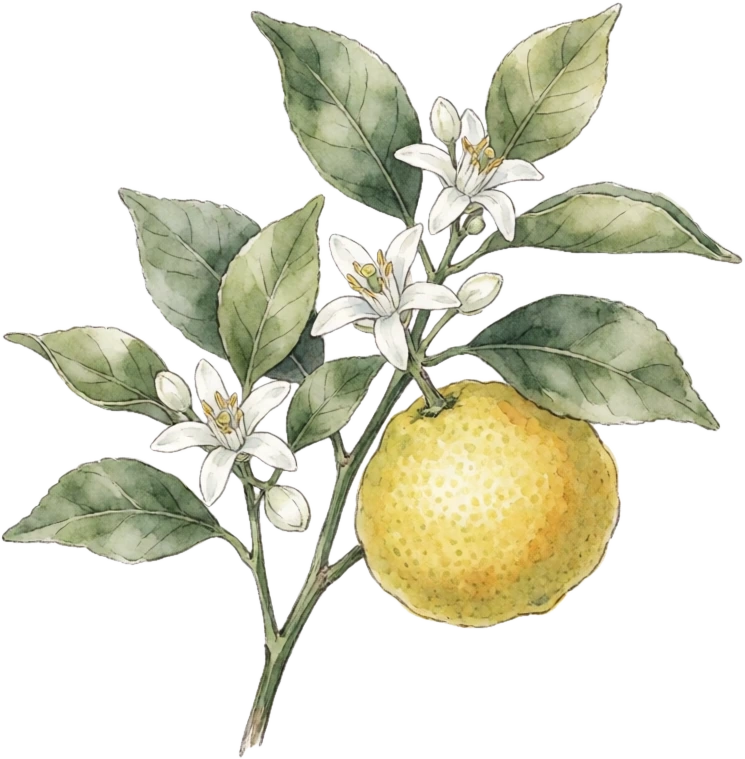
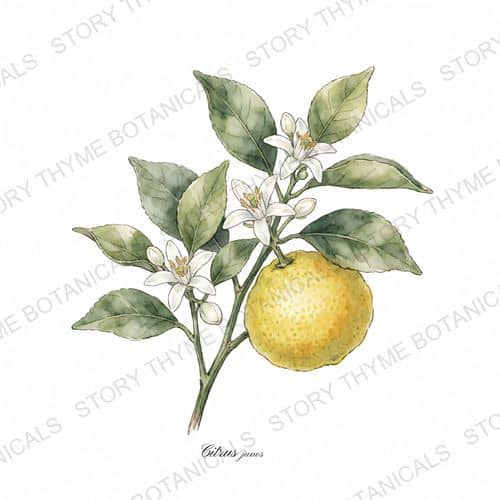
Botanical illustration of Yuzu
Tree · Citrus junos

The citrus that cold-climate cooks can actually grow outdoors — hardy near zero, it laughs at winters that kill lemons. The fruit is inedibly tart and seedy fresh, but its floral zest and juice are gold in Japanese cooking (ponzu, yuzu kosho). Thorny as barbed wire; site accordingly.

TreeFull Sun to Part ShadeModerate waterSlow-Moderate growthExcellent edibleNone winter chill

Where to buy the plant — 2 nurseries

Yuzu — a print from the Citrus Grove collection

From the print shop

Growing yuzu? Hang it.

Our Citrus Grove collection carries yuzuCitrus junos, print Nº 11, “Yuzu.”

16 designsfrom $21.99white or black groundmatte poster, unframed

Shop Citrus Grove botanical prints →

I

Overview

Will yuzu suit your garden, and what goes wrong.

Will it fruit where you are?

Enter your ZIP — we look up your USDA hardiness zone (2023 map) and check it against what yuzu actually needs.

Hardy inZones 7-10
Winter chillNone
PollinationSelf-fertile

Yuzu at a glance

HardinessUSDA 7–10
Mature size8-15 ft, thorny
PollinationSelf-fertile
Chill requirementNone (not chill-dependent)
Bloom seasonSpring
Harvest seasonFall: aromatic, seedy, tart — used for ZEST and juice, not fresh eating
Growth rateSlow-Moderate

Common yuzu problems

II

Growing

Light, water, soil, propagation and the season’s jobs.

How to grow yuzu: light, water & soil

LightFull Sun to Part Shade
WaterModerate
SoilWell-drained · pH 5.5 - 6.5
FertilizerLight citrus feed in season
PruningLate Winter — Manage the vicious thorns; open the center for light.
Spacing8-10 ft

How to plant & propagate yuzu

PropagateGrafted, or from cuttings/layering (seed won't come true)

When to spray yuzu

Dormant season. Oil in late winter.

Growing season. Oil for scale.

The yuzu growing playbook

Field-tested instructions for every job yuzu asks of you, compiled from university extension guidance — in the order the season brings them.

Feeding

Feed from spring growth through midsummer, then stop

Start feeding when growth begins in spring and repeat through midsummer, then stop. Use a balanced 8-8-8 at roughly half a pound per year of tree age for a bearing tree, spread out to the dripline and watered in. Young trees take smaller, more frequent doses: about a third of a pound at the first spring feeding in year one, working up to a pound by late summer of that year. Citrus pushes growth in flushes, and nitrogen applied late in the season forces a soft flush that has no time to harden before frost. That tender wood is the first thing a freeze kills, so a late feeding trades next year's fruit for this year's growth.

Do not fertilize at planting, and keep granular fertilizer off the trunk. After a freeze, cut rates in proportion to the wood you lost rather than pushing a damaged tree with a full program.

Pruning

Prune lightly in late spring, once new growth shows what survived

Wait until the spring flush has fully expanded and matured, then prune. Take out water sprouts, suckers from below the graft, dead or damaged limbs, and any branches crossing and rubbing. That is all yuzu needs. Cut back into living wood at a branch crotch, leaving no stubs. After a cold winter the true extent of freeze damage to branches may not be clear within the first few months. Pruning early means guessing at the line between live and dead wood and cutting twice. Waiting for the new spring flush to fully expand draws that line for you.

Yuzu carries thorns in the leaf axils; wear leather gloves and eye protection. Do not over-prune — UF/IFAS notes that the best way to lessen cold injury and hasten recovery is to maintain healthy trees, and that weak trees are usually the ones most severely damaged by cold.

What to watch for

Check leaf undersides for scale, mites and whitefly

Through the growing season, turn leaves over and look for scale bumps, stippled bronzed foliage from citrus red mite, whitefly, mealybug or black citrus aphid. Sticky honeydew and the sooty mold that grows on it are the giveaway. If you find them, treat with insecticidal soap or a 1 percent horticultural oil on tender new growth, 2 percent on mature foliage. These are all sap feeders that build slowly and are cheap to stop early and hard to stop late. Catching them while the colony is small is the difference between one soap spray and a season of sooty mold shading out the leaves.

Cut the oil back to the label's in-season rate once fruit is on the tree. Spray late in the day, out of direct sun, with no rain expected for 24 hours. Pre-harvest interval for both insecticidal soap and horticultural oil is 0 days.

Spraying

Horticultural oil for scale and mites before the spring flush

If scale or mites built up last season, spray the trunk and limbs with a 2 percent horticultural oil solution, mixed to the dilution on your product's label, to the point of run-off. Do this before new spring growth starts, on a day when temperatures are above 45 degrees F. Oil kills by smothering, so it works on the armored scales and overwintering mite eggs that contact insecticides cannot reach. Hitting them before the flush breaks means the new leaves emerge onto a clean tree instead of into an established population.

Apply only between 45 and 85 degrees F, as oil outside that range burns foliage. Do not spray any tree in bloom. Pre-harvest interval for horticultural oil is 0 days.

Citrus leafminer: treat young trees on the summer flush only

On trees under about four years old, watch each new flush after bloom for silvery serpentine mines and curled leaf tips. If young trees are being set back, spray spinosad while the new flush is still tender and egglaying moths are active. Residues are short lived, so repeat every 7 to 14 days while that flush is expanding. Mature trees more than four years old carry a dense canopy of older foliage, tolerate the damage with negligible effect, and rarely if ever need treating. The moth can only lay into tender, half-grown leaves; once foliage hardens it is immune. Spraying a fully expanded flush is spraying leaves the insect can no longer use. On a young tree the repeated mining genuinely slows growth, which is why the age cutoff matters.

Never spray during bloom. Spinosad is toxic to bees on contact until the spray has dried — apply in the evening when bees are not foraging and let residues dry. Pre-harvest interval is 1 day (Clemson HGIC 2221, Table 1), and spinosad is limited to 6 applications per season. Avoid malathion, carbaryl and pyrethroids here: UC IPM notes frequent use of these broad-spectrum insecticides kills the beneficial insects that hold leafminer down.

Protection

Bank or wrap the trunk before the first freeze

Before the first freeze, bank clean soil around the trunk to a height of about 15 inches, or wrap the trunk with an insulating material such as fiberglass or foam rubber at least 6 inches thick, making good contact with the soil. Use clean mineral soil, not compost or other organic matter. Remove soil banks after the last chance of freeze in early spring. If you can run water, a microsprinkler is the most effective protection there is: at least 10 gallons per tree per hour, a 90-to-180-degree emitter placed within 12 inches of the trunk on the side facing the incoming wind with the spray focused on the graft union, run continuously for the entire duration of the freeze. Yuzu is among the hardiest edible citrus, but the graft union is the one part it cannot regrow from. If the trunk survives, a frozen top rebuilds itself. If the union dies, you are left with a trifoliate rootstock and no yuzu.

UGA specifies trunk banking for trees up to 4 years of age; on older trees trunk protection is less effective. Bank with clean soil only — organic matter mounded around the graft union and scion significantly increases disease incidence and is not recommended. Once a microsprinkler is started for a freeze it must run continuously until temperatures rise; stopping partway through causes worse injury than never starting.

Harvesting

Pick as the rind turns yellow, and beat the first hard freeze

Yuzu ripens in fall as the rough, pebbly rind breaks from green to yellow-green and then yellow. Cut fruit off with clippers rather than pulling, to avoid tearing the rind. You can also pick it green and hard earlier — yuzu is used for cooking primarily while still green, which falls in September to October. Begin harvesting as the first few fruits ripen, which stretches the picking period by a week or two, and get the whole crop off before a hard freeze is forecast. Yuzu is grown for the fragrant oily rind and the juice, not for fresh eating, so peel condition is the whole crop. Citrus fruit on the tree freezes easily at 26 to 28 degrees F, especially when those temperatures hold for several hours, and freeze-damaged fruit loses the aromatic oils that were the point.

Thorns sit in the leaf axils right where you reach for fruit; wear gloves. Expect roughly 28 seeds per fruit; strain the juice.

III

The year

What yuzu asks for, month by month.

The yuzu year, month by month

MonthJanFebMarAprMayJunJulAugSepOctNovDec
Bloom
Prune
Harvest

What each band means

  • Bloomflowers open — pollinators working, frost on blossoms is the danger.
  • Pruneshape it now — cuts heal cleanly and structure is visible.
  • Harvestpicking time — check ripeness every few days.

The yuzu year as text

  • Jan quiet month
  • Feb pruning
  • Mar bloom, pruning
  • Apr bloom
  • May bloom
  • Jun quiet month
  • Jul quiet month
  • Aug quiet month
  • Sep harvest
  • Oct harvest
  • Nov harvest
  • Dec quiet month

These are the species' typical months — expect them a few weeks earlier in warm zones and later in cold ones. Watch the plant, not just the calendar.

IV

Ecology & uses

What it does for the garden, and what it is grown for.

Yuzu in the garden system

  • Understory layer tree
MoistureFacultative / average
DeerBrowsed — protect young plants
OriginIntroduced

What yuzu is grown for

✓ Commonly eatenSkin oils mildly irritating to pets

UseZest
UsePonzu
UseCold-hardy citrus
Edible value4/5

Harvesting & storing yuzu

Fall: aromatic, seedy, tart — used for ZEST and juice, not fresh eating.

Edibility, identification, and traditional-use notes here are general reference — not medical or veterinary advice, and not a claim that any plant treats or prevents anything. Medicinal ratings record how strongly a plant features in herbal tradition, nothing more. Never eat or dose a plant you have not positively identified. More on how to use this library.

V

Cultivars

Named varieties of yuzu, ruled as a catalogue.

Best yuzu varieties & cultivars

1 on file

Named varieties of yuzu differ in winter-chill needs, ripening time, hardiness, and whether they set fruit on their own — pick one that fits your climate.

Yuzu Ichandrin · Ichandrin; CRC 1216

Self-fertile
RipensSeptember to NovemberZones7-10Size12-15 ft on standard citrange/trifoliate rootstock; 4-6 ft on dwarfing Flying Dragon or in a container

Highly acidic at about 4.5 percent citric acid, very sour juice, intensely fragrant pebbly rind used as zest — The one named yuzu selection reliably sold in the US; most nurseries list yuzu with no cultivar name at all. An Ichang papeda by Satsuma mandarin hybrid, grown from seed collected in Hubei, China by USDA explorer Frank Meyer in 1918 (PI 45945). Nurseries rate it hardy to about 0 degrees F, which is what puts it in zone 7; Meyer noted that in its wild habitat temperatures probably never drop below 10 degrees F. Zone 7 growers should still plan on winter trunk protection for the first four years. Grafted on dwarfing rootstock it fruits early. Averages about 28 seeds per fruit, which does not matter for a crop used as zest and juice.

Where to buy ‘Yuzu Ichandrin

Story Thyme Farms may earn a small commission from these links, at no cost to you — it never changes what we recommend.

VI

Sources & plant ID

Where the care distinctions come from, and how the plant is filed.

Research basis

Sources behind this profile

No extension citations are attached to yuzuyet. The care figures below come from the library's own catalogue rather than a traced primary source.

Plant ID

BinomialCitrus junos
FamilyRutaceae
TypeTree · Perennial
OriginIntroduced
Invasive riskLow

VII

Where to buy

Third-party nurseries — not Story Thyme Farms.

Third-party nurseries, not Story Thyme Farms. Prices are theirs.

Story Thyme Farms may earn a small commission from these links, at no cost to you — it never changes what we recommend.

VIII

Questions

Yuzu questions, answered straight.

Do I need two yuzu plants to get fruit?

No — yuzu is self-fertile, so a single plant will set a crop. A second one usually improves yields, but it isn't required.

Is yuzu safe for kids and pets?

Yuzu is commonly eaten and isn't considered toxic, but "commonly eaten" isn't a guarantee for any particular person or animal — allergies, quantity, and which part you eat all matter. One caveat on this one: Skin oils mildly irritating to pets. Never eat a plant you haven't positively identified, and check with a vet before letting pets or livestock graze anything new.

When do you harvest yuzu?

Fall: aromatic, seedy, tart — used for ZEST and juice, not fresh eating.

How do you propagate yuzu?

Grafted, or from cuttings/layering (seed won't come true).

IX

Elsewhere

Where yuzu sits in the library.