The illustrated growing guide

Apricot

Prunus armeniaca

Family Rosaceae

Est. zones 5-8

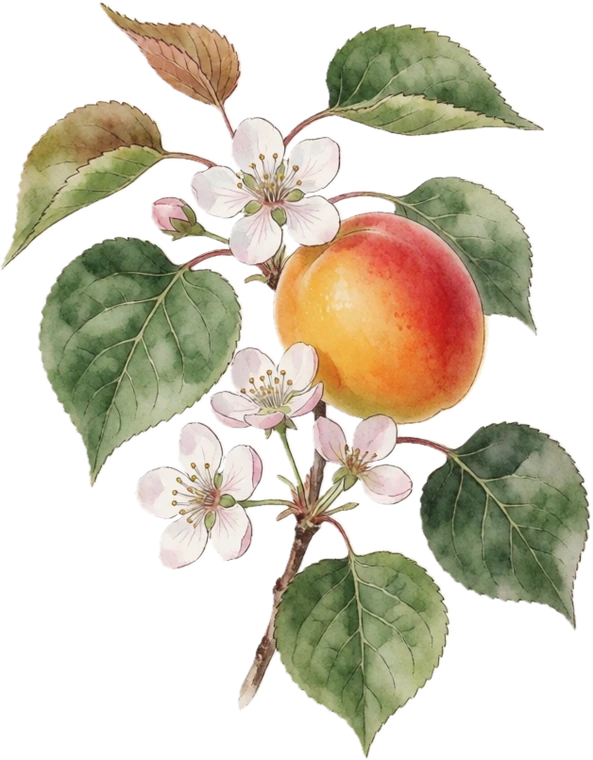
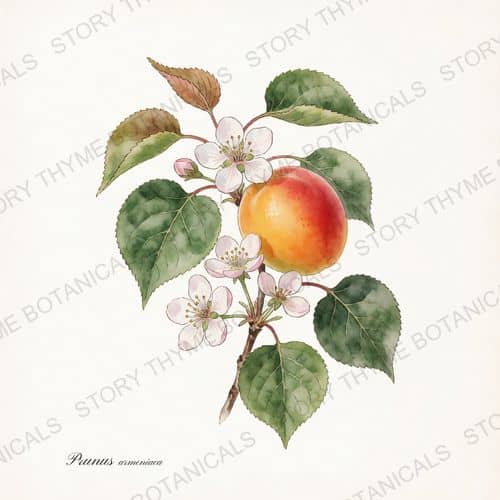
Botanical illustration of Apricot
Tree · Prunus armeniaca

Blooms 2 weeks before peaches — a March frost takes the crop 2 years out of 5 in the Midwest. Plant the coldest spot you have (delays bloom), 'Tomcot' sets in cool weather. When it hits, nothing store-bought compares.

TreeFull SunModerate waterFast growthExcellent edibleAttracts beesAttracts butterflies300-700 winter chill (unconfirmed)

Where to buy the plant — 3 nurseries

Apricot — a print from the Orchard Vol. 2 collection

From the print shop

Growing apricot? Hang it.

Our Orchard Vol. 2 collection carries apricotPrunus armeniaca, print Nº 1, “Apricot.”

16 designsfrom $21.99white or black groundmatte poster, unframed

Shop Orchard Vol. 2 botanical prints →

I

Overview

Will apricot suit your garden, and what goes wrong.

Will it fruit where you are?

Enter your ZIP — we look up your USDA hardiness zone (2023 map) and check it against what apricot actually needs.

Hardy inZones 5-8
Winter chill300-700
Unconfirmed

Commonly quoted, but we have not traced this range to a university extension trial or another primary source, and published figures for the same plant often disagree. Chill-hour requirements were only ever established by trial for a handful of commercial fruit crops; for most species the work was never funded. Treat it as a starting point and check your local extension office before you plant on it.

PollinationSelf-fertile

Apricot at a glance

HardinessUSDA 5–8
Mature size12-18 ft
PollinationSelf-Fertile (most)
Chill requirement300-700
Unconfirmed

Commonly quoted, but we have not traced this range to a university extension trial or another primary source, and published figures for the same plant often disagree. Chill-hour requirements were only ever established by trial for a handful of commercial fruit crops; for most species the work was never funded. Treat it as a starting point and check your local extension office before you plant on it.

Bloom seasonVERY Early Spring — the whole problem
Harvest seasonJuly
Growth rateFast

Common apricot problems

  • Plum Curculio
  • Peach Tree Borer
  • OFM
  • Brown Rot
  • Bacterial Spot
  • Perennial Canker

II

Growing

Light, water, soil, propagation and the season’s jobs.

How to grow apricot: light, water & soil

LightFull Sun, NORTH-facing slope ideal (delays bloom)
WaterModerate, deep and infrequent
SoilWell-drained Loam · pH 6.0 - 7.0
FertilizerLight nitrogen after fruit set only.
PruningSummer or after harvest (dry weather — avoids Eutypa/Cytospora canker) — Open center. Fruits on short spurs living 3-4 years. Prune in dry summer weather, never wet late winter — fresh cuts invite canker.
Spacing15-20 ft

How to plant & propagate apricot

PropagateGrafted, or from cuttings/layering (seed won't come true)

When to spray apricot

Dormant season. Copper at leaf drop. Dormant oil before bud swell.

Growing season. Petal fall: curculio insecticide. Brown rot: fungicide as fruit colors.

The apricot growing playbook

Field-tested instructions for every job apricot asks of you, compiled from university extension guidance — in the order the season brings them.

Thinning

Thin the young fruit to one every 4 to 6 inches

When the fruits are grape-sized, thin them to one fruit every 4 to 6 inches along the branch, taking off the smallest and any that are doubled or touching. Apricots habitually set far more fruit than they can fill, and a tree left unthinned ripens a crop of small stone-heavy fruit while spending the reserves it needs for next year's buds and for wood strong enough to hold the load.

Pruning

Prune to an open vase while the tree is still dormant

Prune in late winter, while the tree is still fully dormant and before the buds swell - in warm zones that can be January, in cold zones March, so watch the buds rather than the calendar. Train young trees to an open vase by keeping 3 to 4 evenly spaced scaffold branches that start 18 to 24 inches above the ground and cutting out the central stem. On an established tree, start with any dead, diseased, or damaged wood, then remove about 25 percent of the branches to open the canopy to light. Apricots fruit on short spurs that stay productive for 3 to 5 years, so the goal is light reaching the inside of the tree to keep those spurs alive and renewing rather than a shell of bearing wood on the outside.

Because the spurs bear for 3 to 5 years, cutting out too much older wood removes the crop - take the 25 percent from crowding and shading branches, not from healthy spur wood. Apricot breaks dormancy earlier than any other stone fruit; if buds have already swollen you are late, so prune and stop rather than working into open bloom.

Strip the mummies and cut out the blighted twigs

Remove fruit mummies from the tree immediately after harvest, clear the fallen fruit from the ground beneath it, and cut out twigs killed by blossom blight along with any branches carrying cankers. Compost or bury the infected fruit rather than leaving it at the base of the tree. Every mummy and canker is where Monilinia spends the winter, and those are the spores that will hit next spring's blossoms - clearing them is the single cheapest way to cut how much you have to spray next year.

Spraying

San Jose scale: horticultural oil at delayed dormant

As buds swell and show their first green but before any blossoms open, spray horticultural oil, covering bark, crotches, and the undersides of scaffold limbs until it drips. San Jose scale overwinters on the bark under a waxy armor that shrugs off most materials, and oil kills by smothering, so it only works while the insects are exposed and the tree has no open flowers to injure.

Oil must go on before bloom - never spray oil onto open blossoms, both because it injures the flowers and because bees are foraging in them.

Brown rot blossom blight: fungicide as the flowers open

Begin fungicide applications when the blossoms first begin to open, using myclobutanil, propiconazole, chlorothalonil, captan, or sulfur, and repeat on the label's interval until petal fall. Wet, mild weather during bloom is what makes the extra applications necessary. Monilinia overwinters in mummified fruit and cankered twigs, and its spores infect through the open flower, then grow down the flower stem into the spur and kill it - so a blossom missed now becomes a twig canker that seeds the whole orchard next spring.

These are fungicides and are appropriate during bloom, but do not tank-mix or follow with an insecticide while flowers are open - bees are foraging. Chlorothalonil is for blossom blight only and is not used for the later fruit rot sprays.

Coryneum blight: spray just after the petals drop

Apply a fungicide for Coryneum blight, also called shot hole, just after petal fall as the young leaves are expanding. USU pairs this with a second application in autumn at 50 percent leaf drop; the spring spray alone is only half the program, so plan on both. The shot hole fungus survives inside infected buds and on twigs, and its spores are splashed onto the new leaves and fruit by spring rain - the tissue is only vulnerable while it is young, which is why the timing hangs on petal fall rather than a date.

Time this to petal fall because that is when the new tissue is susceptible, not because earlier spraying is forbidden - the pre-bloom oil and the bloom fungicide are both correct in their own windows. Do not substitute an insecticide into this slot while any blossoms remain open. Read the label's pre-harvest interval for your product before applying.

Brown rot fruit rot: start sprays as the fruit colors up

Begin fungicide sprays 2 to 3 weeks before harvest as the fruit begins to ripen, using myclobutanil, propiconazole, or captan, and repeat on the label's interval until harvest. Ripening apricots go from resistant to highly susceptible as their sugars rise, and a single infected fruit will sporulate and rot the ones touching it, so the protection has to be on the fruit before the ripening window opens.

Chlorothalonil must not be used for fruit rot - it is a blossom blight material only on stone fruit. Every one of these sprays lands inside the pre-harvest interval, so read the label's PHI in days for your product and do not pick before it has elapsed.

Protection

Protect apricot bloom from frostMar – Apr

Watch forecasts during bloom and cover small trees before freezing nights, extending fabric to the ground and removing it in the morning. Apricots bloom early, so spring freezes can erase the crop even when the tree survives.

Do not let plastic or fabric crush blossoms; uncover for pollinators after the cold night.

Harvesting

Pick when the fruit softens and the green is gone

Harvest when the skin has turned fully from green to yellow, orange, or red and the fruit gives slightly to gentle pressure. Go over the tree repeatedly and pick all fruit as it ripens rather than stripping it at once. Apricots ripen unevenly across a tree and lose flavor if picked while still green-shouldered, and any overripe fruit left hanging becomes the brown rot inoculum for next season.

III

The year

What apricot asks for, month by month.

The apricot year, month by month

MonthJanFebMarAprMayJunJulAugSepOctNovDec
Bloom
Prune
Harvest

What each band means

  • Bloomflowers open — pollinators working, frost on blossoms is the danger.
  • Pruneshape it now — cuts heal cleanly and structure is visible.
  • Harvestpicking time — check ripeness every few days.

The apricot year as text

  • Jan quiet month
  • Feb quiet month
  • Mar bloom
  • Apr bloom
  • May quiet month
  • Jun pruning
  • Jul pruning, harvest
  • Aug pruning
  • Sep quiet month
  • Oct quiet month
  • Nov quiet month
  • Dec quiet month

These are the species' typical months — expect them a few weeks earlier in warm zones and later in cold ones. Watch the plant, not just the calendar.

IV

Ecology & uses

What it does for the garden, and what it is grown for.

Apricot in the garden system

  • Understory layer tree
  • Keystone: Keystone — hosts 340-450+ caterpillar species
AttractsBees, Butterflies
MoistureFacultative / average
DeerBrowsed — protect young plants
OriginIntroduced

What apricot is grown for

! Some parts toxic — see notesPits toxic if crushed

UseFresh
UseJam
UseDrying
Edible value4/5

Harvesting & storing apricot

July.

Edibility, identification, and traditional-use notes here are general reference — not medical or veterinary advice, and not a claim that any plant treats or prevents anything. Medicinal ratings record how strongly a plant features in herbal tradition, nothing more. Never eat or dose a plant you have not positively identified. More on how to use this library.

V

Cultivars

Named varieties of apricot, ruled as a catalogue.

Best apricot varieties & cultivars

19 on file

Named varieties of apricot differ in winter-chill needs, ripening time, hardiness, and whether they set fruit on their own — pick one that fits your climate.

Blenheim · Royal, Royal Blenheim

Self-fertile
Chill400–500 hrsRipensLate JuneZones7-9Diseasesusceptible to brown rot and pit burnSizestandard (12-18 ft; semi-dwarf on rootstock)

sweet, aromatic, richly flavored fresh and dried — The California heirloom benchmark for flavor, but it blooms early so it needs a mild-winter, low-frost site.

Where to buy ‘Blenheimverified

Story Thyme Farms may earn a small commission from these links, at no cost to you — it never changes what we recommend.
Gold Kist

Self-fertile
Chill300–300 hrsRipensLate May to JuneZones7-9DiseasemoderateSizestandard (freestone; heavy bearer)

sweet-tart, good fresh and for canning — A true low-chill pick that fruits in warm-winter zones and ripens 3-4 weeks ahead of Blenheim.

Where to buy ‘Gold Kistverified

Story Thyme Farms may earn a small commission from these links, at no cost to you — it never changes what we recommend.

Katy · Katie

Self-fertile
Chill300–400 hrsRipensLate May to early JuneZones7-9DiseasemoderateSizestandard (large, firm freestone fruit)

mild, sweet, sub-acid, juicy; best fresh — A popular low-chill apricot for warm-winter regions; Dave Wilson lists it around 400 chill hours, a bit higher than Gold Kist.

Where to buy ‘Katy

Story Thyme Farms may earn a small commission from these links, at no cost to you — it never changes what we recommend.

Tomcot

Partly self-fertile
Chill500–600 hrsRipensLate JuneZones5-8DiseasemoderateSizestandard (large, firm fruit)
Pollinationpartially self-fertile; crops much better with a second variety

sweet-tart, firm; good fresh and shipping — A large early apricot that sets some fruit alone but yields far better with a pollinizer; its early bloom makes it frost-prone.

Where to buy ‘Tomcot

Story Thyme Farms may earn a small commission from these links, at no cost to you — it never changes what we recommend.

Moorpark

Self-fertile
Chill600–700 hrsRipensMid to late JulyZones5-8Diseasesusceptible to brown rotSizestandard (large, aromatic fruit)

rich, sweet, intensely aromatic; excellent fresh — A famous old English variety prized for flavor, though fruit ripens unevenly on the tree.

Where to buy ‘Moorparkverified

Story Thyme Farms may earn a small commission from these links, at no cost to you — it never changes what we recommend.

Goldcot

Self-fertile
Chill750–800 hrsRipensMid to late JulyZones4-8Diseasegood (bred for humid eastern climates)Sizestandard (vigorous, upright)

tangy-sweet, firm; good fresh and for jam — A Michigan-bred, cold-hardy, self-fertile apricot well suited to the colder and more humid eastern US; late bloomer.

Where to buy ‘Goldcot

Story Thyme Farms may earn a small commission from these links, at no cost to you — it never changes what we recommend.

Harcot

Self-fertile
Chill600–700 hrsRipensEarly to mid JulyZones5-8Diseasegood (resists brown rot, perennial canker, bacterial spot)Sizestandard (medium-large fruit)

sweet, rich, low-acid; excellent fresh — A cold-hardy Canadian variety with unusually good disease resistance and a later bloom that helps dodge spring frost.

Where to buy ‘Harcot

Story Thyme Farms may earn a small commission from these links, at no cost to you — it never changes what we recommend.

Harglow

Self-fertile
Chill600–700 hrsRipensLate July to early AugustZones5-8Diseasegood (resists brown rot, bacterial spot, perennial canker; crack-resistant)Sizecompact (small, slow-growing tree)

sweet, firm, orange flesh; good fresh and canned — Its late bloom helps it dodge spring frosts, and its compact habit suits small yards.

Where to buy ‘Harglow

Story Thyme Farms may earn a small commission from these links, at no cost to you — it never changes what we recommend.
Moongold

Needs a pollinizer
Chill700–1000 hrsRipensLate JulyZones4-6DiseasemoderateSizestandard (hardy, spreading)
Pollinationneeds a second variety (pair with Sungold)

sweet-tart, firm; good fresh and for preserves — A University of Minnesota selection hardy to about -30F; it is self-unfruitful and must be planted with Sungold (or another compatible apricot) to set fruit.

Where to buy ‘Moongold

Story Thyme Farms may earn a small commission from these links, at no cost to you — it never changes what we recommend.

Sungold

Needs a pollinizer
Chill700–1000 hrsRipensLate July to early AugustZones4-6DiseasemoderateSizestandard (hardy, upright)
Pollinationneeds a second variety (pair with Moongold)

mild, sweet, tender; excellent fresh — The sweeter, milder companion to Moongold; both are self-unfruitful and must be grown together for cross-pollination in far-north gardens.

Where to buy ‘Sungold

Story Thyme Farms may earn a small commission from these links, at no cost to you — it never changes what we recommend.

Chinese · Mormon

Self-fertile
Chill700–700 hrsRipensLate June to JulyZones4-7Sizestandard; medium to large fruit

good flavor and texture; the pit is an edible sweet nut — USU names it among the winter-hardy, later-blooming apricots, which is the whole game in a frost-prone yard. Chill figure of 700 hours is from Dave Wilson Nursery's variety spec.

Where to buy ‘Chineseverified

Story Thyme Farms may earn a small commission from these links, at no cost to you — it never changes what we recommend.

Goldrich

Needs a pollinizer
RipensEarly JulyZones5-8Sizestandard; large fruit
Pollinationrequires cross pollination

rich; used fresh, dried, and cooked — USU calls Goldrich and Harglow the latest blooming of the winter-hardy apricots. It will not set a crop alone - plant a second apricot that blooms with it.

Where to buy ‘Goldrich

Story Thyme Farms may earn a small commission from these links, at no cost to you — it never changes what we recommend.

Tilton

Self-fertile
Chill600–600 hrsRipensJulyZones5-9Sizestandard; medium fruit

distinctive tangy flavor; a classic canning and drying apricot — USU lists Tilton among the winter-hardy, later-blooming cultivars. Chill figure of 600 hours is from Dave Wilson Nursery's variety spec.

Where to buy ‘Tilton

Story Thyme Farms may earn a small commission from these links, at no cost to you — it never changes what we recommend.

Puget Gold

Self-fertile
Chill600–600 hrsRipensEarly AugustZones4-9Sizestandard; large fruit

sweet; good fresh, canned, and dried — The latest-ripening apricot on USU's table apart from Autumn Glo, which pushes the fruit past the worst of early-summer rot pressure. USU notes it handles cool springs. Chill figure of 600 hours is from Dave Wilson Nursery's variety spec. The two sources disagree on cold hardiness - USU lists zones 4-9, Dave Wilson lists 6-9 - so treat the cold end as unsettled and check locally before planting in zone 4 or 5.

Where to buy ‘Puget Gold

Story Thyme Farms may earn a small commission from these links, at no cost to you — it never changes what we recommend.

Goldbar

Needs a pollinizer
RipensJune to JulyZones4-8Sizestandard; very large fruit
Pollinationrequires cross pollination

mild flavor; used fresh and for canning — One of only two very-large-fruited apricots on USU's table. It is self-unfruitful, so it needs a second apricot blooming at the same time. USU rates the flavor as mild - this is a size-and-yield variety, not a flavor pick. No chill figure is recorded because no extension or nursery source consulted states one for Goldbar.

Where to buy ‘Goldbar

Story Thyme Farms may earn a small commission from these links, at no cost to you — it never changes what we recommend.

Perfection · Goldbeck

Needs a pollinizer
RipensEarly JulyZones4-7Sizestandard; large fruit
Pollinationrequires cross pollination

used for baking, canning, drying, and preserves — A large-fruited processing apricot that will not set a crop on its own. Dave Wilson Nursery lists it without a chill figure, so none is recorded here.

Where to buy ‘Perfection

Story Thyme Farms may earn a small commission from these links, at no cost to you — it never changes what we recommend.

Rival

Needs a pollinizer
RipensEarly JulyZones5-8Sizestandard; large fruit
Pollinationrequires cross pollination

mildly flavored; used fresh, dried, and for preserves — USU and Dave Wilson Nursery agree on zones 5-8. Neither states a chill figure, so none is recorded here. Needs a pollinizer.

Where to buy ‘Rival

Story Thyme Farms may earn a small commission from these links, at no cost to you — it never changes what we recommend.

Flavor Giant

Self-fertile
Chill–500 hrsRipensEarly JulyZones5-8Sizestandard; very large fruit

firm texture, mild flavor; good fresh and canned — Dave Wilson Nursery specs it at 500 chill hours or less, making it the lowest-chill self-fertile pick on USU's table. Note the two sources disagree on range - USU lists zones 5-8, Dave Wilson lists 7-9.

Where to buy ‘Flavor Giant

Story Thyme Farms may earn a small commission from these links, at no cost to you — it never changes what we recommend.

Autumn Glo

Self-fertile
Chill–500 hrsRipensAugust to SeptemberZones4-6Sizestandard; medium fruit

great tasting fresh apricot — By far the latest apricot on USU's table, ripening after every other cultivar. Chill spec of 500 hours or less is from Dave Wilson Nursery, which lists its range as zones 7-9 against USU's 4-6 - treat the zone range as unsettled and check locally before planting.

Where to buy ‘Autumn Glo

Story Thyme Farms may earn a small commission from these links, at no cost to you — it never changes what we recommend.

VI

Sources & plant ID

Where the care distinctions come from, and how the plant is filed.

Research basis

Sources behind this profile

No extension citations are attached to apricotyet. The care figures below come from the library's own catalogue rather than a traced primary source.

Plant ID

BinomialPrunus armeniaca
FamilyRosaceae
TypeTree · Perennial
USDA symbolPRAR3
OriginIntroduced
Invasive riskLow

VII

Where to buy

Third-party nurseries — not Story Thyme Farms.

Third-party nurseries, not Story Thyme Farms. Prices are theirs.

Story Thyme Farms may earn a small commission from these links, at no cost to you — it never changes what we recommend.

VIII

Questions

Apricot questions, answered straight.

Do I need two apricot plants to get fruit?

No — apricot is self-fertile, so a single plant will set a crop. A second one usually improves yields, but it isn't required.

Will apricot fruit in a warm-winter climate?

Apricot needs roughly 300-700 hours of winter chill (hours between 32–45°F) to break dormancy and set fruit. That range is commonly quoted but we have not traced it to a university extension trial, and published figures for this plant disagree — treat it as a starting point and check your local extension office. Mild-winter growers should count their chill hours before planting.

Is apricot safe for kids and pets?

With care. Pits toxic if crushed Site it accordingly if children or pets roam the garden. This is general reference, not medical or veterinary advice — call a vet or poison control if something has actually been eaten.

When do you harvest apricot?

July.

IX

Elsewhere

Where apricot sits in the library.