The illustrated growing guide

Radish

Raphanus sativus

Family Brassicaceae

Grown as an annual

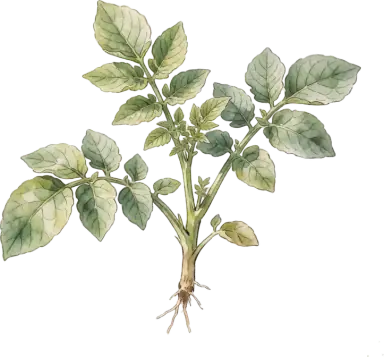
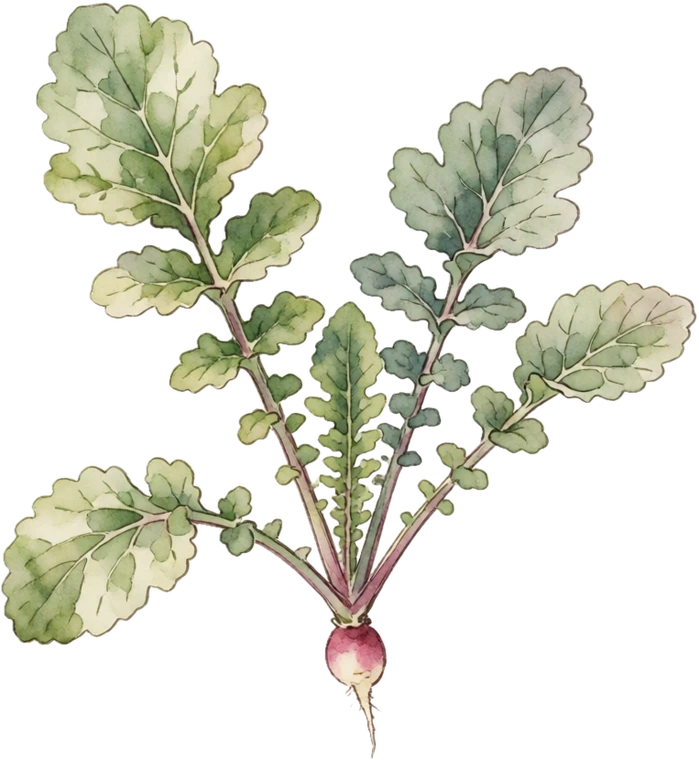
Botanical illustration of Radish
Annual · Raphanus sativus

The instant-gratification crop — kids' first vegetable. Sow a pinch every week, pull in 3-4 weeks; anything left too long gets woody.

AnnualFull Sun to Part ShadeModerate waterVery Fast growthExcellent edibleNone winter chill

Where to buy the plant — 3 nurseries

French Radish — a print from the Roots & Alliums collection

From the print shop

Growing radish? Hang it.

Our Roots & Alliums collection carries radishRaphanus sativus, print Nº 3, “French Radish.”

16 designsfrom $21.99white or black groundmatte poster, unframed

Shop Roots & Alliums botanical prints →

I

Overview

Will radish suit your garden, and what goes wrong.

Will it fruit where you are?

Enter your ZIP — we look up your USDA hardiness zone (2023 map) and check it against what radish actually needs.

Life cycleAnnual
Winter chillNone

Radish at a glance

Life cycleAnnual
Mature size6-12 in
PollinationN/A
Chill requirementNone (not chill-dependent)
Bloom seasonBolts in heat
Harvest seasonApril - June; September - November; winter types for storage
Growth rateVery Fast (radishes in 25 days)

Common radish problems

II

Growing

Light, water, soil, propagation and the season’s jobs.

How to grow radish: light, water & soil

LightFull Sun to Part Shade
WaterModerate and steady — hot + dry = pithy and fiery
SoilLoose, quick-draining · pH 6.0 - 7.0
FertilizerNone needed in decent soil
PruningNone — None.
Spacing2 in

How to plant & propagate radish

Maturity22-30 days
From seedDirect-sow spring/fall; the fastest crop; sow every week
PropagateFrom seed

When to spray radish

Growing season. Row cover at sowing solves both pests.

The radish growing playbook

Field-tested instructions for every job radish asks of you, compiled from university extension guidance — in the order the season brings them.

Sowing

Direct-sow spring radishes as soon as the soil can be worked

Loosen the bed at least six inches deep, then sow seed a half inch deep with about an inch between seeds and rows 10 to 12 inches apart. Sowing can start once soil reaches 40F, and seed comes up in 5 to 10 days. Sow a short row about every 10 days instead of one big planting, so you get a steady supply rather than a glut. Radish can be sown once soil reaches 40F and germinates best at 55F to 75F, and roots mature 25 to 45 days from seeding depending on variety, so the crop has to size up while the weather is still cool. Stress during the first six weeks of growth often leads to premature flowering and low yields, and roots that finish in heat turn hot and bitter.

Sow daikon and winter storage radishes in late summer

Sow the long and storage types from midsummer to late summer for a fall harvest, planting the larger-rooted kinds up to an inch deep and thinning them to four to six inches apart. They take considerably longer than the three to five weeks a spring garden radish needs, so count back from your first hard frost. Winter radishes need a long cool finish, so they are timed to mature as temperatures fall rather than rise; radishes pushed into heat run to flower and seed before the root fills.

Watering

Water regularly and evenly - never let the bed swing from dry to soaked

Water radishes regularly. How much depends on your soil type, so judge by the bed rather than a fixed weekly number - check that moisture is reaching root depth and stays steady. Use drip irrigation if possible, and mulch around the plants to conserve soil moisture. Never let the bed dry to the point of wilting and then flood it. Moisture fluctuations cause root cracking, slow leaf development, and contribute to hot, bitter roots - the flavor growers usually blame on the variety. Stress during the first six weeks of growth also often leads to premature flowering and low yields, and a crop this fast has no time to recover.

Thinning

Thin about a week after each sowing, before the roots start to swell

Once the seedlings are up and a couple of inches tall, thin salad types to 1 to 2 inches apart and daikon or winter types to 4 to 6 inches. Do this for every sowing, spring or fall. It feels wasteful and it is the single step most gardeners skip. A radish root has to have room to expand sideways; crowded plants stay stringy and shriveled no matter how well they are watered, and thinning too shallowly is a leading cause of roots that never fill.

What to watch for

Check seedlings for flea beetles until they reach 4 to 5 leaves

Look at the seedlings every few days for shallow pits and rounded holes smaller than an eighth of an inch. In a home garden, treat only if you find more than five beetles per plant or 10 to 30 percent of the seedling leaves have been lost. Past the 4 to 5 leaf stage the plants outgrow the damage and need nothing. Adult flea beetles do nearly all the damage and only matter while the plant is small - a seedling with half its leaf area gone cannot photosynthesize enough to fill a root, while a larger plant shrugs the same feeding off.

Spraying

Flea beetle: spinosad on seedlings only if scouting says so

If seedlings pass the threshold and covering the row is not an option, spray spinosad, and confirm radish is named on the label of the product you buy. Kaolin clay is a non-toxic alternative that works by coating the leaf. Do not spray plants that have outgrown the seedling stage. Spinosad kills the adult beetles doing the chewing and is one of the softer materials labeled for radish, so it protects the seedling window without wiping out the ground beetles and parasitoids that keep other pests down.

Spinosad on radish carries a 3 day pre-harvest interval - on a 25 day crop that is a real constraint, so count back from your pull date. Spinosad is toxic to bees while the spray is still wet; spray in the evening. Always follow the label on the container you are holding.

Protection

Cover the row at seeding to shut out cabbage maggot and flea beetles

Lay spunbonded row cover over the bed the day you seed and seal the edges with soil so no fly can walk under. Leave it on through harvest - a radish is pulled before it flowers, so pollinator access is not a concern. Do not plant where a brassica grew last year. The cabbage maggot fly lays eggs at the base of young seedlings and the larvae tunnel straight into the root, and flea beetles chew shotgun holes in the first true leaves; both are excluded outright by a cover put on before they arrive, and the maggot overwinters as pupae in soil where brassicas grew.

Harvesting

Pull salad radishes young - under an inch across

Start pulling spring types about three to four weeks after seeding, when the roots are the size of a large marble and still under an inch in diameter. Pull at usable size rather than waiting for bulk. Storage radishes come out around 60 days and keep three to four months at 32F and 95 percent humidity; topped bunching radishes hold three to four weeks at the same conditions. A radish left in the ground past its size goes pithy and turns fiercely hot as the root fibers lignify - the sharp flavor people dislike is almost always a timing failure, not the variety.

Radish companion plants

Good companions

Avoid

Underlined names have their own growing guide in this library.

III

The year

What radish asks for, month by month.

The radish year, month by month

MonthJanFebMarAprMayJunJulAugSepOctNovDec
Harvest

What each band means

  • Harvestpicking time — check ripeness every few days.

The radish year as text

  • Jan harvest
  • Feb harvest
  • Mar quiet month
  • Apr harvest
  • May harvest
  • Jun harvest
  • Jul quiet month
  • Aug quiet month
  • Sep harvest
  • Oct harvest
  • Nov harvest
  • Dec harvest

These are the species' typical months — expect them a few weeks earlier in warm zones and later in cold ones. Watch the plant, not just the calendar.

IV

Ecology & uses

What it does for the garden, and what it is grown for.

Radish in the garden system

  • Root layer annual
MoistureFacultative / average
DeerBrowsed — protect young plants
OriginIntroduced

What radish is grown for

✓ Commonly eaten

UseSalads
UseQuick pickles
UseKids' gardens
Edible value4/5

Harvesting & storing radish

April - June; September - November; winter types for storage. About 22-30 days from planting.

Edibility, identification, and traditional-use notes here are general reference — not medical or veterinary advice, and not a claim that any plant treats or prevents anything. Medicinal ratings record how strongly a plant features in herbal tradition, nothing more. Never eat or dose a plant you have not positively identified. More on how to use this library.

V

Cultivars

Named varieties of radish, ruled as a catalogue.

Best radish varieties & cultivars

14 on file

Named varieties of radish differ in days to maturity, disease resistance, flavor, and habit — pick one that fits your season and space.

Sparkler

White flesh — Spring type - sow as soon as soil can be worked and again for fall, every 10-14 days. Pull at 25 days; holding longer gives pithy, hot roots. Not a summer crop.

Where to buy ‘Sparkler

Story Thyme Farms may earn a small commission from these links, at no cost to you — it never changes what we recommend.

Easter Egg II

A blend, not a single colour - roots come up red, purple and white, so expect variation rather than reading it as a mixed-up crop. Spring type: sow early spring and again late summer. USU lists 25 days, Iowa State 28.

Where to buy ‘Easter Egg II

Story Thyme Farms may earn a small commission from these links, at no cost to you — it never changes what we recommend.

White Chinese

Crisp, mild - mildest of the winter types — Unlike China Rose or Black Spanish this one is not pungent, so it suits people who find winter radishes too sharp. Slowest here at 60 days: sow midsummer to late summer and give it a deep loosened bed for the 6-8 in root. Spring sowing will bolt.

Where to buy ‘White Chinese

Story Thyme Farms may earn a small commission from these links, at no cost to you — it never changes what we recommend.

Cherry Belle

RipensSpring and fallZones2-11SizeRound root 1/2 to 3/4 inch wide

Mild — The fastest crop in the bed at 21 days: succession-sow every 10-14 days and pull promptly, since spring types turn pithy and hot if left in. Sow early spring and again Aug-Sep for fall. Do NOT sow into summer heat - it bolts and turns hot.

Where to buy ‘Cherry Belleverified

Story Thyme Farms may earn a small commission from these links, at no cost to you — it never changes what we recommend.

French Breakfast

RipensSpring and fallZones2-11SizeOblong root 2 to 4 inches long

Mild, scarlet with a white tip — The pick for a late-spring sowing carried into heat - but ONLY with regular water. Illinois ties its heat performance explicitly to consistent moisture; without it, it bolts and turns hot like any other spring radish. Days to maturity not found on an extension source.

Where to buy ‘French Breakfastverified

Story Thyme Farms may earn a small commission from these links, at no cost to you — it never changes what we recommend.

Early Scarlet Globe

RipensSpring and fallZones2-11SizeDeep globe root about 1 inch

Mild, white flesh — Bright red skin over white flesh in a deep globe shape; an old open-pollinated market standard.

Where to buy ‘Early Scarlet Globe

Story Thyme Farms may earn a small commission from these links, at no cost to you — it never changes what we recommend.

Champion

RipensSpring and fallZones2-11SizeRound root about 1 1/2 inches

Crisp, mild — Sizes up larger than most early reds and does well in warm weather, so it stays edible when a Cherry Belle would already be hot.

Where to buy ‘Champion

Story Thyme Farms may earn a small commission from these links, at no cost to you — it never changes what we recommend.

White Icicle · Icicle

RipensSpring and fallZones2-11SizePointed root 4 to 6 inches long

Mild when young — Use this to stretch the season: Illinois recommends later-maturing types like Icicle for late-spring sowing and summer harvest because they take heat better than early types. The root is 4-6 in and tapered, so unlike round radishes it needs a properly loosened bed, not a shallow container.

Where to buy ‘White Icicle

Story Thyme Farms may earn a small commission from these links, at no cost to you — it never changes what we recommend.

Plum Purple

RipensSpring and fallZones2-11SizeRound to oval

White flesh — Purple-skinned with white flesh; a colour you cannot buy in a shop.

Where to buy ‘Plum Purple

Story Thyme Farms may earn a small commission from these links, at no cost to you — it never changes what we recommend.

Watermelon · Red Meat;Beauty Heart

RipensFallZones2-11SizeRound root 2 to 4 inches

White with green shoulders outside, dark pink inside — Sold as a novelty salad radish but SDSU groups it with winter types, which are grown in late summer or fall. Sow late summer, not spring. Illinois notes Red Meat tastes better at about four inches across, so let it size up. The pink interior is the point - slice it raw.

Where to buy ‘Watermelonverified

Story Thyme Farms may earn a small commission from these links, at no cost to you — it never changes what we recommend.

Minowase Summer Cross · Summer Cross

RipensFallZones2-11SizeRoot 6 to 20 inches long

Mild daikon — Japanese daikon type; needs a bed dug a foot or more deep and thinning to 4 to 6 inches or the root forks.

Where to buy ‘Minowase Summer Cross

Story Thyme Farms may earn a small commission from these links, at no cost to you — it never changes what we recommend.

Round Black Spanish · Black Spanish

RipensFall into winter storageZones2-11SizeTurnip-shaped root about 4 inches

Pungent white flesh — Winter type: sow midsummer to late summer, never spring - at 55 days a spring sowing bolts rather than bulks. Let it size up: Illinois notes Black Spanish tastes better at around four inches across, so do not harvest it at spring-radish size. A good keeper.

Where to buy ‘Round Black Spanishverified

Story Thyme Farms may earn a small commission from these links, at no cost to you — it never changes what we recommend.

China Rose · Rose Colored Chinese;Chinese Rose

RipensFall into winter storageZones2-11SizeRoot 4 to 6 inches

Rose skin, white flesh — A winter radish, not a salad radish. Sowing it in spring is the mistake: at ~52 days, more than double a spring type, a spring sowing runs it straight into heat and bolting. Sow midsummer to late summer, harvest in fall, and it stores over winter.

Where to buy ‘China Roseverified

Story Thyme Farms may earn a small commission from these links, at no cost to you — it never changes what we recommend.

VI

Sources & plant ID

Where the care distinctions come from, and how the plant is filed.

Research basis

Sources behind this profile

No extension citations are attached to radishyet. The care figures below come from the library's own catalogue rather than a traced primary source.

Plant ID

BinomialRaphanus sativus
FamilyBrassicaceae
TypeAnnual
USDA symbolRASA2
OriginIntroduced
Invasive riskLow

VII

Where to buy

Third-party nurseries — not Story Thyme Farms.

Third-party nurseries, not Story Thyme Farms. Prices are theirs.

Story Thyme Farms may earn a small commission from these links, at no cost to you — it never changes what we recommend.

VIII

Questions

Radish questions, answered straight.

Is radish safe for kids and pets?

Radish is commonly eaten and isn't considered toxic, but "commonly eaten" isn't a guarantee for any particular person or animal — allergies, quantity, and which part you eat all matter. Never eat a plant you haven't positively identified, and check with a vet before letting pets or livestock graze anything new.

When do you harvest radish?

April - June; September - November; winter types for storage. From planting, expect about 22-30 days to maturity.

What grows well with radish?

Proven companions include cucumber, lettuce, peas — the full companion list, and what to keep away, is in the Growing tab above.

How do you propagate radish?

From seed.

IX

Elsewhere

Where radish sits in the library.

Where radish sits in the library

Grows in the same world