The illustrated growing guide

Cucumber

Cucumis sativus

Family Cucurbitaceae

Grown as an annual

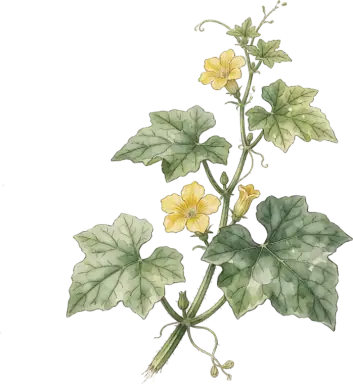
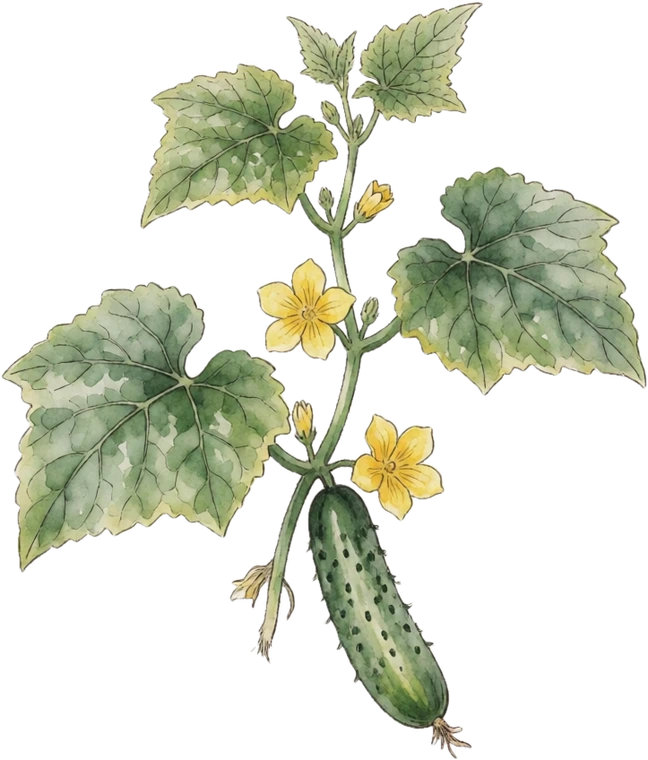
Botanical illustration of Cucumber
Annual · Cucumis sativus

Pick daily at size — one yellow blimp shuts the vine down. Bacterial wilt is fatal; control beetles early.

AnnualFull SunHigh waterVery Fast growthExcellent edibleAttracts beesNone winter chill

Where to buy the plant — 3 nurseries

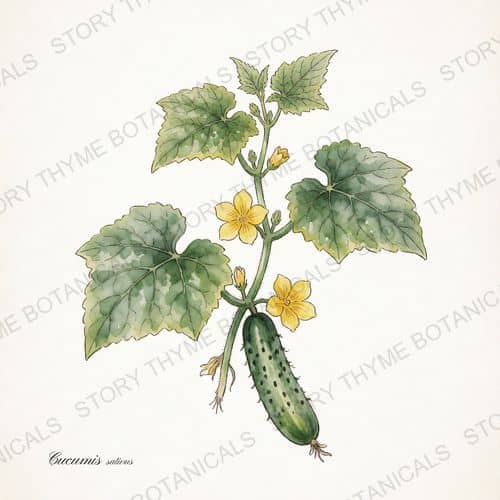
Cucumber Vine — a print from the Vegetables Vol. 2 - In the Garden collection

From the print shop

Growing cucumber? Hang it.

Our Vegetables Vol. 2 - In the Garden collection carries cucumberCucumis sativus, print Nº 5, “Cucumber Vine.”

16 designsfrom $21.99white or black groundmatte poster, unframed

Shop Vegetables Vol. 2 - In the Garden botanical prints →

I

Overview

Will cucumber suit your garden, and what goes wrong.

Will it fruit where you are?

Enter your ZIP — we look up your USDA hardiness zone (2023 map) and check it against what cucumber actually needs.

Life cycleAnnual
Winter chillNone

Cucumber at a glance

Life cycleAnnual
Mature sizeVine 6 ft
PollinationMonoecious — needs bees moving pollen between male/female flowers
Chill requirementNone (not chill-dependent)
Bloom seasonSummer
Harvest seasonJune - September
Growth rateVery Fast

Common cucumber problems

II

Growing

Light, water, soil, propagation and the season’s jobs.

How to grow cucumber: light, water & soil

LightFull Sun
WaterHigh, 1-2 inches/week. Bitter fruit = drought stress
SoilRich, Well-drained · pH 6.0 - 7.0
FertilizerCompost at planting; balanced feed monthly.
PruningNone (annual) — Trellis for straight fruit and airflow.
Spacing12 inches (trellised)

How to plant & propagate cucumber

Maturity50-70 days
From seedDirect-sow after frost in warm soil (70°F+), or start 3 wks early
PropagateFrom seed

When to spray cucumber

Growing season. Row cover until flowering (then remove for bees) beats spraying for beetles. Neem or spinosad if beetle pressure is severe. Resistant varieties beat fungicide for mildews.

The cucumber growing playbook

Field-tested instructions for every job cucumber asks of you, compiled from university extension guidance — in the order the season brings them.

Sowing

Direct sow only after the soil hits 65-70F

Wait until soil at one inch deep reads 65-70F, then sow seeds an inch deep, 12-18 inches apart in rows about 4 feet apart. Black plastic mulch warms the soil and lets you start earlier; hold off on organic mulch until the soil is above 75F. Cucumber seed germinates between 65 and 85F and rots in cold wet ground, so seed sown into soil that has not warmed simply disappears rather than emerging.

Planting out

Set out transplants after frost, roots undisturbed

Start seed indoors no earlier than four weeks before your last frost date and use peat pots that go into the ground intact. Move plants out once frost danger has passed, transplanting carefully before the plant outgrows its container so the taproot is not damaged. Cucumbers resent root disturbance because of their taproot, and seedlings held indoors too long transplant poorly and stall.

Watering

One to two inches a week, delivered at the ground

Give 1-2 inches of water per week depending on plant size, deeply rather than in daily sips, using drip line or a soaker hose so the leaves stay dry. Inconsistent moisture is what makes cucumbers bitter and misshapen, and overhead water sitting on foliage is the film that downy mildew and angular leaf spot need to infect.

Feeding

Sidedress nitrogen once the vines start to run

When the plants put out runners and before the first flowers open, sidedress 3-4 tablespoons of a nitrogen fertilizer such as 21-0-0 per plant, scattered beside the row rather than against the stem, then water it in. Cucumbers build their whole fruiting frame in a few weeks of vine growth, and the nitrogen that carries that expansion has to be in place before flowering starts, not after fruit is already sizing.

What to watch for

Check seedlings for cucumber beetles two to three times a week

From emergence through the third true leaf, look on stems, leaf undersides and at the base of each plant. The action threshold is two or more beetles per plant on a quarter of your plants at the cotyledon stage, or a quarter of a plant defoliated at the first to third true-leaf stage. Beetles that show up later in summer on established vines can be ignored. The beetles carry Erwinia tracheiphila in their gut and their feces, and it enters through fresh feeding wounds in rain or dew, so a few beetles on a seedling are a wilt infection rather than just chewed leaves. Plants are most vulnerable between emergence and bloom.

Spraying

Spinosad on seedlings if beetles pass threshold before bloom

Only if scouting hits the threshold on pre-bloom seedlings, spray spinosad, directing it at the stem base and leaf undersides where the beetles hide rather than just over the canopy. Stop treating once flowering starts. Killing the vector during the cotyledon-to-third-leaf window is what actually prevents bacterial wilt, because once the bacterium is in the xylem the vine is unsavable and dies in a couple of weeks.

Spinosad carries a 3 day pre-harvest interval on cucurbits - do not harvest within 3 days of spraying. Do not spray once blossoms are open: spinosad is toxic to bees while wet, and cucumbers depend on insect pollination to set fruit. If beetles are present at bloom, use row covers or hand-removal instead, not an insecticide.

Chlorothalonil for downy mildew once it is reported nearby

Watch for yellow areas on the upper leaf surface that turn brown with irregular margins, with a gray mold on the underside. Fungicides only work preventatively, before symptoms appear, so if downy mildew is active in or near your garden, apply chlorothalonil and cover the leaf undersides. Downy mildew moves fast in cool humid weather and can strip a planting once it arrives. Resistant and tolerant varieties (Marketmore 76, Diva, Dasher II, Calypso) slow it down but modern strains have eroded that resistance, so tolerance reduces losses rather than preventing infection outright.

Chlorothalonil carries a 0 day pre-harvest interval on cucurbits. It is a fungicide, not an insecticide, but still avoid spraying open blossoms when bees are foraging.

Protection

Pull the row covers the day the first flowers open

Row covers laid over the bed at seeding or transplanting exclude striped cucumber beetles through the vulnerable seedling weeks, but take them off as soon as flowering begins unless you are growing a seedless parthenocarpic variety. Cucumbers need insect pollination to set fruit, and a cover left on past first bloom locks the bees out - you trade beetle damage for no crop at all.

Harvesting

Pick every day or two, and never off a wet vine

Fruit is ready 5-7 days after flowering. Pick young and tender at your variety's size rather than letting fruit fill out, and keep picking on a one to two day cycle. Do not pick fruit while the vines are wet, because of the danger of spreading diseases. A cucumber left to mature on the vine signals the plant to stop setting fruit, and flavor drops as the seeds harden and the skin toughens. Handling wet vines spreads bacterial and fungal disease from plant to plant.

Cucumber companion plants

Avoid

Underlined names have their own growing guide in this library.

III

The year

What cucumber asks for, month by month.

The cucumber year, month by month

MonthJanFebMarAprMayJunJulAugSepOctNovDec
Bloom
Harvest

What each band means

  • Bloomflowers open — pollinators working, frost on blossoms is the danger.
  • Harvestpicking time — check ripeness every few days.

The cucumber year as text

  • Jan quiet month
  • Feb quiet month
  • Mar quiet month
  • Apr quiet month
  • May quiet month
  • Jun bloom, harvest
  • Jul bloom, harvest
  • Aug bloom, harvest
  • Sep harvest
  • Oct quiet month
  • Nov quiet month
  • Dec quiet month

These are the species' typical months — expect them a few weeks earlier in warm zones and later in cold ones. Watch the plant, not just the calendar.

IV

Ecology & uses

What it does for the garden, and what it is grown for.

Cucumber in the garden system

  • Vine layer annual
AttractsBees
MoistureFacultative / average
DeerBrowsed — protect young plants
OriginIntroduced

What cucumber is grown for

✓ Commonly eaten

UseFresh
UsePickling
Edible value4/5

Harvesting & storing cucumber

June - September. About 50-70 days from planting.

Edibility, identification, and traditional-use notes here are general reference — not medical or veterinary advice, and not a claim that any plant treats or prevents anything. Medicinal ratings record how strongly a plant features in herbal tradition, nothing more. Never eat or dose a plant you have not positively identified. More on how to use this library.

V

Cultivars

Named varieties of cucumber, ruled as a catalogue.

Best cucumber varieties & cultivars

17 on file

Named varieties of cucumber differ in days to maturity, disease resistance, flavor, and habit — pick one that fits your season and space.

General Lee

Slicing — Bears mostly female blooms - plant the included pollinizer seed alongside it, or interplant a monoecious variety. Without pollen it flowers heavily and sets little.

Where to buy ‘General Lee

Story Thyme Farms may earn a small commission from these links, at no cost to you — it never changes what we recommend.
Sweet Slice

Burpless, mild — Monoecious - produces its own male and female flowers, so one plant can set fruit given bees. No pollinizer management.

Where to buy ‘Sweet Slice

Story Thyme Farms may earn a small commission from these links, at no cost to you — it never changes what we recommend.

Bush Pickle

Pickling — Bush pickling type and the fastest here at 48 days. No trellis. Pick at 2 in or smaller - pickling types go seedy and blimp-shaped quickly.

Where to buy ‘Bush Pickle

Story Thyme Farms may earn a small commission from these links, at no cost to you — it never changes what we recommend.

Bush Crop · Bushcrop

Slicing — Bush habit - no trellis, suits patio containers and tight beds.

Where to buy ‘Bush Crop

Story Thyme Farms may earn a small commission from these links, at no cost to you — it never changes what we recommend.

Straight Eight

Classic slicing — Vining - trellis it or allow room to run. Heirloom AAS winner.

Where to buy ‘Straight Eight

Story Thyme Farms may earn a small commission from these links, at no cost to you — it never changes what we recommend.

Marketmore 76

Self-fertile
Zones2-11DiseaseAngular leaf spot, anthracnose, cucumber mosaic virus, downy mildew, powdery mildew, scabSize8-9 inch slicing fruit

Mild, stays dark green even under weather stress — Open-pollinated slicer bred at Cornell, so you can save seed. Cornell's resistant-cucurbit list credits it with the broadest resistance package of any OP slicer. Johnny's lists it at 58 days from direct seeding.

Where to buy ‘Marketmore 76

Story Thyme Farms may earn a small commission from these links, at no cost to you — it never changes what we recommend.

County Fair · County Fair 87

Self-fertile
Zones2-11DiseaseAngular leaf spot, anthracnose, bacterial wilt, cucumber mosaic virus, powdery mildewSizePickling

One of the very few cucumbers carrying genetic resistance to bacterial wilt, which is the disease that ends most cucumber plantings where cucumber beetles are heavy.

Where to buy ‘County Fair

Story Thyme Farms may earn a small commission from these links, at no cost to you — it never changes what we recommend.
Little Leaf H-19 · H-19 Little Leaf

Self-fertile
Zones2-11DiseaseAngular leaf spot, anthracnose, bacterial wilt, cucumber mosaic virus, downy mildew, powdery mildew, scabSizePickling

Carries bacterial wilt resistance alongside the widest disease package on Cornell's pickling list.

Where to buy ‘Little Leaf H-19

Story Thyme Farms may earn a small commission from these links, at no cost to you — it never changes what we recommend.

Eureka

Self-fertile
Zones2-11DiseaseAngular leaf spot, anthracnose, cucumber mosaic virus, downy mildew, powdery mildew, papaya ringspot virus, scab, watermelon mosaic virus strain 2, zucchini yellow mosaic virusSizePickling

F1 pickler with the longest resistance list of any cucumber on Cornell's chart, including three mosaic viruses.

Where to buy ‘Eureka

Story Thyme Farms may earn a small commission from these links, at no cost to you — it never changes what we recommend.

Diva

Self-fertile
Zones2-11DiseaseAngular leaf spot, cucumber vine yellowing virus, downy mildew, powdery mildew, scabSizeSlicing

THE EXCEPTION to the pollinizer rule: being parthenocarpic it sets seedless fruit with no bees and no pollinizer. Ideal where bee activity is poor, or under row cover or in a tunnel where insects are excluded.

Where to buy ‘Diva

Story Thyme Farms may earn a small commission from these links, at no cost to you — it never changes what we recommend.

Dasher II

Self-fertile
Zones2-11DiseaseAngular leaf spot, anthracnose (Co:2; A2), cucumber mosaic virus, downy mildew, powdery mildew, scabSizeSlicing

F1 slicer carrying six-way resistance; listed by extension among the cucumbers with downy mildew tolerance worth planting where the disease arrives every year.

Where to buy ‘Dasher II

Story Thyme Farms may earn a small commission from these links, at no cost to you — it never changes what we recommend.

Calypso

Self-fertile
Zones2-11DiseaseAngular leaf spot, anthracnose (Co:A), cucumber mosaic virus, downy mildew, powdery mildew, scabSizePickling

Mostly-female flowers, so it needs pollen from a monoecious plant. Seed companies blend pollinizer seed into the packet, often dyed a different colour - do NOT discard those odd-looking seeds or fruit set collapses.

Where to buy ‘Calypso

Story Thyme Farms may earn a small commission from these links, at no cost to you — it never changes what we recommend.

Olympian

Self-fertile
Zones2-11DiseaseAngular leaf spot, anthracnose (Co:A), downy mildew, powdery mildew, scabSizeSlicing

F1 slicer with five-way resistance including both mildews.

Where to buy ‘Olympian

Story Thyme Farms may earn a small commission from these links, at no cost to you — it never changes what we recommend.

Salad Bush

Self-fertile
Zones2-11DiseaseCorynespora leaf spot/blight, cucumber mosaic virus, powdery mildew, scab, target leaf spotSizeCompact bush habit

Bush type: grow in a container or small bed without a trellis, where a standard vining cucumber would need several feet of run or vertical support.

Where to buy ‘Salad Bush

Story Thyme Farms may earn a small commission from these links, at no cost to you — it never changes what we recommend.

Sweet Success

Self-fertile
Zones2-11DiseaseAngular leaf spot, corynespora leaf spot/blight, cucumber mosaic virus, scab, target leaf spot, watermelon mosaic virus strain 2SizeLong slicing fruit

Mild, seedless when unpollinated — Listed by Utah State Extension among the excellent home garden cucumbers. A parthenocarpic type, so it can hold fruit under row cover after other varieties have to be uncovered for bees.

Where to buy ‘Sweet Success

Story Thyme Farms may earn a small commission from these links, at no cost to you — it never changes what we recommend.

Fanfare

Self-fertile
Zones2-11DiseaseAngular leaf spot, anthracnose (Co:A), cucumber mosaic virus, downy mildew, powdery mildew, scabSizeSlicing, compact vine

Monoecious, so it carries its own male flowers - no pollinizer needed. Semi-bush habit works in a small bed or large container without a long trellis. AAS winner.

Where to buy ‘Fanfare

Story Thyme Farms may earn a small commission from these links, at no cost to you — it never changes what we recommend.

Boston Pickling

Self-fertile
Zones2-11DiseaseCucumber mosaic virus, powdery mildewSizeSmall pickling fruit

Heirloom open-pollinated pickler, named by Utah State Extension as an excellent home garden variety and credited by Cornell with cucumber mosaic virus and powdery mildew resistance. No bacterial wilt or downy mildew resistance, so lean on row covers and resistant neighbours such as County Fair where wilt is heavy.

Where to buy ‘Boston Pickling

Story Thyme Farms may earn a small commission from these links, at no cost to you — it never changes what we recommend.

VI

Sources & plant ID

Where the care distinctions come from, and how the plant is filed.

Research basis

Sources behind this profile

No extension citations are attached to cucumberyet. The care figures below come from the library's own catalogue rather than a traced primary source.

Plant ID

BinomialCucumis sativus
FamilyCucurbitaceae
TypeAnnual
USDA symbolCUSA4
OriginIntroduced
Invasive riskLow

VII

Where to buy

Third-party nurseries — not Story Thyme Farms.

Third-party nurseries, not Story Thyme Farms. Prices are theirs.

Story Thyme Farms may earn a small commission from these links, at no cost to you — it never changes what we recommend.

VIII

Questions

Cucumber questions, answered straight.

Is cucumber safe for kids and pets?

Cucumber is commonly eaten and isn't considered toxic, but "commonly eaten" isn't a guarantee for any particular person or animal — allergies, quantity, and which part you eat all matter. Never eat a plant you haven't positively identified, and check with a vet before letting pets or livestock graze anything new.

When do you harvest cucumber?

June - September. From planting, expect about 50-70 days to maturity.

What grows well with cucumber?

Proven companions include beans, corn, radish — the full companion list, and what to keep away, is in the Growing tab above.

How do you propagate cucumber?

From seed.

IX

Elsewhere

Where cucumber sits in the library.

Where cucumber sits in the library

Grows in the same world